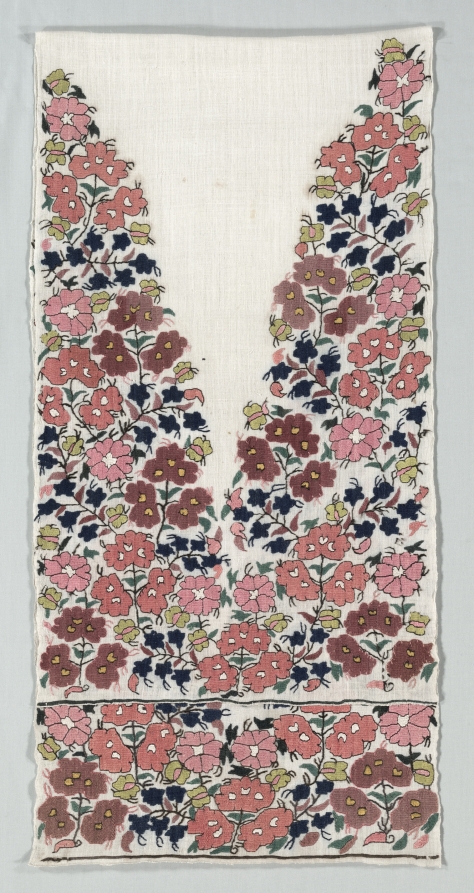
The Scarf as a Sovereign Artefact: Silk, Imperial Legacy, and the Modern Wardrobe
In the hushed, wood-panelled ateliers of London’s Savile Row, where tailoring is a discipline of precision and provenance, the scarf is seldom dismissed as a mere accessory. It is, rather, a portable heirloom—a whisper of empire, a thread of history. At the Lauren Fashion Heritage Lab, we examine the scarf not only as a functional garment but as a material document of power, trade, and craftsmanship. This paper focuses on the scarf’s most exalted materiality: silk, and its enduring legacy from the imperial weaving houses of Europe and Asia to the contemporary wardrobe.
Heritage research demands that we interrogate the object’s biography. The silk scarf, in its finest form, is a direct descendant of the imperial looms that once clothed monarchs, diplomats, and merchants. From the Chinese dynastic workshops of the Han period to the French royal manufactories of Lyon under Louis XIV, silk weaving was a state-sanctioned art, guarded by guilds and regulated by royal decree. The scarf—whether a cravat, a foulard, or a cache-nez—was never trivial. It signified rank, allegiance, and taste. To wear a silk scarf in the 18th century was to wear the spoils of global trade routes, the labour of sericulture, and the prestige of imperial patronage.
Materiality and Mastery: The Silk Thread as a Carrier of Empire
Silk’s material properties are uniquely suited to the scarf’s dual role as adornment and artefact. The long, continuous filaments of the
Bombyx mori silkworm produce a fibre of extraordinary tensile strength, lustre, and dye affinity. In the imperial context, this was not merely a textile; it was a medium for political messaging. The
Grande Fabrique of Lyon, for instance, wove silk scarves and ribbons for the court of Versailles, embedding motifs of fleur-de-lis, sunbursts, and classical allegories that reinforced the divine right of kings. Similarly, the Ottoman imperial silk workshops in Bursa produced scarves and kaftans woven with gold and silver threads, their patterns—
çintemani and
rumî—symbolising celestial power and earthly dominion.
The scarf, therefore, was a canvas for imperial semiotics. Its materiality—the weight, the drape, the sheen—communicated the wealth of the state. A silk scarf from the Mughal court, woven in Varanasi with
zari (metallic thread), was not a personal indulgence but a diplomatic gift, a token of sovereignty. The legacy of this practice persists in the modern luxury scarf: the Hermès carré, for example, is a direct heir to the Lyon tradition, its hand-rolled edges and screen-printed motifs a testament to a craft that once served kings.
The Scarf as a Palimpsest of Imperial Networks
To understand the scarf’s heritage, one must trace the silk routes—both terrestrial and maritime—that connected the imperial capitals. The
Silk Road was not a single path but a web of exchanges, and the scarf was a portable commodity that crossed borders with ease. Chinese silk scarves, often embroidered with dragons or phoenixes, were prized in Rome, Byzantium, and later in Renaissance Italy. The Venetian and Genoese merchants who traded these goods were not merely sellers; they were intermediaries of imperial aesthetics.
By the 17th century, the East India Companies—British, Dutch, French—had institutionalised the scarf trade. Indian
bandhani and
patola silks, with their resist-dyed patterns, were imported to Europe and adapted for scarves, shawls, and neckwear. The
cashmere shawl, though technically a wrap, influenced the scarf’s evolution: its
paisley motif, derived from the Persian
boteh, became a global symbol of luxury. The British imperial system, in particular, commodified these textiles, exporting raw silk from Bengal to London, where it was woven into scarves for the colonial elite. The scarf thus became a marker of imperial identity—a way for the British in India to signal their status while appropriating local craftsmanship.
From Court to Catwalk: The Democratisation of Imperial Silk
The 20th century witnessed a profound shift. The scarf, once the preserve of aristocracy and imperial administrators, was democratised by industrialisation and the rise of ready-to-wear. Yet its materiality—silk—retained its aura of exclusivity. The
house of Hermès, founded in 1837 as a harness workshop, began producing silk scarves in 1937, and the
carré became a cultural icon. Its designs, often inspired by equestrian motifs, heraldic symbols, and global travel, consciously evoke the imperial past. The scarf is not merely a fashion item; it is a collector’s object, a piece of wearable heritage.
Similarly, the
Liberty of London scarf, with its Art Nouveau prints, draws on the Arts and Crafts movement’s reverence for natural dyes and handcraft, but its silk base is a nod to the East India Company’s legacy. The modern luxury scarf, whether from Burberry, Gucci, or a Savile Row milliner, is a palimpsest of imperial narratives. It carries the weight of colonial trade, the skill of anonymous weavers, and the taste of patrons who once defined style.
Preserving the Legacy: The Scarf as Heritage Asset
At the Lauren Fashion Heritage Lab, we treat the silk scarf as a
primary source for understanding material culture. Its conservation requires expertise in textile chemistry, dye analysis, and historical context. A scarf from the 18th century, with its faded madder red and indigo blue, tells us about the global dye trade. A 1920s Art Deco scarf, with its geometric patterns, reflects the machine age and the rise of modernism. A 21st-century silk scarf, woven in Como or Lyon, continues the tradition of imperial craftsmanship, albeit in a post-colonial world.
The responsibility of the heritage specialist is to ensure that this legacy is not lost. We must document the provenance, the weaver’s mark, the dye recipe, and the cultural significance. The scarf is not a trivial object; it is a thread connecting the imperial past to the present. In the hands of a discerning collector or a fashion historian, it becomes a tool for understanding power, trade, and artistry.
Conclusion: The Scarf as Sovereign Statement
In the lexicon of Savile Row, where every garment is a bespoke narrative, the silk scarf stands as a sovereign artefact. Its materiality—the lustre of the silk, the precision of the weave, the depth of the dye—is a testament to centuries of imperial ambition and artisanal mastery. To wear a silk scarf today is to participate in a tradition that spans continents and centuries. It is to carry the legacy of the imperial loom, the Silk Road merchant, and the courtly weaver. And in that act, the scarf transcends fashion; it becomes a heritage object, a piece of history draped with intention.
— The Lauren Fashion Heritage Lab, London. 2025.