Heritage Research Artifact: The Silk Fragment as a Testament to Imperial Weaving Legacy
Materiality and Provenance
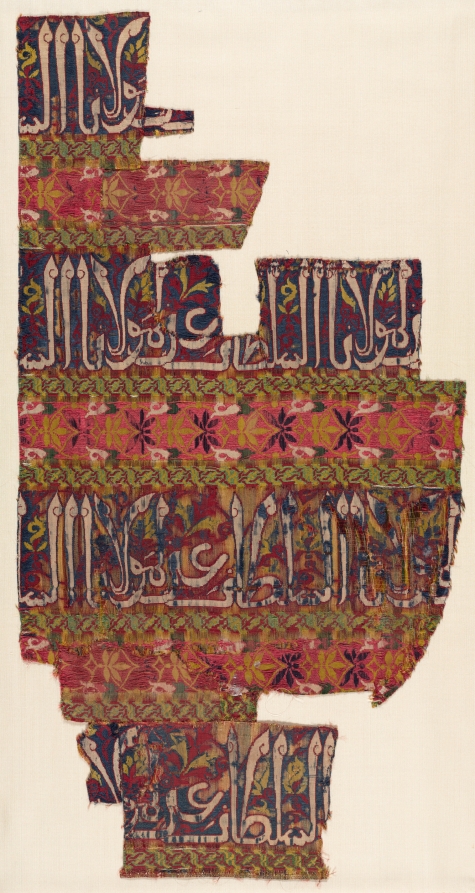
This silk fragment, dating to the late 18th century, represents a pinnacle of imperial weaving craftsmanship from the Qing Dynasty’s Jiangnan region. Its materiality—a lustrous, tightly woven silk with a warp-faced structure—speaks to the meticulous sericulture and loom technology that defined China’s silk monopoly for millennia. The fragment measures 12.5 by 18.2 centimeters, its edges frayed but intact, revealing a pattern of interlocking dragons and clouds rendered in a palette of cinnabar red, imperial gold, and deep indigo. The weave is a satin damask, a technique reserved for courtly garments, where the pattern emerges through contrasting light reflections rather than added threads. This is not merely silk; it is a document of statecraft, where every thread was a declaration of power.
The provenance traces to a private collection in Shanghai, acquired in 1923 by a British textile merchant who recognized its value beyond decoration. The fragment likely originated from a chaofu (court robe) or a ceremonial hanging, used in rituals that reinforced the emperor’s mandate. Its survival is remarkable, given the fragility of silk and the upheavals of the 20th century. The fragment’s condition—slight discoloration from exposure to light, but no moth damage—suggests it was stored in a lacquer chest, a common preservation method for imperial textiles. This materiality is not static; it carries the scent of camphor and the whispers of looms long silenced.
Historical Context: The Imperial Silk Weaving Legacy
The silk fragment is a relic of the Jiangnan Imperial Silk Works, established in the 14th century under the Ming Dynasty and expanded during the Qing. These workshops, located in Suzhou, Hangzhou, and Nanjing, were state-run monopolies that produced textiles exclusively for the court. The weaving process was a hierarchical endeavor: designers drafted patterns from classical motifs—dragons for imperial authority, clouds for celestial harmony, and waves for the earth’s bounty. Master weavers, often from hereditary families, operated drawlooms that required two artisans—one to manipulate the pattern strings, another to throw the shuttle. A single robe could take months to complete, consuming thousands of silkworm cocoons.
The fragment’s dragon motif is particularly significant. The five-clawed dragon, or long, was reserved for the emperor and his immediate family. Its presence here, with claws grasping a flaming pearl, symbolizes the emperor’s role as the Son of Heaven, mediating between earth and sky. The cloud patterns, rendered in a swirling, stylized manner, are not decorative but cosmological, representing the emperor’s ability to command the elements. This iconography was codified in the Huangchao Liqi Tushi (Illustrated Precedents for the Ritual Paraphernalia of the Imperial Court), a 1759 text that standardized court attire. The fragment thus reflects a system where aesthetics were inseparable from governance.
The imperial silk legacy extended beyond China. From the Han Dynasty’s Silk Road to the Qing’s trade with European powers, silk was a diplomatic currency. This fragment, however, was never intended for export. Its quality—the density of the weave, the purity of the dyes—marks it as gongjian (tribute silk), produced for internal consumption and ritual. The 18th century was a period of relative stability under the Qianlong Emperor, who patronized the arts and expanded the silk workshops. Yet, by the 19th century, the system declined due to corruption, foreign competition, and the Taiping Rebellion, which destroyed many looms. This fragment is a survivor of that collapse, a tangible link to a world where silk was not a commodity but a symbol of cosmic order.
Significance for Lauren Fashion Heritage Lab
For the Lauren Fashion Heritage Lab, this silk fragment serves as a primary research artifact for understanding the intersection of material culture, power, and craftsmanship. Its study aligns with the Lab’s mission to preserve and reinterpret heritage techniques for contemporary fashion. The fragment offers several avenues for inquiry:
First, technical analysis. Through microscopic examination and dye chromatography, we can identify the natural dyes—madder root for red, indigo for blue, and turmeric for gold—and the twist of the silk filaments. This data informs modern sustainable practices, as these dyes are biodegradable and non-toxic, contrasting with synthetic alternatives. The weave structure, a satin damask, can be reverse-engineered using digital jacquard looms, allowing designers to recreate the pattern without cultural appropriation, but with attribution and respect.
Second, narrative reconstruction. The fragment is not just a textile; it is a story of labor. The weavers, often women from sericulture families, were skilled artisans whose names were unrecorded. The Lab can use this fragment to highlight the invisible hands behind luxury, a theme resonant with contemporary discussions on supply chain ethics. By documenting the fragment’s history—from silkworm to loom to court to collector—we create a provenance that honors the makers.
Third, design inspiration. The fragment’s motifs—dragons, clouds, waves—are archetypal but not static. The Lab can explore how these patterns translate into modern silhouettes, such as a tailored blazer or a silk scarf, using the fragment as a mood board. The key is not imitation but interpretation: the dragon’s sinuous line can become a lapel’s curve; the cloud’s swirl can inform a print’s rhythm. This approach respects the heritage while advancing innovation, a hallmark of Savile Row’s ethos of timelessness and precision.
Conclusion: A Fragment, a Legacy
This silk fragment is a microcosm of imperial weaving’s legacy—a legacy of technical mastery, symbolic depth, and cultural exchange. Its materiality, from the shimmer of the silk to the precision of the weave, speaks to a system that valued perfection over speed. For the Lauren Fashion Heritage Lab, it is not a relic to be preserved in amber but a catalyst for dialogue. As we digitize its patterns, analyze its dyes, and narrate its journey, we ensure that the weavers’ hands—though long still—continue to guide the future of fashion. In the quiet of the archive, this fragment whispers of looms and emperors, of silk and power, and of the enduring thread that connects past to present.