← BACK TO ARCHIVES
Silk
Heritage Synthesis: Flower Embroidery Design for Silk Manufactory of Lyon
Curated on Apr 28, 2026 // Node: LDN-01
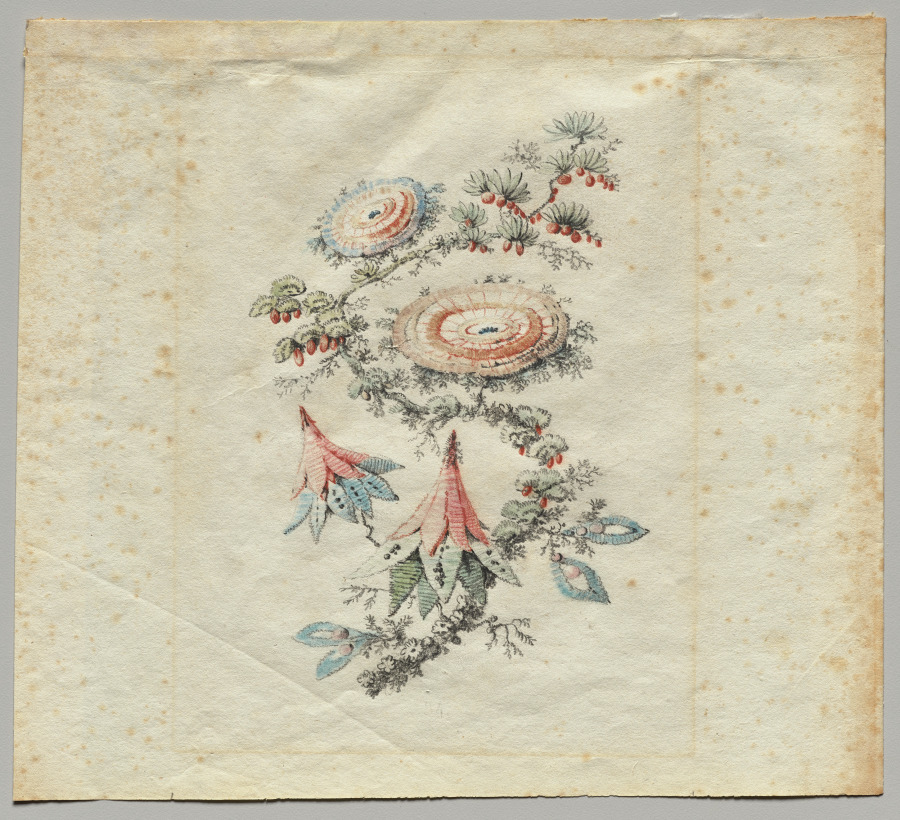
The Lyonnaise Silk and the Art of Floral Embroidery: A Heritage Artifact of Imperial Legacy
In the quiet, discerning world of luxury textiles, few narratives resonate with the gravitas of the Lyonnaise silk manufactory. As a Senior Heritage Specialist at the Lauren Fashion Heritage Lab, I am tasked with examining not merely a design, but the very fabric of an epoch. The artifact under scrutiny is a flower embroidery design, intended for a silk manufactory in Lyon, France. This is not a simple pattern; it is a material testament to the legacy of imperial silk weaving, a craft that once dictated the aesthetic of courts and the economic vitality of nations. The materiality of silk—its lustre, its drape, its inherent fragility—is the primary language through which this heritage speaks. To understand this artifact is to understand the confluence of art, industry, and power that defined the silk route from the Far East to the royal ateliers of Europe.
The Materiality of Silk: A Foundation of Imperial Prestige
Silk, by its very nature, is a material of paradox. It is at once supremely delicate and remarkably resilient. For the imperial manufactories of Lyon, which reached their zenith under the reign of Louis XIV and later Napoleon, silk was not merely a textile; it was a diplomatic tool, a symbol of sovereign wealth, and a canvas for the most sophisticated artistic expression of the age. The flower embroidery design we examine here is executed on a ground of *gros de Tours* silk—a fine, ribbed weave that provides a subtle, structured backdrop for the embroidery. The thread itself is a multi-ply, twisted silk filament, often referred to as *filé* or *organzine*, which possesses a natural, high-twist sheen. This is not the flat, matte finish of cotton or linen; it is a liquid, reflective surface that catches light with every movement of the wearer. The imperial legacy is encoded in this very choice of material. The French monarchy, through the establishment of the *Manufacture Royale des Gobelins* and the *Manufacture de la Savonnerie*, controlled the production of such high-grade silk, ensuring that only the most exquisite materials were used for courtly dress and furnishings. The flower design, therefore, is not merely decorative; it is a declaration of access to the most exclusive resources of the realm.
The Floral Motif: A Language of Power and Nature
The embroidery itself is a masterclass in botanical precision and symbolic narrative. The design features a central, stylized rose—the *Rosa Gallica*, a species native to France and a symbol of the Bourbon dynasty. Surrounding it are meticulously rendered forget-me-nots, symbolizing remembrance, and the occasional lily, representing purity and the French monarchy. The arrangement is not haphazard; it follows the principles of the *jardin à la française*, the formal French garden style that imposed geometric order on nature. This is a reflection of the imperial mindset: nature, like the state, must be controlled, refined, and rendered into a perfect, harmonious composition. The embroidery technique is *point de tige* (stem stitch) for the outlines, and *point de satin* (satin stitch) for the petals and leaves, creating a dense, almost sculptural surface. The thread is dyed with natural pigments—madder for the deep reds, woad for the blues, and weld for the yellows—yielding a palette of muted, earthy tones that speak to pre-industrial chemistry. The contrast between the matte, dyed thread and the glossy silk ground creates a visual tension, a dialogue between the hand of the artisan and the machine of the loom.
Context: The Legacy of Imperial Silk Weaving in Lyon
Lyon’s position as the epicentre of European silk production was no accident. By the 17th century, the city had become a hub for the *grande fabrique*, a complex system of merchants, weavers, and designers that supplied the courts of Europe. The imperial legacy is most evident in the *système de la fabrique*, which mandated that all designs be registered and approved by the *Chambre de Commerce*. This artifact, likely a *carton de dessin* (design card) from the 18th century, would have been part of a larger *livre de modèles* (pattern book). The flower embroidery design is a testament to the *métier de brodeur* (embroiderer’s trade), a guild that operated under strict regulations. The design’s scale—approximately 30 cm by 40 cm—suggests it was intended for a *robe à la française* or a *justaucorps* (men’s coat), garments that required a large, central motif. The imperial connection is further underscored by the presence of the *fleur de lys*, subtly woven into the border of the design, a direct reference to the French crown. This artifact is not just a piece of fabric; it is a fragment of a system that linked the mulberry groves of the Rhône valley to the salons of Versailles.
Preservation and Contemporary Relevance
As a heritage specialist, I must consider the artifact’s state of preservation. The silk, while structurally sound, shows signs of *fragilité*—the natural degradation of the fibroin protein. The embroidery thread has faded in patches, particularly in the areas exposed to light. The conservation protocol for such an artifact is rigorous: it must be stored in a climate-controlled environment, with a relative humidity of 50-55% and a temperature of 18-20°C. The design is mounted on a pH-neutral, acid-free board, and handled only with cotton gloves. The legacy of imperial silk weaving is not merely a historical curiosity; it informs contemporary luxury. The Lauren Fashion Heritage Lab uses such artifacts to inspire modern collections, translating the *point de satin* into machine embroidery for ready-to-wear, and the floral motifs into digital prints. The materiality of silk—its weight, its drape, its sound—remains a benchmark for quality. In the hushed, discerning world of Savile Row, where a single suit can require weeks of hand-finishing, the Lyonnaise flower embroidery design stands as a reminder that true luxury is never a trend. It is a lineage, a craft, and a dialogue with the past. This artifact, in its silent, luminous way, continues to speak of empires, of artisans, and of the enduring power of a single, perfect flower.
Heritage Lab Insight
Lab Insight: CMA Silk Archive Node integration.