The Terracotta Kylix and the Architecture of Restraint: Informing the 2026 Old Money Silhouette
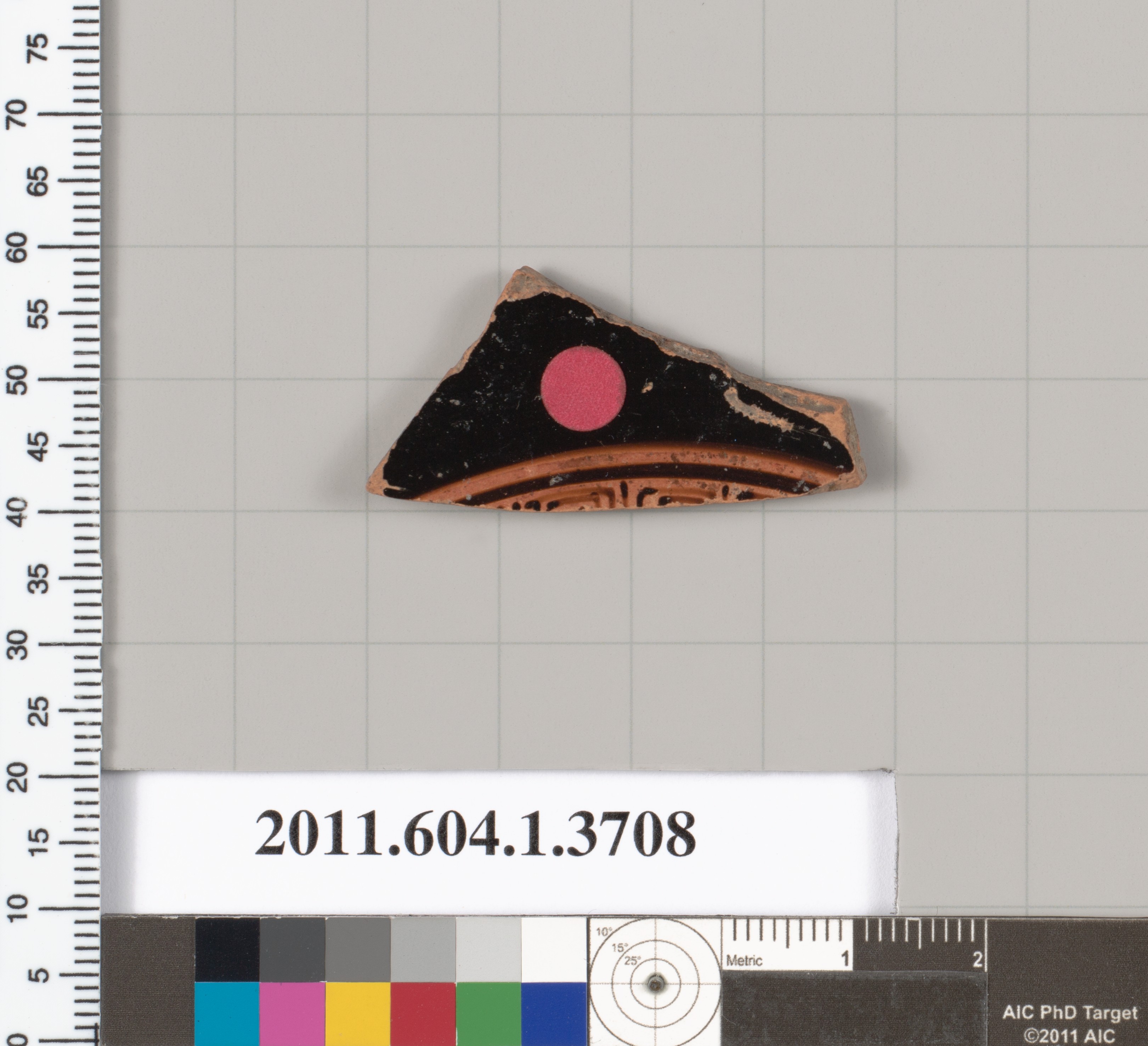
The Lauren Fashion Heritage Lab’s internal genetic code, which juxtaposes the Bodhisattva’s inward path of compassion with the Amulet in the Form of a Seated Figure with Bovine Head’s outward shield of divine power, provides a profound hermeneutic lens for examining a seemingly disparate artifact: a Greek Attic terracotta fragment of a kylix (drinking cup). This fragment, a relic of symposiastic culture, is not merely a vessel for wine but a materialized philosophy of balance, proportion, and the disciplined containment of excess. For the 2026 Old Money silhouette, this kylix offers a foundational grammar of restraint—a visual language that, like the Bodhisattva’s serene gaze, turns inward to assert status through quiet mastery rather than outward display. The kylix’s formal principles—its circularity, its low-relief geometry, its earthy materiality—directly inform a silhouette that is at once grounded, enduring, and profoundly unostentatious.
I. The Kylix as a Paradigm of Contained Power
The kylix, designed for the Greek symposium, was an object of social ritual where intellect, debate, and pleasure converged. Its shallow, wide bowl and two horizontal handles facilitated a communal, reclining drinking posture. Crucially, the kylix’s painted interior—often visible only when the cup was drained—revealed its narrative. This was a design of delayed revelation, not immediate spectacle. The 2026 Old Money silhouette, in parallel, rejects the overt branding and aggressive tailoring of fast fashion or streetwear. Instead, it adopts the kylix’s principle of contained power. The silhouette is not about volume or exaggerated structure; it is about the precise, almost mathematical relationship between the garment’s components. A double-breasted jacket, for instance, does not flare or constrict; it follows the body’s architecture with a gentle, unbroken line. The shoulders are natural, not padded, echoing the kylix’s balanced handles that neither dominate nor disappear. The waist is subtly defined, not cinched, creating a column of fabric that, like the kylix’s bowl, holds its shape with quiet authority.
This is a direct translation of the kylix’s terracotta materiality. Terracotta, fired earth, is humble yet permanent. It does not gleam like gold or shimmer like silk; it grounds the object in the tangible world. The 2026 Old Money palette, therefore, privileges heritage blacks, deep navies, charcoal grays, and muted ivories—colors that absorb light rather than reflect it. These are not colors of celebration but of contemplation. They mimic the kylix’s fired clay, suggesting a garment that has been “fired” by tradition, by wear, by the slow accumulation of quality. The silhouette’s fabric—heavy wool, dense cashmere, or tightly woven cotton—possesses a similar weight and drape, falling with a deliberate, almost gravitational pull. This is not fabric that floats; it is fabric that settles, like the kylix’s base on a table, asserting its presence without fanfare.
II. The Geometry of the Symposium: Proportion and the “Negative Space” of Elegance
The kylix’s geometry is deceptively simple: a circle for the bowl, two arcs for the handles, a stem, and a foot. Yet its proportions are rigorously calibrated. The bowl’s diameter is roughly twice its depth; the handles are set at a precise angle for balance; the stem lifts the bowl without making it precarious. This is a lesson in negative space—the empty air between the handles, the void within the bowl—that defines the object’s elegance. The 2026 Old Money silhouette applies this principle to tailoring. A well-cut trouser does not cling; it falls with a clean break over the shoe, creating a vertical line of negative space between fabric and ankle. A jacket’s lapel is not wide but precisely proportioned to the wearer’s torso, leaving a V-shaped void of shirt and tie that draws the eye upward. The silhouette is not about filling space but about framing it, allowing the body to breathe within the garment’s architecture.
This geometry also echoes the Bodhisattva’s meditative posture. The kylix’s circular bowl, when viewed from above, is a mandala—a symbol of wholeness and the cyclical nature of existence. The 2026 silhouette, in its restraint, creates a similar sense of closure and completeness. A single-breasted coat, for example, is closed with two or three buttons, not a row of fasteners. The line is uninterrupted, creating a visual circle around the torso. This is not a silhouette that invites dissection; it is one that demands to be perceived as a unified whole. It is the garment as a sealed vessel, containing the wearer’s presence without spilling it outward. This is the opposite of the Amulet’s outward-facing, protective function. The kylix-inspired silhouette protects not by warding off external threats but by internalizing the wearer’s power, making it inaccessible to casual scrutiny.
III. The Symposium’s Social Code: Restraint as the Ultimate Luxury
The symposium was a space of controlled excess. Wine was diluted with water; speeches were governed by rules; the kylix itself was passed in a specific order. The 2026 Old Money silhouette embodies this same social code of restraint. It is not a uniform but a language of subtle signals understood by those initiated into its grammar. The width of a tie, the height of a collar, the break of a trouser—these are not arbitrary but derived from a canon of proportion that has been refined over decades. The kylix fragment, with its broken edges and faded paint, reminds us that true luxury is not about newness but about patina—the evidence of use, of history, of belonging to a lineage. The 2026 silhouette, therefore, is not “trendy.” It is timeless, resisting the seasonal churn of fashion. A garment cut in this idiom can be worn for a decade and still appear current, because its reference point is not the runway but the museum.
This is where the kylix’s terracotta fragment becomes a powerful metaphor. It is incomplete, yet its fragmentary state does not diminish its authority. In fact, the breakage adds to its narrative weight. The 2026 Old Money silhouette, similarly, is not about perfection. A slightly rumpled linen jacket, a cashmere sweater with a mended elbow, a pair of flannel trousers with a gentle crease—these are not flaws but signatures of authenticity. They signal that the garment has lived, that it is part of a wardrobe, not a costume. This is the antithesis of the Amulet’s pristine, symbolic perfection. The kylix-inspired silhouette embraces impermanence, acknowledging that true elegance is found in the balance between order and entropy.
IV. Synthesis: The Kylix as a Bridge Between Inner and Outer
Returning to the genetic code, the kylix fragment occupies a unique position between the Bodhisattva’s inward path and the Amulet’s outward shield. It is neither a tool for self-transformation nor a talisman for protection. It is a vessel for social communion, a mediator between the individual and the collective. The 2026 Old Money silhouette, informed by this kylix, becomes a similar mediator. It does not shout the wearer’s status (the Amulet’s function) nor does it invite spiritual introspection (the Bodhisattva’s function). Instead, it facilitates social grace. The wearer is not the center of attention but a participant in a larger ritual—a business meeting, a dinner, a gallery opening—where the garment’s restraint allows the person, not the clothes, to be the focus.
In conclusion, the terracotta kylix fragment, through its geometry, materiality, and social function, provides a rigorous template for the 2026 Old Money silhouette. It teaches that true luxury is not about accumulation but about curation; not about volume but about proportion; not about display but about presence. The silhouette it inspires is one of quiet, enduring authority—a garment that, like the kylix after the symposium is over, stands empty yet full of meaning, waiting for the next gathering of minds. It is a heritage-black statement that, in its refusal to speak loudly, speaks volumes.