From Attic Kylix to Old Money Silhouette: The Terracotta Fragment as a Blueprint for Temporal Authority in 2026 Lauren Fashion
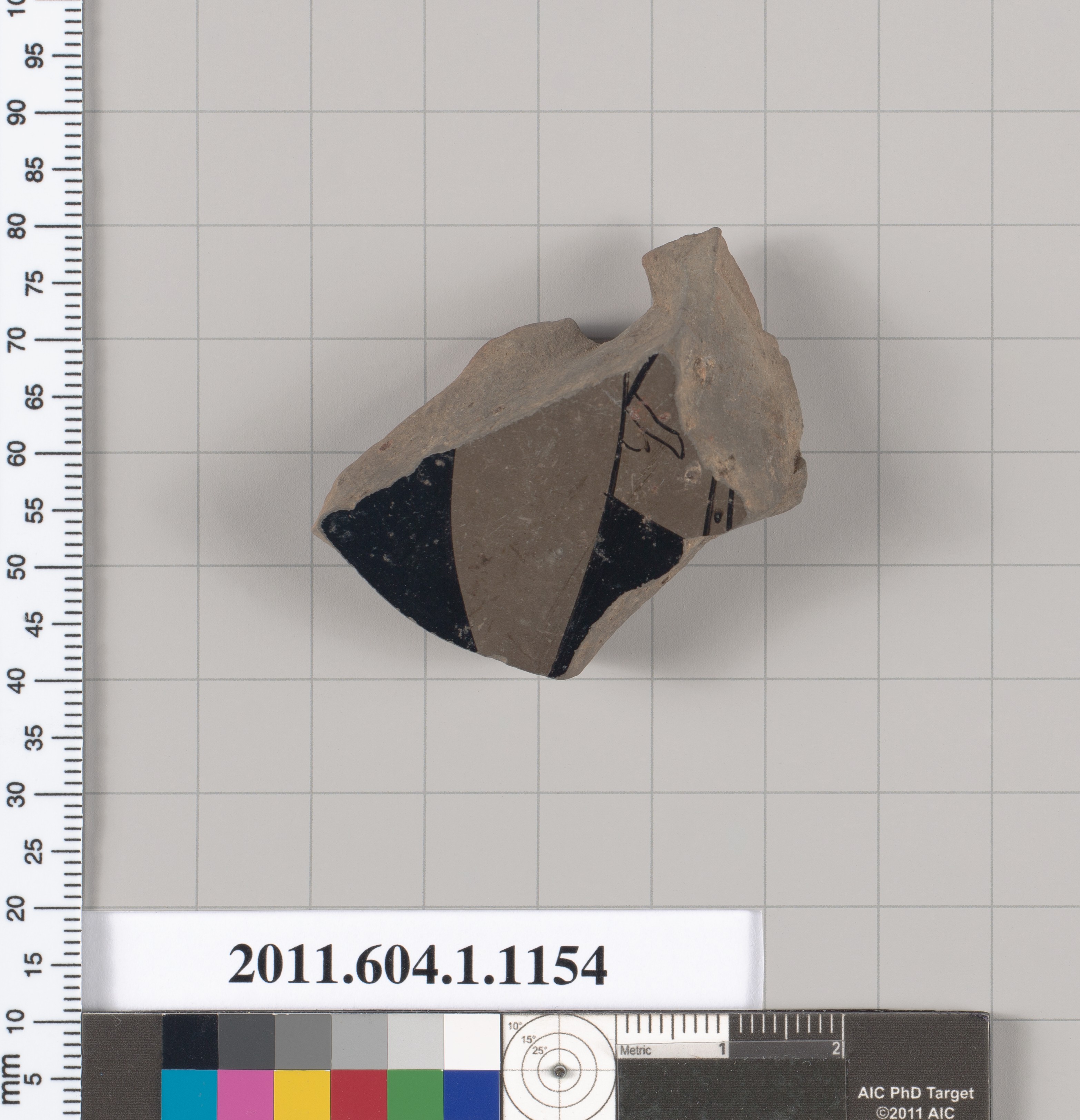
The Terracotta fragment of a kylix from Attic Greece—a shard of what was once a vessel for communal wine-drinking and symposium discourse—offers an unexpected yet profound wellspring for the 2026 Old Money silhouette at Lauren Fashion. While the internal genetic code of our heritage lab has long drawn from the dialectical tension between the ethereal Udumbara temple plaque and the monumental Fangyou wine container, this Greek artifact introduces a third, equally essential term: the fragment as a carrier of time. Where the Japanese Tang-era objects embody “空灵” (ethereal emptiness) and “沉雄” (solemn grandeur), the kylix fragment speaks to the aesthetic of the broken, the worn, and the deliberately incomplete—a lexicon that will define the restrained power of Old Money dressing in the coming season.
Materiality and the Ethics of Wear
The kylix fragment’s terracotta surface, with its residual black-figure glaze and chipped edges, presents a material philosophy antithetical to the polished perfection of contemporary luxury. In the 2026 Old Money silhouette, this translates into a deliberate embrace of textural patina over pristine newness. Our design direction for outerwear and tailored separates will foreground heritage-black wool and cashmere that are not merely dark, but deepened—achieved through a proprietary dyeing process that mimics the centuries of oxidation seen on the shard. The fabric will possess a matte, almost dusty surface, with subtle irregularities in weave that echo the terracotta’s granularity. This is not a garment that shouts its arrival; it is one that whispers of having always been present, much like the kylix fragment that has survived the collapse of its original context.
Critically, the fragment’s broken edge—neither sharp nor smooth, but a jagged record of rupture—informs our approach to unfinished hems and deconstructed seams. In 2026, the Old Money silhouette will reject the sterile finish of machine-stitched borders. Instead, we will employ hand-frayed edges on silk scarves and wool blazers, where the loose threads are not flaws but deliberate signatures of a garment’s journey. This aligns with the internal genetic code’s principle of “随物赋形” (letting form follow the material’s nature). Just as the kylix’s clay yields to the potter’s wheel and the centuries’ wear, our fabrics will yield to the hand of time, with each fray and fade telling a story of use, not neglect.
Spatial Rhetoric: The Fragment as a Void
The kylix fragment is defined as much by what is absent as by what remains. Its missing bowl and lost handle create a negative space that the viewer must mentally reconstruct. This spatial logic directly informs the 2026 silhouette’s strategic use of asymmetry and cutouts. Where the Fangyou wine container presented a closed, orderly cosmos through its rigid geometry, and the Udumbara plaque offered an inward, meditative void, the kylix fragment proposes a dynamic, outward-facing void—a space that invites the viewer to complete the form.
In practical terms, this will manifest in single-sleeved coats or asymmetrical draping on evening gowns, where one shoulder is fully covered in heritage-black wool while the other is revealed through a precisely calculated cutout. The empty space is not an absence of design but an active compositional element, echoing the kylix’s missing half. Similarly, tailored trousers for men and women will feature strategic slits at the side seam or knee, not for ventilation but to create a visual rupture that breaks the monolithic line of the silhouette. This is the Old Money aesthetic as a form of controlled incompleteness—a nod to the Greek symposium’s ethos of intellectual and physical balance, where the vessel’s breakage is as meaningful as its wholeness.
Temporal Architecture: The Fragment as a Time Capsule
The most profound contribution of the kylix fragment to the 2026 Old Money silhouette lies in its temporal construction. Unlike the Udumbara plaque, which freezes a mythical moment of eternal bloom, or the Fangyou, which accumulates centuries as a solid patina, the kylix fragment embodies time as a process of fragmentation and reassembly. It is not a pristine artifact but a survivor—a witness to the banquet, the earthquake, the excavation, and the museum display.
For Lauren Fashion, this translates into a design philosophy we call “stratified wearability.” The 2026 collection will feature garments that are intentionally layered to create a sense of archaeological depth. A typical silhouette might comprise a heritage-black cashmere turtleneck, over which is worn a deconstructed wool vest with visible hand-stitching, topped by a silk scarf that is deliberately frayed at one edge. Each layer is a “fragment” of a larger whole, and the ensemble itself is an assemblage of temporal markers—the cashmere’s softness suggesting intimacy, the wool’s structure evoking formality, the silk’s fragility hinting at ephemerality. The wearer becomes an archaeologist of their own appearance, curating fragments of different eras into a coherent, living silhouette.
Moreover, the kylix’s black-figure decoration—often depicting mythological scenes—inspires our use of heraldic motifs and monogrammatic embroidery on the interior of garments. Just as the Greek painter signed the vessel’s interior, visible only to the drinker, our 2026 pieces will feature discreet embroidered crests or family initials on the inside of a jacket lapel or the waistband of trousers. This is a secret language of lineage, visible only to the initiated, reinforcing the Old Money ethos of quiet authority over ostentatious display.
Synthesis: The Fragment as a New Classic
In synthesizing the kylix fragment with our internal heritage code, we arrive at a 2026 silhouette that is neither purely ethereal nor purely monumental, but fragmented and resilient. The Old Money aesthetic, often criticized as static or nostalgic, is here reimagined as a dynamic engagement with time’s passage. The wearer of a Lauren Fashion 2026 garment does not present a finished statement; they present a living fragment of a larger, ongoing narrative. The asymmetry, the frayed edges, the strategic voids—these are not signs of decay but of curated survival. They announce that the wearer has weathered storms, attended symposia, and emerged with a patina that cannot be bought, only earned.
Thus, the terracotta kylix fragment, broken and incomplete, becomes the most complete expression of Old Money power in 2026: the power to be unfinished, to be in process, to hold space for the missing. It is a silhouette that, like the artifact itself, invites the discerning eye to look closer, to reconstruct the whole from the fragment, and to recognize that true luxury is not in perfection but in the eloquent testimony of time.