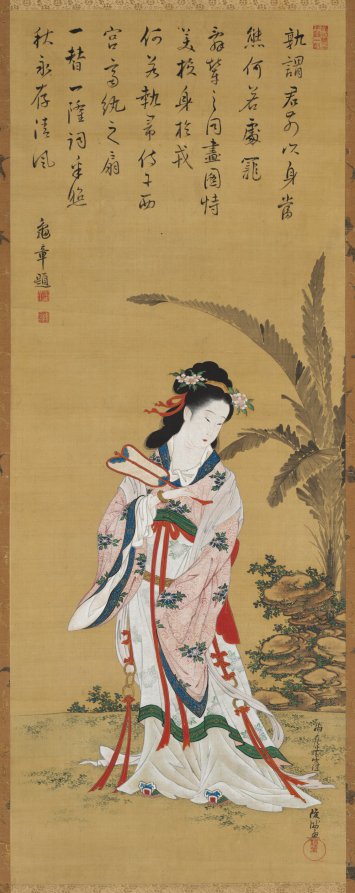
The Materiality of Chinese Beauty: Silk and the Legacy of Imperial Weaving
In the hushed ateliers of London’s Savile Row, where precision tailoring meets centuries of craft, one material commands a reverence that transcends mere fabric: silk. For the Lauren Fashion Heritage Lab, the study of Chinese beauty through silk is not an exercise in nostalgia but a rigorous inquiry into how imperial weaving techniques have shaped global luxury. The legacy of imperial silk weaving—rooted in the dynastic workshops of Suzhou, Nanjing, and Hangzhou—offers a profound lesson in materiality, where beauty is not skin-deep but woven into the very warp and weft of cultural identity. This artifact examines how silk, as a material, embodies Chinese aesthetic principles of harmony, refinement, and impermanence, and how its imperial heritage continues to inform contemporary fashion’s pursuit of authenticity.
The Imperial Workshop: A Crucible of Craft
To understand Chinese beauty through silk, one must first appreciate the imperial weaving workshops (官办织造) that operated under the Ming and Qing dynasties. These were not mere factories but state-sanctioned academies of artistry, where master weavers—often from hereditary families—produced textiles exclusively for the emperor, his court, and the bureaucratic elite. The Jiangnan region, particularly Suzhou, became the epicentre of this production, with its humid climate and mulberry groves yielding the finest mulberry silk. The kesi (cut-silk) technique, for instance, involved weaving with fine silk threads to create tapestry-like images—a process so laborious that a single robe could take months or years to complete. This was not decoration; it was a statement of cosmic order. The emperor’s dragon robe, adorned with the twelve symbols of imperial authority, was a microcosm of the universe, where each thread signified moral rectitude and celestial harmony.
What distinguishes imperial silk from other luxury textiles is its materiality as a carrier of meaning. The weight, sheen, and drape of silk were not arbitrary; they were calibrated to reflect the wearer’s rank and virtue. A five-clawed dragon embroidered on a yellow robe was reserved for the emperor alone, while princes wore four-clawed dragons on blue or azure grounds. The colour yellow, specifically the shade known as “imperial yellow,” was derived from the sophora japonica plant, a dye that required exacting proportions to achieve its luminous, unctuous hue. This was not mere aesthetics; it was a language of power, where the material itself—its origin, its colour, its weave—communicated hierarchy and propriety. For the modern luxury house, this legacy underscores the importance of provenance and craftsmanship as markers of value. A Savile Row suit, after all, is not just a garment; it is a testament to the tailor’s lineage and the cloth’s heritage.
Beauty as Harmony: The Aesthetic of Silk
Chinese beauty, as articulated through silk, is rooted in the concept of he (和), or harmony. This is not the static symmetry of Western classicism but a dynamic balance between opposites: lightness and weight, opacity and translucency, structure and fluidity. Imperial silk weaving achieved this through meticulous attention to yarn twist and weave density. A satin weave, for example, produced a glossy surface that reflected light like still water, while a gauze weave created a diaphanous, breathable fabric ideal for summer robes. The beauty lay in the interplay—the way a sleeve would fall in soft folds, or how a collar would frame the face with a subtle sheen. This is a materiality that demands a certain embodied knowledge: the tailor must understand how silk behaves under the needle, how it breathes with the body, and how it ages with grace.
Consider the Ming dynasty’s “cloud collar” (云肩), a decorative shoulder piece often embroidered with auspicious motifs like bats (for happiness) and peonies (for prosperity). The silk base was not merely a canvas; it was a participant in the design. The weight of the silk ensured the collar sat elegantly on the shoulders, while the embroidery—often in gold thread—created a tactile contrast that invited touch. This is a beauty that engages all senses, not just sight. For the contemporary designer, this suggests that materiality is not a backdrop but a co-author of the garment’s narrative. A silk dress from a heritage house like Lauren must honour this principle: the fabric should dictate the cut, not the other way around.
The Legacy of Impermanence: Silk as a Living Archive
Imperial silk weaving also teaches us about impermanence as a form of beauty. Unlike the durable wools and cottons of the West, silk is a protein fibre that degrades over time—its lustre fades, its edges fray, and its colours shift. This is not a flaw but a feature. In Chinese aesthetics, the wabi-sabi of silk—its tendency to acquire a patina of wear—is celebrated as a sign of authenticity. The imperial court valued aged silk for its softness and depth, often passing robes down through generations as heirlooms. The Qing dynasty’s “court robe” (朝服), with its intricate embroidery of dragons and waves, was designed to be worn and re-worn, each crease and stain telling a story of ritual and ceremony.
This legacy challenges the modern fashion industry’s obsession with novelty. In an era of fast fashion and synthetic blends, the materiality of silk demands patience and care. A Savile Row tailor might advise a client that a silk suit will not last forever, but its beauty will deepen with time—much like a fine wine or a well-loved book. For the Lauren Fashion Heritage Lab, this is a call to preserve not just the techniques of imperial weaving but the philosophy behind them: that luxury is not about perfection but about meaningful endurance. The silk road was not just a trade route; it was a conduit for ideas about beauty, where Chinese silk influenced everything from Byzantine brocades to Japanese kimonos. Today, as we face environmental and ethical challenges, the legacy of imperial silk offers a model of slow luxury—one that values craft over quantity, and heritage over hype.
Conclusion: The Thread That Binds
In the context of the Lauren Fashion Heritage Lab, the study of Chinese beauty through silk is a reminder that materiality is never neutral. The imperial silk weaving of China was not just a technical achievement but a philosophical one, where beauty was understood as a harmonious relationship between material, maker, and wearer. For the modern fashion house, this legacy demands a return to craftsmanship—not as a marketing gimmick but as a core value. A silk garment from a heritage brand should carry the weight of history, the precision of technique, and the humility of impermanence. It should be, in the words of a Savile Row cutter, “a thing of beauty that ages with grace.”
As we continue to research and preserve these traditions, we must ask: How can we translate the materiality of imperial silk into a contemporary language of luxury? The answer lies not in replication but in reinterpretation. By honouring the principles of harmony, provenance, and impermanence, we can create garments that speak to both the past and the future. For in the end, silk is not just a fabric; it is a thread that binds us to a legacy of beauty that transcends time and place.