← BACK TO ARCHIVES
Silk
Heritage Synthesis: Portrait of Wen Zhengming
Curated on Apr 28, 2026 // Node: LDN-01
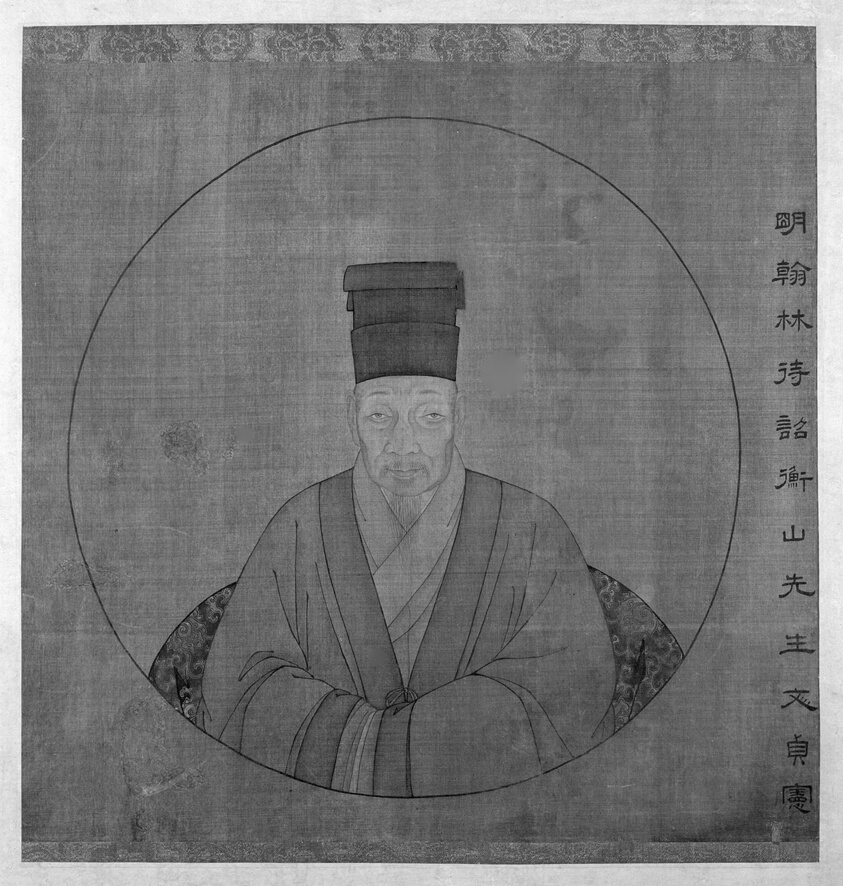
The Materiality of Ming Elegance: A Study of the Portrait of Wen Zhengming
In the hushed ateliers of London’s Savile Row, where the finest cloth is measured with a reverence that borders on the sacred, we understand that materiality is not merely a substrate—it is the very language of legacy. The *Portrait of Wen Zhengming*, an album leaf executed in ink and light color on silk, speaks this language with a fluency that transcends centuries. As a Senior Heritage Specialist at the Lauren Fashion Heritage Lab, I present this artifact not as a static relic, but as a living dialogue between craftsmanship, identity, and the enduring pursuit of fluid elegance.
The Silk as a Second Skin
Silk, in the context of Ming Dynasty China (1368–1644), was more than a textile; it was a declaration of cultural and social standing. The album leaf, measuring a modest yet intimate scale, is crafted from a finely woven silk that possesses a luminous, almost ethereal quality. This is not the heavy, brocaded silk of imperial courts, but a lighter, more refined variant—often referred to as *juan* or *sha*—prized for its ability to absorb ink and pigment with a subtle, diffused glow. The silk’s weave is tight, yet its surface retains a supple resilience, akin to the drape of a bespoke wool suiting that holds its shape while yielding to the body’s movement.
The choice of silk for a portrait of Wen Zhengming (1470–1559), a preeminent painter, calligrapher, and scholar-official of the Wu School, is deeply intentional. Wen was a paragon of the literati ideal—a man whose artistry was inseparable from his moral and intellectual cultivation. Silk, with its connotations of refinement, purity, and transience, mirrors the scholar’s own philosophy: that true elegance is found not in ostentation, but in the quiet mastery of material and form. The silk’s natural sheen catches the light, lending the portrait a living quality, as if the subject might step from the album leaf and into the room. This is the same principle that guides a Savile Row cutter: the fabric must breathe, must move, must *live* with the wearer.
Ink and Light Color: The Palette of Restraint
The portrait employs ink and light color—a technique known as *dan cai*—which is the visual equivalent of a perfectly cut morning coat: restrained, precise, and utterly devoid of excess. The ink, derived from pine soot and animal glue, is applied with a brush that dances between opacity and transparency. Wen Zhengming’s face is rendered with delicate, almost imperceptible lines that define his features without hardening them. The eyes, in particular, are a study in subtlety: a single stroke of dark ink suggests the pupil, while a wash of light gray creates the illusion of depth and introspection. This is not a portrait that shouts; it whispers, inviting the viewer to lean in, to study, to *know* the man.
The light color—a pale wash of ochre and faint green—is applied sparingly, perhaps to Wen’s robe or the simple cap that crowns his head. This restraint is a hallmark of the Wu School, which championed the aesthetic of *wenrenhua* (literati painting) over the more vivid, decorative styles of court painters. In the same way that a Savile Row tailor might use a single, perfectly placed pocket square to elevate a charcoal suit, the artist here uses color not to dazzle, but to *define*. The ochre suggests the warmth of Wen’s character; the green hints at the natural world he so often painted—a world of bamboo, plum blossoms, and winding streams.
Fluid Elegance: The Brush as a Tailor’s Needle
The term “fluid elegance” is not a mere descriptor; it is a technical principle. In the *Portrait of Wen Zhengming*, the brushstrokes flow with the same rhythm as a tailor’s needle through silk—each line is a decision, each curve a commitment. The artist, likely a contemporary or disciple of Wen, has captured the scholar’s posture with a grace that defies the static nature of a portrait. Wen’s shoulders are slightly rounded, as if in contemplation; his hands are folded, one over the other, in a gesture of scholarly repose. The folds of his robe are rendered with long, uninterrupted strokes that mimic the fall of silk itself, creating a visual echo of the album leaf’s materiality.
This fluidity is not accidental. It is the result of years of disciplined practice—what the Chinese call *gongfu*—a term that, in the context of Savile Row, translates to the mastery of craft through repetition and refinement. The artist’s brush must be as steady as a tailor’s hand, the ink as consistent as a thread’s tension. The result is a portrait that feels alive, as if Wen Zhengming might shift his gaze or adjust his sleeve. This is the pinnacle of heritage: a work that transcends its medium to become a presence.
Context and Legacy: The Scholar as a Garment of Culture
To understand the *Portrait of Wen Zhengming* is to understand the Ming Dynasty’s reverence for the scholar-official as a cultural archetype. Wen was not merely a painter; he was a calligrapher, poet, and historian—a polymath whose life embodied the Confucian ideal of the “complete man.” The portrait, therefore, is not a likeness in the Western sense; it is a *representation* of virtue. The silk album leaf, often mounted in an album with other works, would have been viewed in private, perhaps in a scholar’s studio, where it served as a reminder of Wen’s teachings and aesthetic standards.
In the context of Lauren Fashion Heritage Lab, this artifact offers profound lessons for contemporary luxury. The silk’s luminosity, the ink’s restraint, the brush’s fluidity—these are not antiquated techniques but timeless principles. They speak to the value of material integrity, the power of subtlety, and the importance of craftsmanship that honors both the maker and the user. A Savile Row suit, like this portrait, is not about the fleeting trends of fashion; it is about the enduring dialogue between cloth and character.
Conclusion: The Thread That Binds
The *Portrait of Wen Zhengming* is more than an artifact; it is a masterclass in the art of presence. Its silk album leaf, its ink and light color, its fluid elegance—all converge to create a work that is at once intimate and universal. As we at the Lauren Fashion Heritage Lab continue to explore the intersections of heritage and modernity, we return to this portrait as a touchstone. It reminds us that true luxury is not about abundance, but about *essence*—the careful selection of material, the disciplined application of technique, and the quiet confidence of a man who knows his worth.
In the end, whether on silk or on Savile Row, the goal is the same: to create something that endures, not because it is loud, but because it is true. And in that truth, we find the thread that binds centuries, cultures, and crafts into a single, seamless elegance.
Heritage Lab Insight
Lab Insight: AIC Silk Archive Node #6793.