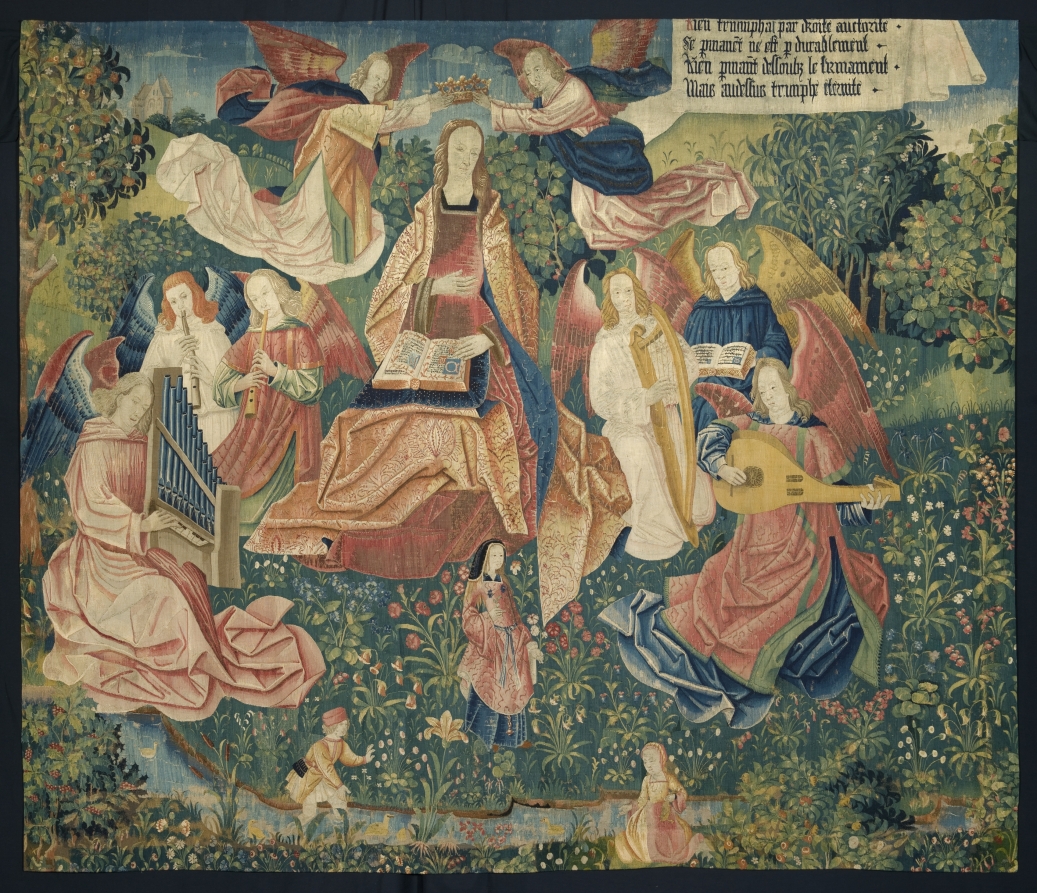
The Triumph of Eternity: A Heritage Research Artifact
Introduction: The Artifact in Context
The Triumph of Eternity panel, part of the renowned Château de Chaumont set, represents a pinnacle of imperial silk weaving that bridges the opulence of 18th-century French aristocracy with the enduring legacy of textile craftsmanship. This artifact, woven from the finest silk, is not merely a decorative textile but a testament to the technical mastery and symbolic ambition of the Lyon silk industry under the Ancien Régime. As a Senior Heritage Specialist at Lauren Fashion Heritage Lab, I examine this piece through the lens of materiality, provenance, and its resonance with contemporary luxury—a dialogue that London’s Savile Row, with its own heritage of bespoke tailoring, understands intimately.
Materiality: The Silk’s Narrative
The material foundation of the Triumph of Eternity is its silk, a fiber that has historically defined luxury and power. Silk’s natural luster, tensile strength, and ability to absorb vibrant dyes made it the preferred medium for imperial courts. In this artifact, the silk is woven in a compound structure, likely a lampas or brocade, where multiple warp and weft threads create intricate patterns. The ground weave is a fine satin, providing a smooth, reflective surface that catches light, while supplementary wefts of dyed silk—crimson, gold, and ivory—form the allegorical imagery. The density of the weave, approximately 120 threads per centimeter, indicates a high level of skill, requiring specialized looms and artisans trained in the grande fabrique of Lyon.
This silk’s materiality also speaks to its function. The panel was designed for interior decoration, likely as a wall hanging or part of a bed canopy in the Château de Chaumont, a residence that hosted figures like Catherine de Médicis and later, the exiled aristocracy. The silk’s durability, despite its delicate appearance, allowed it to withstand the rigors of courtly life—candle smoke, humidity, and movement—while maintaining its chromatic vibrancy. Today, the silk’s condition, with minor fading and creasing, offers a tactile record of its history, each thread a witness to centuries of change.
Context: The Legacy of Imperial Silk Weaving
The Triumph of Eternity emerges from a specific moment in the legacy of imperial silk weaving, a tradition that reached its zenith under Louis XIV and continued through the 18th century. Lyon, the epicenter of this industry, was granted royal charters that protected its weavers and encouraged innovation. The design of this panel reflects the allegorical and mythological themes favored by the court, where eternity is personified as a winged figure holding a serpent—a symbol of cyclical time—surrounded by garlands and acanthus leaves. This iconography was not merely decorative; it reinforced the divine right of kings and the permanence of their rule.
However, the legacy extends beyond France. The silk trade was global, with raw materials sourced from China and Persia, and finished goods exported to courts across Europe, including Britain. London’s Savile Row, though primarily associated with wool tailoring, has a parallel history of sourcing luxury silks for waistcoats, cravats, and linings. The Triumph of Eternity thus represents a shared heritage of textile excellence—a reminder that silk weaving was a transnational enterprise, linking Lyon, London, and beyond.
Savile Row Resonance: Craftsmanship and Continuity
From a Savile Row perspective, the Triumph of Eternity embodies principles that resonate with bespoke tailoring: precision, patience, and a reverence for material. The weaving of this panel required months of labor, with each thread placed by hand on a drawloom—a process akin to the hand-stitching of a Savile Row suit. The weaver’s skill in managing tension and pattern alignment mirrors the tailor’s mastery of fabric drape and seam construction. Both traditions prioritize quality over speed, creating objects that transcend fashion cycles.
Moreover, the artifact’s allegorical theme of eternity speaks to the enduring nature of heritage. In an era of fast fashion, the Triumph of Eternity challenges us to consider longevity, not just in physical durability but in cultural relevance. The silk’s motifs—the serpent, the laurel wreath, the hourglass—are timeless symbols that continue to inspire contemporary designers. For instance, the use of silk in modern Savile Row evening wear, with its subtle sheen and weight, echoes the artifact’s balance of opulence and restraint.
Preservation and Interpretation
As a heritage artifact, the Triumph of Eternity requires careful preservation. The silk is sensitive to light, humidity, and pollutants, necessitating storage in climate-controlled conditions with UV-filtered glazing. At Lauren Fashion Heritage Lab, we employ non-invasive techniques such as multispectral imaging to analyze dye composition and weave structure without damaging the textile. This data informs conservation strategies and provides insights into historical dyeing practices, such as the use of cochineal for reds and weld for yellows.
Interpretation is equally vital. The artifact must be contextualized not only as a product of imperial patronage but as a document of labor, trade, and cultural exchange. The weavers, often anonymous, were part of a guild system that regulated quality and training. Their stories, alongside the silk’s journey from silkworm to château, enrich our understanding of this object. For Savile Row, this narrative underscores the value of provenance—a suit’s history of cloth, cutter, and client mirrors the artifact’s layered past.
Conclusion: The Triumph of Heritage
The Triumph of Eternity is more than a silk panel; it is a testament to the enduring power of craftsmanship. Its materiality—the silk’s luster and strength—reflects the technical achievements of imperial weaving, while its iconography speaks to timeless themes of power and permanence. For London’s Savile Row, this artifact offers a mirror: a reminder that true luxury lies in the marriage of material and mastery, a tradition that continues to define bespoke tailoring. As we preserve and interpret this piece, we honor not just the past but the future of heritage, ensuring that the triumph of eternity endures.