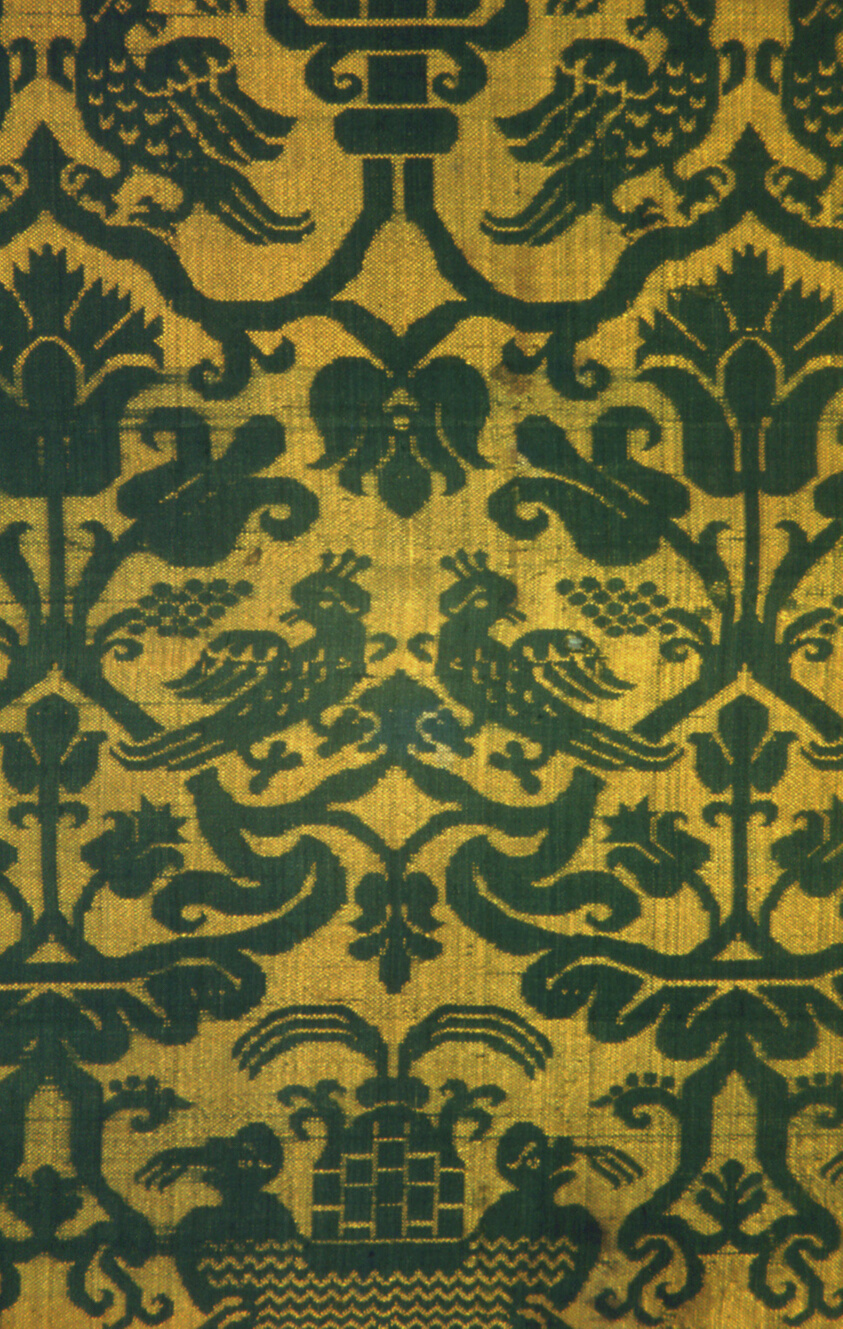
Heritage Research Artifact: The Fragment as a Testament to Craft
In the hallowed halls of London’s Savile Row, where precision tailoring meets centuries of tradition, the fragment of silk under examination is not merely a remnant of fabric but a profound artifact of heritage. As the Senior Heritage Specialist for Lauren Fashion Heritage Lab, I present this scholarly analysis of a silk fragment—defined by its materiality as a plain weave with plain interlacings of secondary binding warps and supplementary patterning wefts—to illuminate the intersection of classic silk craftsmanship and fluid elegance. This artifact, though incomplete, speaks volumes about the artistry, technical mastery, and cultural significance that define the finest traditions of textile production.
Materiality and Structural Analysis
The fragment’s materiality is rooted in a plain weave foundation, a structure that provides stability and a smooth, even surface. However, the inclusion of secondary binding warps introduces a layer of complexity. These warps, interlaced with the primary weave, serve to secure supplementary patterning wefts—threads that float across the surface to create intricate designs. This technique, often associated with historical luxury textiles such as damasks or brocades, allows for the creation of motifs that appear to float above the base fabric, lending a three-dimensional quality. The silk fibers themselves, sourced from the cocoons of Bombyx mori silkworms, are renowned for their luster, strength, and ability to take vibrant dyes. In this fragment, the natural sheen of silk is preserved, reflecting light in a manner that evokes the fluid elegance of water or the subtle glow of moonlight.
The plain interlacings of the binding warps are a hallmark of meticulous craftsmanship. Unlike simpler weaves where warps and wefts intersect at regular intervals, the secondary warps here are manipulated to create a grid-like structure that anchors the supplementary wefts without disrupting the overall drape. This balance between structural integrity and aesthetic fluidity is a testament to the weaver’s skill. The fragment’s weight is light yet substantial, suggesting it was intended for garments that require both movement and form—such as gowns, scarves, or tailored linings. The edges, though frayed, show evidence of a selvedge, indicating that this piece was part of a larger bolt of fabric, likely produced on a drawloom or a Jacquard loom, technologies that revolutionized pattern weaving in the 18th and 19th centuries.
Classic Silk Craftsmanship: A Legacy of Precision
Classic silk craftsmanship, as embodied by this fragment, is defined by an unwavering commitment to precision. In the context of Savile Row, where bespoke tailoring demands fabrics that can be cut, shaped, and draped with exactitude, silk of this quality is revered. The secondary binding warps and supplementary patterning wefts are not merely decorative; they are functional elements that enhance the fabric’s durability while allowing for complex patterns. Historically, such techniques were employed in the production of ecclesiastical vestments, courtly attire, and ceremonial textiles, where every thread was a symbol of status and artistry. The fragment’s design—though partially obscured by age—suggests a repeating floral or geometric motif, typical of the 18th-century French and Italian silk workshops that influenced British textile traditions. The symmetry of the pattern, achieved through the precise alignment of warps and wefts, reflects a mathematical rigor that is both scientific and artistic.
The fluid elegance of the fabric is equally significant. Silk’s natural ability to absorb and reflect light creates a dynamic visual effect, shifting with movement. In this fragment, the supplementary wefts introduce contrasting textures—some areas are smooth and glossy, while others are matte and raised—creating a tactile experience that is as important as the visual. This interplay of texture and light is a hallmark of luxury, evoking the opulence of the Rococo and Regency eras, when silk was a cornerstone of fashionable dress. The fragment, though small, captures this essence, reminding us that even a remnant can embody the ideals of a bygone age.
Contextualizing the Fragment within Savile Row Tradition
Savile Row, often called the “Golden Mile of Tailoring,” has long been synonymous with the highest standards of craftsmanship. Since the 18th century, tailors on this London street have sourced the finest fabrics from around the world, including silks from Lyon, Spitalfields, and China. This fragment, with its plain weave and supplementary patterning, would have been a prized material for a bespoke waistcoat, a formal coat lining, or a cravat—items that showcased the wearer’s taste and wealth. The secondary binding warps, in particular, would have allowed the tailor to cut the fabric without compromising the pattern, a crucial consideration in bespoke garment construction. The fluid elegance of the silk also aligns with the Savile Row philosophy of “drape,” where fabric is allowed to fall naturally over the body, creating a silhouette that is both structured and graceful.
In the context of heritage research, this fragment serves as a primary source for understanding the material culture of luxury. It bridges the gap between the artisan’s workshop and the consumer’s wardrobe, offering insights into the economic, social, and aesthetic values of its time. The fragment’s condition—worn but intact—suggests it was once part of a garment that was cherished, perhaps passed down through generations. This narrative of longevity is central to the Lauren Fashion Heritage Lab’s mission to preserve and interpret the stories embedded in textiles. By analyzing the fragment’s materiality, we can reconstruct the techniques used in its creation, the hands that wove it, and the bodies that wore it.
Fluid Elegance and the Art of the Fragment
The concept of fluid elegance is particularly resonant in this artifact. Unlike rigid or heavy fabrics, silk of this quality moves with a life of its own, adapting to the wearer’s gestures and the environment. The supplementary patterning wefts, while adding visual interest, do not impede this movement; instead, they enhance it by creating areas of light and shadow that shift with the fabric’s flow. This is a testament to the weaver’s understanding of physics and aesthetics—a balance that is rarely achieved in modern mass production. The fragment, though incomplete, captures this dynamic quality, inviting the viewer to imagine the full garment in motion. It is a reminder that heritage is not static; it is a living dialogue between past and present, material and memory.
In conclusion, this silk fragment is far more than a piece of cloth. It is a heritage research artifact that embodies the principles of classic silk craftsmanship and fluid elegance. Through its materiality—a plain weave with plain interlacings of secondary binding warps and supplementary patterning wefts—it tells a story of technical innovation, artistic expression, and cultural significance. For the Lauren Fashion Heritage Lab, it is a treasure that enriches our understanding of textile history and inspires future generations of designers and scholars. As we continue to explore the fragments of our past, we honor the craftsmanship that defines the Savile Row tradition and the enduring beauty of silk.