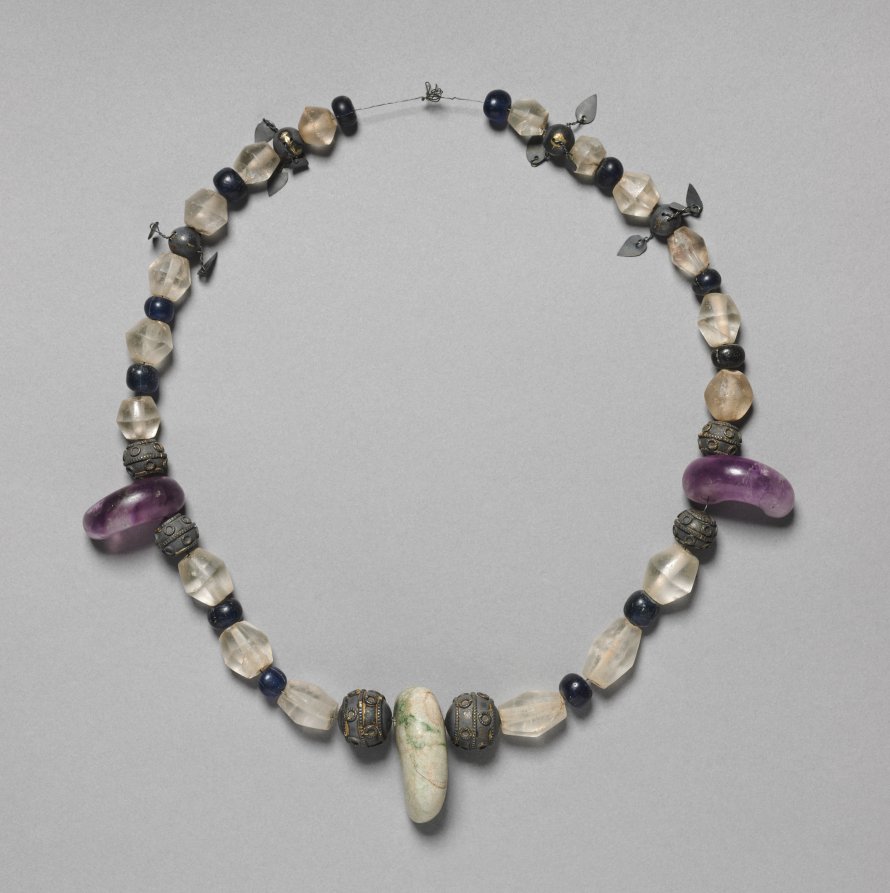
The Silk Necklace: A Study in Imperial Legacy and Modern Craftsmanship
In the hushed corridors of London’s Savile Row, where bespoke tailoring meets centuries of tradition, the silk necklace emerges as an artifact of profound heritage. At the Lauren Fashion Heritage Lab, we examine this object not merely as an accessory, but as a tangible link to the imperial silk weaving legacy—a narrative woven through dynasties, trade routes, and the meticulous hands of artisans. This paper explores the materiality of silk in necklace form, tracing its journey from the imperial looms of China to the refined ateliers of contemporary fashion, where heritage is both preserved and reimagined.
Materiality and the Silk Thread
Silk, derived from the cocoon of the Bombyx mori silkworm, possesses a unique materiality that distinguishes it from other fibers. Its tensile strength, lustrous sheen, and thermal regulation properties have made it a textile of choice for royalty and nobility since antiquity. In the context of a necklace, silk is often braided, knotted, or woven into cords that support pendants or form intricate chokers. The material’s lightness allows for elaborate designs without burdening the wearer, while its natural dye affinity enables a spectrum of colors—from the deep indigos of Ming dynasty court robes to the muted ivories favored in Edwardian England. The tactile experience of silk against the skin is one of subtle luxury, a hallmark of imperial craftsmanship.
Historically, the production of silk was a state secret in China, guarded by the imperial court for millennia. The Silk Road, a network of trade routes established during the Han Dynasty (206 BCE–220 CE), facilitated the exchange of silk for spices, gold, and ideas. However, the monopoly on sericulture—the cultivation of silkworms—remained intact until the sixth century, when Byzantine monks smuggled silkworm eggs to Constantinople. This act democratized silk production, yet the imperial legacy persisted in the form of sumptuary laws and guild systems. In Europe, silk weaving became synonymous with power, as seen in the opulent fabrics of Louis XIV’s Versailles or the ceremonial robes of the British monarchy. The necklace, as a personal adornment, often incorporated silk cords to suspend precious gems or religious relics, blending the sacred with the sovereign.
Imperial Weaving: From Suzhou to Savile Row
The imperial silk weaving legacy is most vividly embodied in the workshops of Suzhou, China, where for centuries, artisans produced brocades, satins, and gauzes for the Forbidden City. These textiles were characterized by intricate patterns—dragons, phoenixes, and clouds—symbolizing cosmic harmony and imperial authority. The techniques employed, such as kesi (cut silk tapestry) and yunjin (cloud brocade), required extraordinary precision. A single brocade could take months to complete, with weavers manipulating thousands of threads per inch. This dedication to craft is echoed in the Savile Row ethos, where a bespoke suit may require over 80 hours of handwork. The silk necklace, though smaller in scale, demands similar expertise: the braiding of multiple silk strands into a cohesive form, the knotting of pearls or gemstones, and the finishing of clasps with hand-stitched silk thread.
The transition of silk from imperial looms to Western fashion houses was facilitated by the East India Company and later by luxury brands such as Hermès and Gucci, who adapted Chinese motifs for European tastes. However, the true custodians of this legacy are the independent artisans and heritage brands that maintain traditional techniques. In London, establishments like the Royal School of Needlework and the Worshipful Company of Weavers preserve the knowledge of silk manipulation. For the Lauren Fashion Heritage Lab, the silk necklace serves as a case study in how materiality informs design: the drape of a silk cord influences the necklace’s movement, the sheen dictates the interplay of light, and the durability ensures heirloom status. This is not fast fashion; it is slow, deliberate creation.
Cultural Resonance and Modern Interpretation
The silk necklace’s cultural resonance extends beyond its physical form. In imperial China, silk was considered a conduit for spiritual energy, or qi, and necklaces were often worn as talismans. The Tibetan prayer necklace, or mala, uses silk threads to string 108 beads, each representing a mantra. Similarly, in Victorian England, mourning jewelry incorporated black silk cords to hold jet or onyx, reflecting societal rituals of grief. Today, designers reinterpret these traditions through a contemporary lens. For instance, a silk necklace might feature a minimalist geometric pendant suspended on a hand-dyed silk cord, bridging ancient symbolism with modern aesthetics. This fusion is evident in collections by brands like Bottega Veneta, where intrecciato weaving techniques are applied to silk, or in the work of independent designers who source silk from ethical, heritage mills in Como, Italy.
The Lauren Fashion Heritage Lab’s research emphasizes that materiality is not static; it evolves with context. The silk necklace, when studied through the lens of imperial legacy, reveals a dialogue between past and present. The same material that adorned empresses now graces the necks of discerning clients on Savile Row, who value provenance and craftsmanship. This shift from imperial to individual does not diminish the heritage; rather, it democratizes luxury, making it accessible to those who appreciate the story behind the object. The necklace becomes a wearable artifact, a conversation starter that invites reflection on the Silk Road, the industrial revolution, and the enduring appeal of natural fibers.
Preservation and the Future of Silk Craft
Preserving the legacy of imperial silk weaving requires more than archival study; it demands active engagement with living traditions. The Lab collaborates with weavers in Suzhou and dyers in Kyoto to document techniques and source materials. For the silk necklace, this means ensuring that the silk is ethically harvested, dyed with natural pigments, and assembled by hand. The rise of synthetic alternatives poses a threat to this heritage, but discerning consumers increasingly seek authenticity. Savile Row’s clientele, for example, often commissions custom silk necklaces to complement bespoke garments, valuing the material’s breathability and timeless elegance. The future of this craft lies in education—training a new generation of artisans who understand the chemical properties of silk, the history of its patterns, and the cultural significance of its colors.
In conclusion, the silk necklace is a microcosm of imperial silk weaving legacy, encapsulating millennia of trade, artistry, and symbolism. Its materiality—light yet strong, lustrous yet subtle—reflects the paradox of luxury: it is both ephemeral and enduring. As we continue to research and preserve this heritage, we honor the hands that spun the silk, the looms that wove the threads, and the wearers who carry the story forward. On Savile Row, where tradition meets innovation, the silk necklace remains a testament to the power of material culture—a thread connecting empires to individuals, past to present.