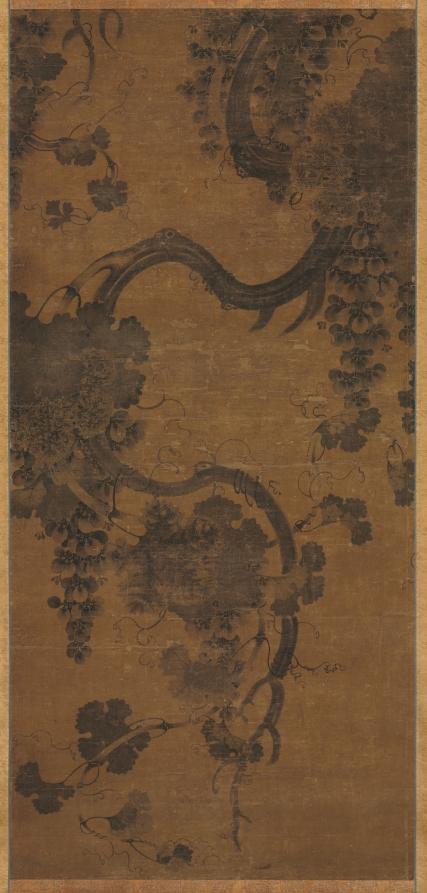
The Grape in Silk: A Study of Imperial Weaving’s Enduring Legacy
Introduction: The Vine as a Textile Motif
In the hushed ateliers of London’s Savile Row, where the cut of a lapel is a matter of quiet reverence, the language of cloth speaks volumes. Among the most evocative motifs in the lexicon of luxury textiles is the grape—a symbol of abundance, fertility, and the cultivated pleasures of life. When rendered in silk, particularly within the context of imperial weaving traditions, the grape transcends mere ornamentation. It becomes a testament to the mastery of material, the precision of technique, and the enduring narrative of power and refinement. This artifact, a fragment of heritage, examines the grape as a subject in silk, tracing its lineage from the looms of ancient empires to the bespoke workshops of today.
Materiality: The Unrivaled Nature of Silk
Silk is not merely a fiber; it is a medium of transformation. Its natural luster, tensile strength, and capacity for absorbing the most vibrant dyes make it the ideal canvas for the grape motif. The imperial silk weavers of China, Persia, and later the Byzantine and Ottoman courts understood this implicitly. The grape, with its clustered form and sinuous tendrils, demands a fabric that can capture both the density of the fruit and the fluidity of the vine. Silk’s filament, drawn from the cocoon of the Bombyx mori, allows for a warp and weft that can articulate the subtlest gradations of light and shadow. In a Savile Row context, this materiality is non-negotiable. A silk tie or pocket square bearing a grape pattern is not an accessory; it is a statement of heritage, a nod to the weaver’s art that has been honed over millennia.
Imperial Legacy: The Grape in Courtly Silk
The legacy of imperial silk weaving is inextricably linked to the grape. In the Tang dynasty (618–907 AD), Chinese silks featuring grapevines and scrolling foliage were reserved for the emperor and his court. These designs, often woven in kesi (silk tapestry) or jin (brocade), were not merely decorative. They were imbued with symbolism: the grape represented prosperity and the continuity of the imperial line. The weavers, operating under strict imperial patronage, achieved a level of technical sophistication that remains unmatched. The grape clusters were rendered with a three-dimensional quality, achieved through the manipulation of multiple weft threads and the use of gold-wrapped silk. This technique, known as zhaojin, created a surface that shimmered with the opulence of the court.
Similarly, in Safavid Persia (1501–1736), silk weavers in Isfahan produced textiles that celebrated the grape as a symbol of paradise. The Safavid silks, often woven in lampas or velvet, depicted grapevines in a state of perpetual harvest. The motifs were not static; they flowed across the fabric, echoing the gardens of the Persian imagination. The use of silk allowed for a palette of deep purples, emerald greens, and golds that mimicked the natural world with an almost uncanny fidelity. These textiles were not just garments; they were portable gardens, a reminder of the divine bounty promised in the afterlife. For the modern connoisseur on Savile Row, this heritage is palpable. A silk scarf or lining bearing a grape motif connects the wearer to a lineage of craftsmanship that prized both beauty and meaning.
Technical Mastery: Weaving the Vine
To understand the grape in silk is to understand the weaver’s art. The complexity of the grape motif lies in its organic form. Unlike geometric patterns, the grape requires a mastery of compound weaves and float threads. In imperial workshops, the weaver worked from a pattern draft that dictated the placement of every thread. The grape cluster, with its multiple spheres, demanded a technique known as shading, where different colored wefts were introduced to create the illusion of volume. The tendrils, delicate and curling, required a satin weave to achieve the necessary fluidity. The leaves, often veined with gold or silver, were woven using a brocading technique, where supplementary wefts were added to create a raised, tactile surface.
In the context of Savile Row, this technical mastery is preserved in the work of specialist mills such as Holland & Sherry and Scabal, which continue to produce silk fabrics using traditional jacquard looms. The jacquard mechanism, invented in 1801, is itself a descendant of the drawloom used by imperial weavers. It allows for the precise control of individual warp threads, enabling the reproduction of complex motifs like the grape. The result is a fabric that is not only beautiful but also structurally sound, capable of withstanding the rigors of bespoke tailoring. A Savile Row suit lined in a grape-patterned silk is a quiet assertion of quality, a recognition that the best materials are those with a history.
Symbolism and the Modern Wardrobe
The grape motif, when rendered in silk, carries a weight of meaning that transcends fashion. In the imperial context, it was a symbol of power and divine favor. In the Renaissance, it was adopted by European courts as a sign of classical learning and the revival of antiquity. Today, on Savile Row, the grape is a motif of discernment. It speaks to a client who understands that luxury is not about ostentation but about the quiet appreciation of heritage. A silk tie with a grape pattern, worn with a chalk-stripe suit, is a conversation piece—a reference to the weaver’s art that only the initiated will recognize.
Moreover, the grape in silk is a reminder of the cyclical nature of taste. Just as the imperial courts of China and Persia prized these textiles, so too does the modern gentleman. The grape motif has been revived by houses such as Drake’s and Turnbull & Asser, who source their silks from the same regions that once supplied the emperors. The materiality of silk ensures that the grape remains a living motif, one that can be adapted to contemporary aesthetics without losing its historical resonance.
Conclusion: A Legacy Woven in Silk
The grape in silk is more than a pattern; it is a heritage artifact. It embodies the technical mastery of imperial weavers, the symbolic richness of courtly culture, and the enduring appeal of a material that has been prized for millennia. For the Savile Row client, it is a choice that reflects a deep understanding of quality—a recognition that the best things in life are those that have been cultivated with care. As you consider your next bespoke commission, remember the grape. It is not merely a fruit; it is a thread that connects you to the looms of history.