The Terracotta Kylix and the Architecture of Restraint: Etruscan Lineage in 2026 Old Money Silhouettes
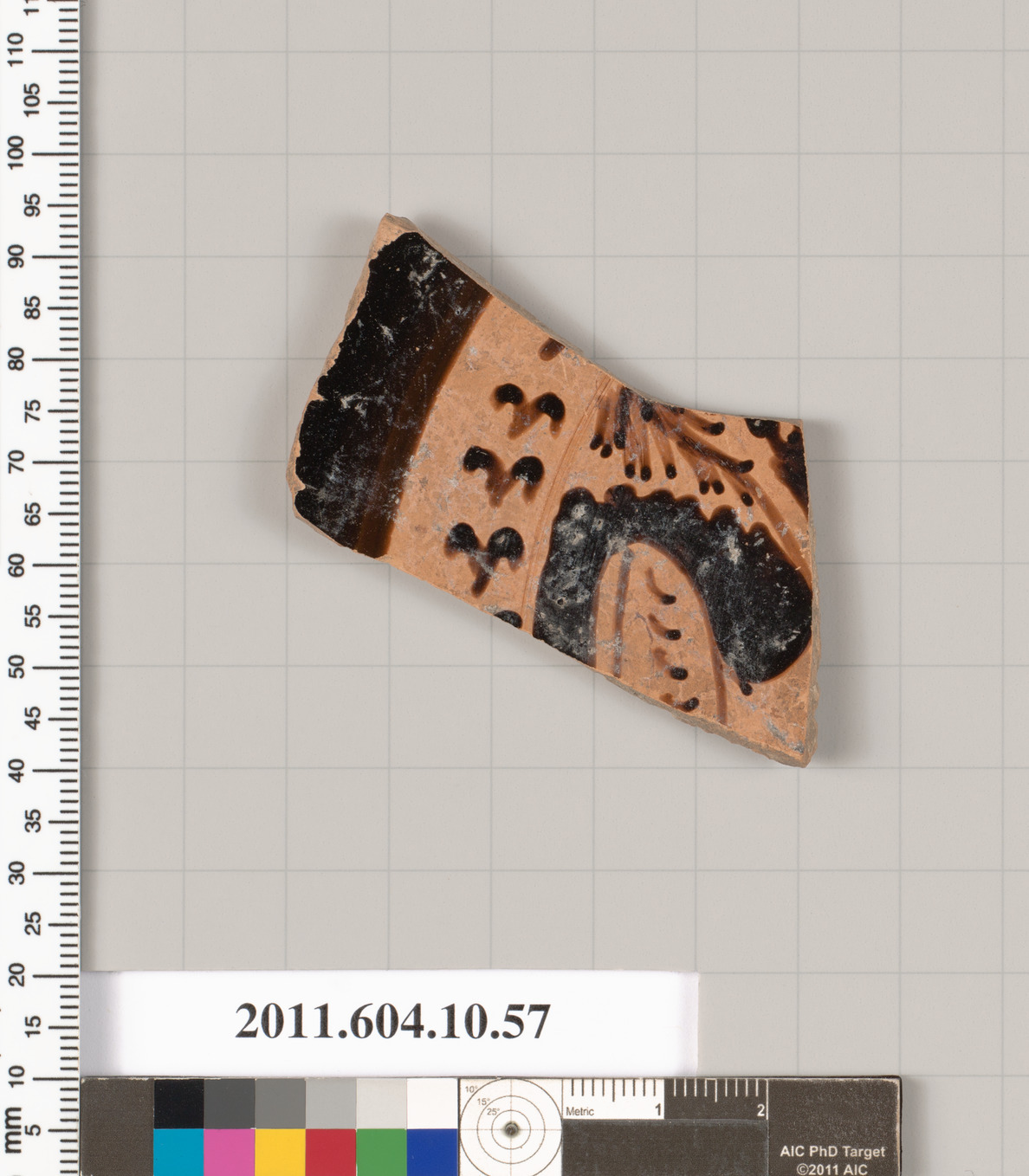
At the Lauren Fashion Heritage Lab, the synthesis of internal archives with museum artifacts is not merely an exercise in historical reference—it is a dialectical process that reveals the deep genetic code of luxury. The Terracotta fragment of an Etruscan kylix, a drinking cup from the 6th century BCE, presents a seemingly improbable interlocutor for the Chinese aesthetic dualism encoded in our heritage: the tensile, monochrome dynamism of Han Gan’s Night-Shining White and the chromatic, organic harmony of Yun Shouping’s Hundred Flowers. Yet, within the Etruscan fragment’s fired clay, we discover a third term—a material and formal logic that directly informs the 2026 Old Money silhouette’s ethos of restrained power and tectonic elegance.
From Etruscan Pottery to Sartorial Structure: The Grammar of the Fragment
The kylix fragment—a shard of terracotta bearing the remnants of a painted symposium scene—embodies a principle that resonates with the Lauren archive’s most enduring codes: the beauty of the broken, the power of the partial. Unlike the pristine, continuous surfaces of Yun Shouping’s silk scrolls, the Etruscan fragment celebrates material honesty and structural integrity. Its fired clay is neither polished to a mirror finish nor draped in illusionistic color; it stands as a testament to the process of making. The black-figure technique, where silhouettes are painted in a slip that turns glossy black against the natural orange-red of the clay, creates a stark, graphic contrast that echoes Han Gan’s use of ink on silk. But where Han Gan’s horse is a metaphysical entity—a “dragon steed” straining against its tether—the Etruscan kylix is a functional object, a vessel for communal drinking. Its ornamentation serves a social, not solely spiritual, purpose.
This functionalist aesthetic directly informs the 2026 Old Money silhouette. The “terracotta logic” manifests in three key sartorial principles:
- Structural Honesty: Just as the kylix’s clay does not pretend to be marble, the 2026 silhouette rejects synthetic stiffness in favor of natural fiber architecture. Wool, linen, and cashmere are cut to reveal their weight and drape, not to disguise it. Shoulder pads are replaced by tailored, seamed constructions that echo the kylix’s fired strength—a “terracotta shoulder” that is broad but not padded, strong but not armored.
- Graphic Restraint: The black-figure technique’s economy of line—figures rendered in solid black against the clay ground—informs a new approach to contrast. In 2026, this appears as monochromatic layering with subtle tonal shifts: a charcoal wool blazer over a black cashmere turtleneck, the only “figure” being the sharp line of a lapel or the precise break of a trouser. This is the “Night-Shining White” principle applied to tailoring—maximum impact through minimal means.
- Fragment as Motif: The kylix’s broken edge, its irregular silhouette, becomes a design language. Jackets feature asymmetrical hems; trousers are cropped to reveal the ankle bone; sleeves are cut to a three-quarter length. These are not signs of decay but of curated incompleteness, a nod to the Etruscan fragment’s ability to suggest a whole that is more powerful in its partial state.
The Aesthetic Dialogue: Tension, Harmony, and the Terracotta Third
The Etruscan kylix fragment mediates between the two poles of our internal genetic code. Han Gan’s Night-Shining White is a study in kinetic tension—the horse’s energy is locked in a struggle with the tether and post. Yun Shouping’s Hundred Flowers is a study in organic harmony—the blossoms coexist in a timeless, peaceful garden. The Etruscan kylix, with its symposium scenes of reclining figures, musicians, and dancers, occupies a middle ground: it depicts social tension—the ritualized conviviality of the drinking party, where pleasure is regulated by custom, where the body is both free and bound by the vessel’s rim.
This social tension translates directly into the 2026 Old Money silhouette’s defining characteristic: the controlled silhouette. The blazer is not a second skin but a “vessel”—a structured container that shapes the wearer’s presence. The trousers are not fluid but “fired”—pressed with a sharp crease that echoes the kylix’s wheel-thrown precision. The overall effect is one of poised containment, a sartorial equivalent of the symposium’s balance between abandon and decorum.
Consider the 2026 “Terracotta Coat”—a double-breasted wool overcoat in a deep, burnt-orange hue that references the clay’s natural color. Its silhouette is architectural: a broad, flat shoulder; a straight, columnar body; a hem that falls just below the knee. The lapels are wide and notched, but the fabric is dense, almost rigid. This is not a coat for movement but for presence. It is the “Night-Shining White” of the wardrobe—a single, powerful statement that does not need embellishment. Yet its color, a warm, earthy tone, connects it to the “Hundred Flowers” tradition of chromatic richness. The terracotta mediates between the monochrome and the polychrome, between the metaphysical and the material.
Old Money as Etruscan Legacy: The 2026 Silhouette’s Ethical Dimension
The Etruscan kylix fragment also teaches us about durability and legacy. Unlike the fragile silk of Yun Shouping’s scroll or the delicate ink of Han Gan’s painting, terracotta is a humble, enduring material. It is fired in a kiln, transformed from mud to stone. It can survive millennia, broken but not erased. This is the ethical core of the 2026 Old Money silhouette: clothing as artifact, not as disposable fashion.
The silhouettes are designed to last—not just in terms of construction, but in terms of visual timelessness. There are no trends, no seasonal gimmicks. The 2026 collection features:
- The Symposium Blazer: A single-breasted jacket with a low, two-button stance, reminiscent of the reclining figures on the kylix. Its fabric is a heavy wool-cashmere blend in “heritage black”, a color that absorbs light like the black slip on the terracotta. The lining is a deep, terracotta red—a hidden detail, a secret fragment.
- The Kylix Trouser: A wide-leg, high-waisted trouser with a single pleat, cut to graze the floor. The fabric is a brushed wool in a muted, clay-like beige. The hem is unfinished, a deliberate “fragment edge” that suggests the garment’s own history.
- The Fired Sweater: A cashmere turtleneck with a dense, almost brittle knit structure. Its silhouette is boxy and short, ending at the natural waist. It is the “terracotta body”—solid, warm, and unadorned.
Conclusion: The Terracotta Imperative
The Etruscan kylix fragment is not a decorative motif but a structural principle. It teaches us that true luxury lies in the honesty of materials, the economy of gesture, and the power of the partial. In the 2026 Old Money silhouette, this translates into garments that are vessels for presence—architectural, restrained, and enduring. They are the sartorial equivalent of the symposium’s eternal dance: a balance between the wild energy of the Night-Shining White and the serene order of the Hundred Flowers, held together by the fired clay of Etruscan discipline. This is the heritage black of our future: not a color, but a condition of being—fired, broken, and timeless.