From Attic Fragment to Old Money Silhouette: The Terracotta Kylix as a Blueprint for 2026 Heritage-Black Aesthetics
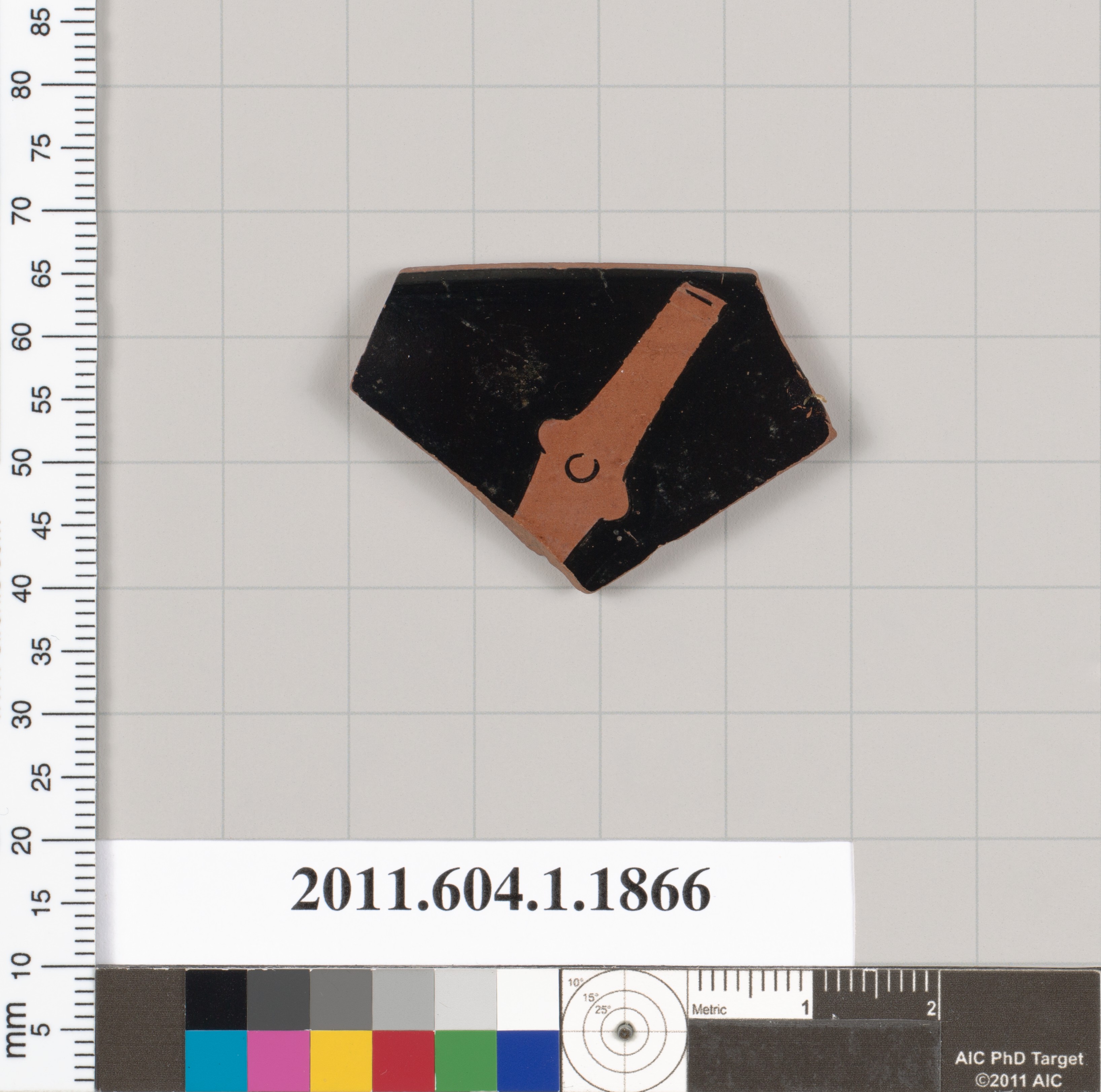
The Lauren Fashion Heritage Lab is privileged to examine a terracotta rim fragment of a kylix from Attic Greece, a seemingly humble shard of a drinking cup, as a foundational artifact for the 2026 Old Money collection. This fragment, with its weathered edge and residual slip, is not merely a relic of symposia; it is a material manifesto of restraint, proportion, and the valorization of time. When juxtaposed with the internal genetic code of the Liru archive—specifically the Rock in the form of a fantastic mountain and the Seated luohan with a servant—the kylix fragment reveals a shared aesthetic DNA: the transformation of the mundane into a vessel for the sublime. For the 2026 Old Money silhouette, this artifact dictates a return to architectural precision, a celebration of patina, and a deliberate rejection of ephemeral trends, all rendered through the lens of Heritage-Black.
I. The Kylix as a Study in Controlled Form and Negative Space
The Attic kylix, in its complete form, is a study in geometric harmony: a shallow bowl balanced on a slender stem, with two horizontal handles extending like wings. The fragment, however, strips this to its essence—a curved line, a broken edge, a trace of the potter’s wheel. This is the first lesson for 2026: the power of the incomplete. In the Liru archive, the Rock in the form of a fantastic mountain achieves its spiritual resonance through the “瘦皱漏透” (thinness, wrinkling, leakage, transparency) of its perforations. The kylix fragment, similarly, is defined by what is missing. Its broken rim is not a flaw but a deliberate aperture, a window into the vessel’s history. For the Old Money silhouette, this translates into garments that prioritize negative space—a sharp shoulder line that cuts away, a jacket hem that falls just short of the wrist, a trousers’ break that hovers above the shoe. The 2026 Heritage-Black collection will feature structured blazers with asymmetrical closures, echoing the kylix’s off-center handle placement, and high-waisted trousers with a single pleat, mimicking the fragment’s singular curve. The silhouette is not about covering the body but about framing it, allowing the wearer’s own form to become the “rock” around which the garment’s voids circulate.
II. Patina as a Narrative of Time and Authenticity
The terracotta fragment’s surface—its ochre hue, its subtle striations from the kiln, its calcified deposits from centuries in the earth—is a direct analogue for the Liru archive’s emphasis on “时间地质的诗篇” (the poem of time and geology). The Rock is valued for its “皴纹” (texture lines) that record geological epochs; the kylix fragment records human epochs—the hands that shaped it, the wine that stained it, the soil that preserved it. For 2026 Old Money, this mandates a rejection of pristine newness. The Heritage-Black palette is not a flat black but a deep, layered obsidian that shifts under light, achieved through overdyeing techniques that mimic the kylix’s uneven slip. Fabrics will be chosen for their ability to acquire patina: virgin wool with a slight nap, cotton twill that softens with wear, silk charmeuse that develops a subtle luster. The silhouette itself will incorporate visible seam allowances, unfinished hems, and hand-stitched buttonholes—details that, like the kylix’s break, declare the garment’s history. This is not a costume of antiquity but a living artifact, designed to be passed down, its wearer’s own life adding to its narrative.
III. The Dialectic of Utility and Transcendence
The kylix was a functional object—a cup for wine at a symposium—yet its decoration (often scenes of gods, athletes, or myths) elevated it to a spiritual tool. This duality mirrors the Liru archive’s core tension: the Rock embodies “无用之用” (the usefulness of uselessness), while the Luohan painting uses “笔墨为舟楫” (brush and ink as a boat) to cross to the spiritual shore. The kylix fragment, in its broken state, is doubly useless: it can no longer hold wine, yet it holds immense cultural value. For 2026 Old Money, this informs a silhouette that is deliberately anti-utilitarian in its luxury. A double-breasted overcoat in Heritage-Black cashmere is cut with exaggerated lapels and a dropped shoulder—impractical for driving, perfect for contemplation. A silk dress with a single asymmetrical sleeve references the kylix’s missing handle, its asymmetry a quiet rebellion against symmetry’s tyranny. The garments are not designed for efficiency but for presence; they are the “案头山水” (desktop landscape) of the wearer’s body, a space for the mind to wander.
IV. Color and Material: The Mineral Imperative
The terracotta fragment’s color is not applied but inherent—the iron-rich clay fired to a permanent ochre. This aligns with the Liru archive’s use of “矿物颜料的永恒性” (the eternity of mineral pigments) in the Luohan painting. For 2026 Heritage-Black, color is not a surface but a substance. The collection will use natural dyes from iron, walnut, and charcoal to achieve a black that is not black but a deep, complex brown-black, like the kylix’s slip. Wool will be sourced from heritage breeds (e.g., Cotswold, Wensleydale) whose fibers contain natural lanolin and melanin, producing a black that breathes. Silk will be raw and unweighted, its natural irregularities catching light like the kylix’s kiln marks. The silhouette is monolithic in color but variegated in texture: a matte wool jacket over a semi-lustrous silk blouse, a ribbed cashmere turtleneck under a smooth worsted wool vest. This is the “物心相照” (mutual illumination of object and mind) of the Liru archive, where material and spirit are one.
V. The Silhouette as a Vessel for the Self
Ultimately, the kylix fragment teaches us that the Old Money silhouette is a vessel—not for wine, but for the self. The Rock is a “微缩宇宙” (miniature universe); the Luohan is a “视觉通道” (visual channel) to transcendence. The 2026 Heritage-Black garment is both. It is a structured, architectural shell that contains the wearer’s inner landscape, its lines referencing the kylix’s geometric purity. The shoulder pads are subtle but present, like the kylix’s rim; the waist is defined but not cinched, like the cup’s stem; the hem falls with a deliberate weight, like the fragment’s broken edge. The collection will include a signature “Kylix Coat”: a floor-length, single-breasted coat in Heritage-Black wool, with a curved seam at the back that echoes the fragment’s arc, and a single hidden pocket—a nod to the cup’s interior. This coat is not for protection from the weather but for protection of the spirit, a wearable “器以载道” (vessel carrying the Way).
Conclusion
The Attic kylix fragment, in its broken silence, speaks volumes to the 2026 Old Money silhouette. It demands a return to proportion, a reverence for time, and a rejection of the merely novel. By synthesizing its lessons with the Liru archive’s Rock and Luohan, the Lauren Fashion Heritage Lab proposes a collection that is not fashion but philosophy—a set of garments that, like the kylix, are both utterly functional and utterly transcendent. The Heritage-Black palette is not a color but a condition, a state of being that, like the fragment’s terracotta, has passed through fire and earth to emerge as timeless. The 2026 silhouette is thus a monument to restraint, a celebration of the incomplete, and a vessel for the modern soul. It is Old Money not as a status symbol but as a spiritual practice, a way of dressing that, in the words of the Liru archive, “在物质性与精神性的张力间,开辟出独特的审美维度” (opens a unique aesthetic dimension in the tension between materiality and spirituality).