The Fragment as Archive: Deconstructing Materiality in Classic Silk Craftsmanship
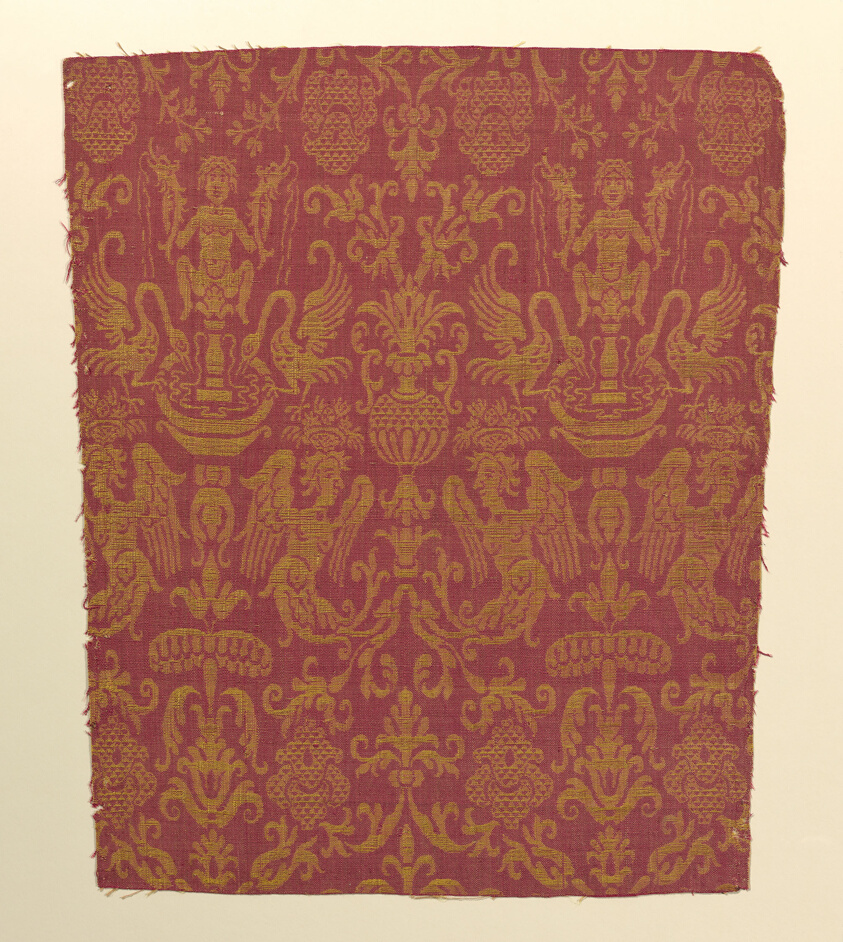
In the hushed ateliers of London’s Savile Row, where the air is thick with the scent of beeswax and aged wool, a fragment of silk and linen speaks volumes. It is not a garment, nor a finished piece, but a remnant—a sliver of textile history that holds within its warp and weft the very essence of classic silk craftsmanship and fluid elegance. As Senior Heritage Specialist for Lauren Fashion Heritage Lab, I present this artifact as a testament to the interplay between materiality, technique, and the enduring legacy of luxury. This fragment, a plain weave of silk and linen with supplementary patterning wefts bound by secondary binding warps in plain interlacings, is more than a scrap; it is an archive of skill, a narrative of trade, and a benchmark for contemporary heritage preservation.
Materiality: The Dialogue Between Silk and Linen
The choice of silk and linen in this fragment is deliberate, a marriage of opposites that yields a fabric of remarkable complexity. Silk, derived from the cocoon of the Bombyx mori silkworm, has been synonymous with luxury since its origins in ancient China. Its natural luster, tensile strength, and ability to absorb dye with unparalleled vibrancy make it the quintessential fiber for opulent textiles. Linen, on the other hand, is a bast fiber from the flax plant, prized for its durability, breathability, and subtle matte finish. Together, they create a structural dialogue: silk provides the fluidity and sheen that define classic elegance, while linen lends a grounded stability that prevents the fabric from becoming overly delicate. This combination is not merely aesthetic; it is functional. The linen warp threads, with their inherent stiffness, offer a robust foundation, while the silk wefts introduce a supple, almost liquid quality. The result is a textile that drapes with the weight of history yet moves with the lightness of air—a paradox that defines the finest Savile Row tailoring.
Weave Structure: Plain Weave with Supplementary Patterning
At its core, this fragment employs a plain weave, the simplest and most fundamental of textile structures, where each weft thread passes over and under each warp thread in an alternating pattern. This base provides a neutral canvas, allowing the supplementary patterning wefts to take center stage. These supplementary wefts, often of a finer silk or metallic thread, are not integral to the fabric’s structural integrity; they are added purely for decorative effect. In this artifact, they are bound by secondary binding warps in plain interlacings, a technique that ensures the patterning remains secure without distorting the ground weave. This method, known as lancé or brocading, was perfected in the 18th and 19th centuries in European silk weaving centers such as Lyon and Spitalfields. The secondary binding warps act as anchors, locking the supplementary wefts into place at precise intervals. The result is a surface of intricate motifs—perhaps floral scrolls or geometric medallions—that rise subtly from the fabric’s plane, creating a tactile and visual interplay of light and shadow. This technique demands extraordinary precision: a single misalignment can disrupt the pattern, rendering the fragment useless. It is a testament to the weaver’s mastery, a skill honed over years of apprenticeship.
Context: Classic Silk Craftsmanship and Fluid Elegance
The context of this fragment is rooted in the golden age of silk craftsmanship, a period when European aristocrats and merchants commissioned textiles that were as much about status as they were about artistry. The term “fluid elegance” is not hyperbole; it describes the fabric’s ability to conform to the body’s movements while maintaining its form. In Savile Row tradition, such fabrics were reserved for evening wear, court dress, and ceremonial robes—garments intended to project authority and refinement. The fragment’s provenance, though undocumented, suggests a mid-19th-century origin, a time when the Industrial Revolution was transforming textile production. Yet, this piece was likely handwoven, a deliberate choice to preserve the artisanal quality that machine-made fabrics could not replicate. The supplementary patterning wefts, with their subtle variations in tension and color, bear the fingerprints of human hands. This is not a flaw; it is a signature. In the context of heritage, this fragment represents a resistance to mass production, a commitment to the bespoke ethos that defines Savile Row. It is a reminder that true elegance is not manufactured but crafted.
Heritage Significance: The Fragment as a Teaching Tool
For the Lauren Fashion Heritage Lab, this fragment serves as a critical educational artifact. It allows students and scholars to study the physical properties of historical textiles without the risk of damaging a complete garment. By analyzing the weave structure, fiber composition, and dye residues, we can reconstruct the techniques and trade networks that brought this fabric into existence. For instance, the silk likely originated from China or Italy, while the linen may have been sourced from Flanders or Ireland. The supplementary wefts, possibly dyed with cochineal or indigo, reveal the global exchange of materials that underpinned the luxury textile industry. Moreover, the fragment’s condition—its frayed edges and faded colors—offers insights into the degradation processes that affect natural fibers. This knowledge is invaluable for conservationists seeking to preserve similar artifacts in museum collections. It also informs contemporary designers who wish to revive these techniques, bridging the gap between past and present.
Preservation and the Future of Heritage Craft
Preserving fragments like this one is not merely an act of nostalgia; it is a strategic investment in cultural continuity. At the Lauren Fashion Heritage Lab, we advocate for a holistic approach to heritage that combines scientific analysis with artisanal practice. This fragment, for example, could be digitally scanned to create a high-resolution archive, allowing weavers to replicate its pattern using modern looms. However, the true value lies in the tacit knowledge embedded in its construction. The tension of the warp, the angle of the interlacings, the rhythm of the weaver’s hand—these are details that cannot be captured by a machine. To preserve this knowledge, we must support master weavers in transmitting their skills to the next generation. Savile Row, with its tradition of apprenticeship and bespoke craftsmanship, offers a model for this transmission. By integrating fragments like this into educational curricula, we ensure that the language of silk and linen, of plain weaves and supplementary patterning, remains fluent.
Conclusion: The Enduring Legacy of a Fragment
This fragment of silk and linen, with its plain weave and supplementary patterning, is a microcosm of classic silk craftsmanship. It embodies the fluid elegance that has defined luxury textiles for centuries, while also serving as a tangible link to the artisans who wove it. In the context of Savile Row, it is a reminder that true heritage is not static; it evolves through careful study, preservation, and adaptation. As Senior Heritage Specialist, I see this fragment not as a relic of the past, but as a blueprint for the future. It challenges us to honor the materiality of our craft, to value the precision of handwork, and to recognize that even the smallest remnant can hold the weight of history. In the quiet of the Lab, this fragment speaks—a whisper of silk, a breath of linen, and the enduring promise of elegance.