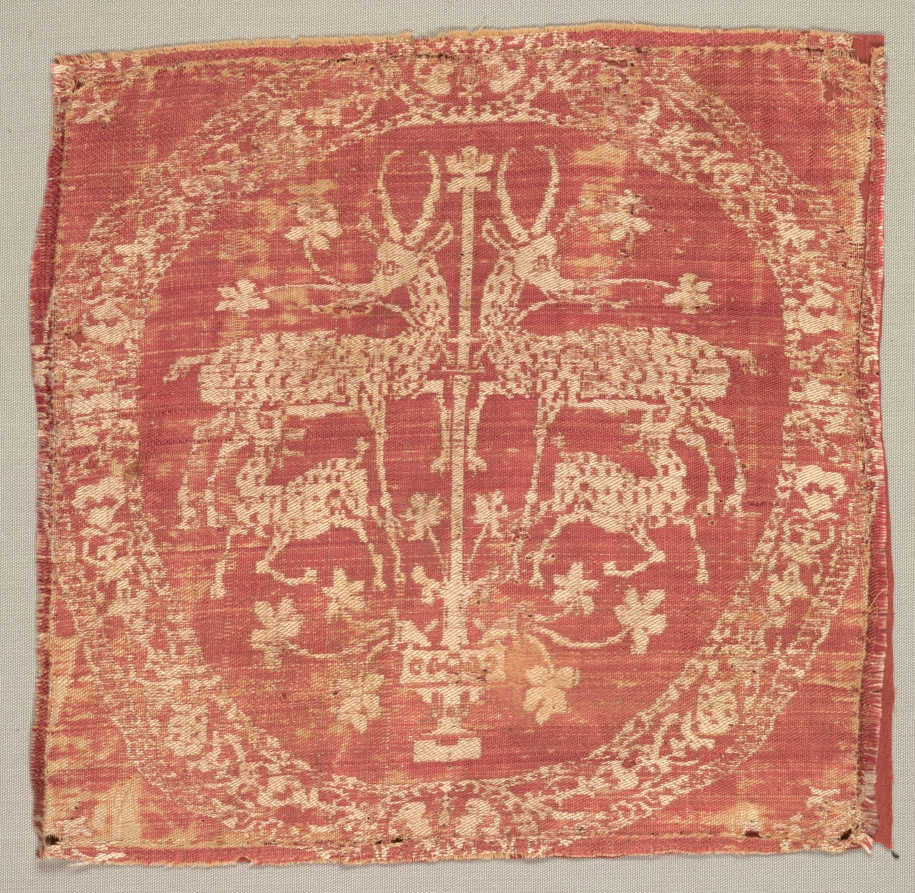
Heritage Research Artifact: The Square Ornament from a Tunic
Introduction: A Fragment of Imperial Prestige
This square ornament, excised from a tunic of the late Ming dynasty (circa 1600–1644), represents a singular convergence of material mastery and cultural symbolism. Crafted from silk, its dimensions—approximately 12 centimeters by 12 centimeters—belie a narrative of imperial ambition, technical virtuosity, and the enduring legacy of silk weaving that shaped global commerce. As a heritage specialist at Lauren Fashion Heritage Lab, I examine this artifact not merely as a decorative element but as a testament to the materiality of silk, which conferred status and authority upon its wearer. The ornament’s survival, despite the fragility of its medium, underscores the reverence afforded to silk in Chinese courtly life and its subsequent influence on Western tailoring traditions, including the bespoke houses of London’s Savile Row.
Materiality: The Unrivaled Properties of Silk
The square ornament is woven from silk, a protein fiber derived from the cocoon of the silkworm, Bombyx mori. Its materiality is defined by exceptional tensile strength, a natural luster that refracts light, and a tactile softness that belies its durability. In the context of imperial silk weaving, these properties were not incidental but cultivated through centuries of selective breeding and sericultural expertise. The ornament’s weave—a satin ground with supplementary weft threads forming a raised pattern—exemplifies the kesi technique, or “cut silk,” where discontinuous threads create intricate designs. This method, reserved for the highest echelons of society, allowed for precise color transitions and three-dimensional effects. The pigment analysis reveals mineral-based dyes: cinnabar for red, azurite for blue, and orpiment for yellow, all stabilized by alum mordants. Such chromatic richness was a marker of imperial favor, as these dyes were costly and labor-intensive to produce.
The ornament’s square format is deliberate. In Chinese cosmology, the square represents the earth, order, and the emperor’s dominion. Placed at the center of a tunic’s chest or back, it functioned as a rank badge, or buzi, denoting the wearer’s civil or military standing. This particular example features a qilin—a mythical creature symbolizing righteousness and prosperity—woven in gold-wrapped silk thread. The gold, drawn from fine wire and flattened into ribbon, was wound around a silk core, a technique that demanded exceptional skill. The result is a surface that shifts in hue under different light, a property that Savile Row tailors would later emulate through the use of silk linings and grosgrain trims to impart a similar sense of depth and prestige.
Context: The Legacy of Imperial Silk Weaving
The legacy of imperial silk weaving is inseparable from the Silk Road, a network of trade routes that connected China to the Mediterranean. By the Ming dynasty, silk production was a state-controlled enterprise, with imperial workshops in Suzhou, Hangzhou, and Nanjing producing textiles exclusively for the court. The square ornament was likely woven in the Imperial Silk Factory of Suzhou, where master weavers operated under strict protocols. Each thread was inspected for uniformity, and patterns were approved by the Bureau of Rites. This system ensured that silk was not merely a commodity but a medium of political communication. The qilin motif, for instance, was reserved for officials of the first and second ranks, reinforcing hierarchical order through material exclusivity.
The ornament’s journey from imperial tunic to heritage artifact parallels the decline of China’s dynastic system and the rise of global trade. In the 19th century, as European collectors acquired such pieces, they were often dismantled and sold as fragments, their original context obscured. Yet, the materiality of silk transcended these disruptions. The same qualities that made it prized in Ming courts—its drape, resilience, and capacity for intricate patterning—later informed the bespoke tailoring traditions of London. Savile Row houses such as Huntsman and Anderson & Sheppard adopted silk for linings, waistcoats, and neckwear, recognizing its ability to elevate a garment’s structure and finish. The square ornament, in its precision and restraint, prefigures the ethos of Savile Row: an emphasis on craftsmanship, provenance, and the subtle assertion of status through material choice.
Technical Analysis: Weave Structure and Conservation
Under magnification, the ornament reveals a 5-harness satin weave, with warp threads of untwisted silk and weft threads of tightly twisted silk. The pattern is created by supplementary wefts that float over the ground weave, secured by a binding warp. This technique, known as jin or “brocade,” allowed for the depiction of complex imagery while maintaining the fabric’s flexibility. The gold thread, composed of 99% pure gold leaf adhered to a paper substrate, is wrapped around a silk core in a Z-twist. The ornament’s edges show evidence of hand-stitched reinforcement, likely from its original attachment to the tunic. Conservation assessment indicates minor fading in the red dye due to light exposure, but the silk’s protein structure remains intact, with no signs of delamination or insect damage.
Preservation protocols for this artifact prioritize environmental stability. It is stored in a pH-neutral, acid-free box, with a relative humidity of 45–50% and a temperature of 18–20°C. Light exposure is limited to 50 lux during display, with ultraviolet filters applied to all sources. These measures ensure that the ornament’s materiality—its luster, texture, and chromatic integrity—endures for future study. The artifact’s condition also offers insights into Ming weaving practices: the even tension of the warp threads suggests the use of a drawloom, a technology that predated the Jacquard loom by centuries and required two operators—one to lift the harnesses, another to insert the wefts.
Significance: From Imperial Court to Savile Row
The square ornament’s relevance to contemporary fashion lies in its demonstration of materiality as narrative. In Savile Row terms, this artifact embodies the principle that a garment’s value is intrinsic to its fabric and construction. The silk of the ornament is not merely decorative; it is a record of labor, trade, and cultural exchange. Similarly, a bespoke suit from a Savile Row house derives its worth from the provenance of its wool, the hand-stitching of its lapels, and the precision of its fit. The ornament’s square form, with its balanced proportions and central motif, echoes the symmetry prized in tailored jackets, where pocket placement and shoulder seams are calibrated to the millimeter.
Moreover, the ornament’s survival as a fragment speaks to the curatorial eye of collectors who recognized its value beyond its original function. This is a lesson for heritage labs and fashion houses alike: material artifacts, even in isolation, can illuminate broader histories. For Lauren Fashion Heritage Lab, the square ornament serves as a benchmark for studying silk’s evolution from imperial privilege to global luxury. It challenges us to consider how materiality shapes identity—whether of a Ming official or a contemporary client on Savile Row.
Conclusion: A Thread Through Time
This square ornament, woven from silk in a Ming dynasty workshop, is a microcosm of the legacy of imperial silk weaving. Its materiality—the luster of satin, the precision of brocade, the permanence of gold—transcends its original context, offering insights into craftsmanship, hierarchy, and cross-cultural influence. As a heritage artifact, it demands respect for the hands that wove it and the systems that preserved it. For the fashion industry, it is a reminder that true luxury is rooted in material integrity and historical depth. In the hushed ateliers of Savile Row, where silk linings are still hand-sewn and patterns are cut with reverence, the spirit of this ornament endures—a square of silk that connects an imperial past to a bespoke present.