← BACK TO ARCHIVES
Heritage-Black
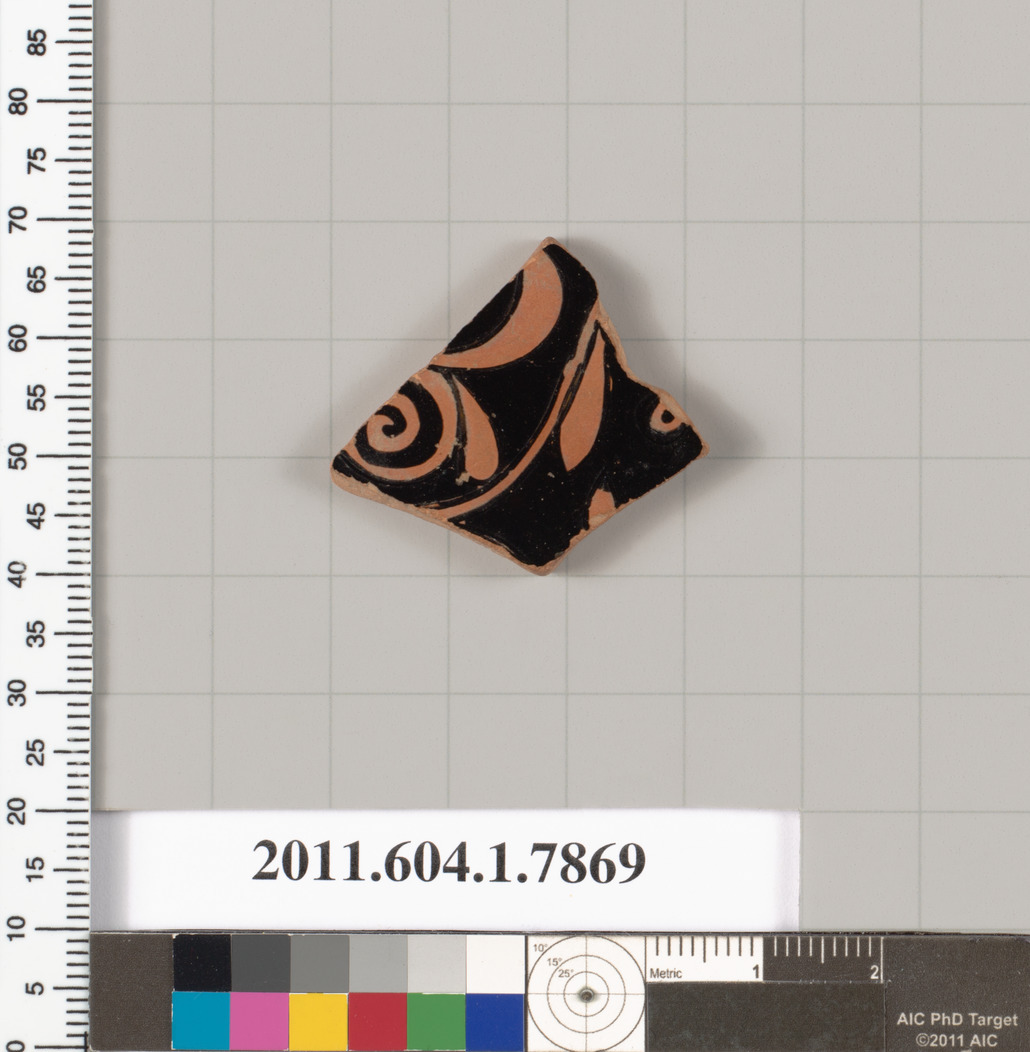
Heritage Synthesis: Terracotta fragment of a kylix (drinking cup)
Curated on May 01, 2026 // Node: LDN-01
The Terracotta Kylix and the Architecture of Restraint: Informing the 2026 Old Money Silhouette
The intersection of sacred statuary and utilitarian vessel may seem an unlikely foundation for a luxury fashion heritage analysis. Yet, when the internal genetic code of Lauren Fashion—articulated through the dialectical tension between the *Bodhisattva* and the *Amulet in the Form of a Seated Figure with Bovine Head*—is applied to the museum artifact of a Greek Attic terracotta kylix, a profound architectural principle emerges. This principle, which I term “structured transcendence,” becomes the defining logic for the 2026 Old Money silhouette. The kylix, a drinking cup from the 5th century BCE, is not merely a container; it is a microcosm of the Greek pursuit of *arete* (excellence) through measured form. Its terracotta body, painted black-figure or red-figure, embodies a tension between the earthbound material (clay) and the aspirational narrative (mythological scenes). For the 2026 Old Money aesthetic—which demands quiet authority, generational permanence, and an understated refusal of ephemeral trends—the kylix offers a lexicon of proportion, balance, and the deliberate restraint of ornament.
The Kylix as a Structural Archetype: From Vessel to Garment
The kylix is defined by its shallow bowl, two horizontal handles, and a stemmed foot. Its silhouette is one of grounded expansion: a broad, open top that tapers to a narrow, stable base. This is not a form of aggressive verticality but of controlled horizontality—a shape that suggests generosity of spirit (the bowl) anchored by discipline (the stem). In the context of the 2026 Old Money silhouette, this translates directly into the re-emergence of the tailored double-breasted blazer and the wide-leg trouser. The blazer’s lapels function as the kylix’s handles, projecting outward with a defined, almost architectural sweep, while the body of the jacket tapers to a suppressed waist, mirroring the cup’s stem. The trouser, cut with a generous leg that falls straight from the hip to a gentle break at the shoe, echoes the bowl’s expansive, grounded presence. The silhouette is not slim or constricting; it is *settled*—a garment that occupies space with the same quiet authority as a museum artifact on its plinth.
The terracotta material itself reinforces this ethos. Unlike the gilded opulence of the *Bodhisattva* or the lapidary permanence of the bovine-headed amulet, terracotta is humble, fired earth. It is the material of the everyday, yet in the hands of the Attic potter, it achieves timelessness. For Lauren Fashion, this suggests a 2026 palette dominated by “Heritage-Black” as the foundational tone—not a void of absence, but a rich, slightly matte black that absorbs light, reminiscent of the black-figure technique on the kylix. This black is not the aggressive void of contemporary streetwear; it is the black of a well-worn leather armchair, of a grandfather’s overcoat, of the shadows in a Greek vase painting. It is a color that communicates *depth* rather than *statement*.
The Dialectic of Interiority and Exteriority: The Bodhisattva and the Amulet in the Kylix
Returning to the internal genetic code, the *Bodhisattva* represents an “inward” path—a spiritual guide whose serene form invites contemplation and self-transformation. The *Amulet* represents an “outward” shield—a protective force that guards against chaos. The kylix, as a drinking vessel, occupies a liminal space between these two poles. It is an object of communal ritual (the symposium), where wine was consumed in a structured, philosophical setting. The exterior of the kylix, often painted with scenes of gods, heroes, or athletes, functioned as an *amulet* of cultural identity—a visual declaration of Athenian civic virtue and mythological protection. The interior, however, revealed a *Bodhisattva*-like moment: a single figure or a medallion (the *tondo*) that the drinker would contemplate as they lifted the cup. This duality—the protective exterior narrative and the contemplative interior image—is the precise tension that defines the 2026 Old Money silhouette.
The garment, like the kylix, must have a “tondo.” For the 2026 collection, this manifests as a hidden detail: a silk lining in a deep, unexpected hue (a muted burgundy or a faded indigo) inside a Heritage-Black overcoat; a single, hand-stitched seam on the inside of a trouser leg that echoes the curve of the kylix’s bowl; a subtle, almost invisible embroidery of a Greek key pattern on the interior of a blazer pocket. These details are not for public consumption. They are for the wearer alone—a private dialogue with heritage, a quiet nod to the *Bodhisattva*’s inner wisdom. The exterior, meanwhile, remains rigorously clean, its lines as unadorned as the black-figure silhouette of a kylix. The amulet-like function is served by the garment’s *construction*: the weight of the wool, the precision of the canvas interfacing, the hand-finished buttonholes. These are the protective charms against the chaos of fast fashion and disposable luxury.
Proportion, Balance, and the “Old Money” Ethos
The kylix’s proportions are not arbitrary. The ratio of the bowl’s diameter to the stem’s height is carefully calculated to create a sense of poised equilibrium. This is the same logic that governs the 2026 Old Money silhouette. The shoulder of a jacket should not be exaggerated (as in the 1980s power suit) nor slouched (as in contemporary minimalism). It should be *just so*—a slight extension that creates a clean line from the neck to the upper arm, reminiscent of the kylix’s handle attachment. The waist is not cinched but *suggested*—a subtle suppression that gives the garment body without constricting movement. The length of a coat should fall to the knee or just below, echoing the kylix’s stem, which elevates the bowl without making it inaccessible.
This is the antithesis of the *Amulet*’s static, monumental quality. The Greek kylix, for all its formal rigor, was a *functional* object. It was held, passed, and used. The 2026 Old Money silhouette must similarly accommodate the body in motion. The fabric must drape with a natural weight, not a stiff, armor-like rigidity. The *Bodhisattva*’s flowing robes, with their suggestion of inner calm and effortless grace, offer a counterpoint to the amulet’s rigidity. The 2026 silhouette thus marries the *structure* of the kylix (the amulet’s protective form) with the *flow* of the Bodhisattva’s garments (the inward path of ease). The result is a garment that feels both authoritative and lived-in—a piece of heritage that has been inherited, not purchased.
Conclusion: The Terracotta Imperative for 2026
The terracotta kylix, when read through the lens of the *Bodhisattva* and the bovine-headed amulet, reveals the 2026 Old Money silhouette as an act of *sacred architecture*. It is not about novelty or self-expression. It is about the disciplined arrangement of form, material, and proportion to create a garment that functions as both a protective amulet (against the vulgarities of trend) and a contemplative icon (of personal heritage). The Heritage-Black palette, the grounded horizontality, the hidden interior details—all of these are derived from the kylix’s silent wisdom. In a fashion landscape increasingly defined by digital noise and disposable spectacle, the 2026 Old Money silhouette offers a return to the *terracotta*: the humble, fired earth that, when shaped with precision and intention, becomes timeless. The garment is not a statement. It is a vessel. And what it holds is the quiet, unshakeable confidence of those who know that true luxury is not seen—it is *felt*.
Heritage Lab Insight
Genetic Bridge: Archive node focusing on Heritage-Black craftsmanship.