Introduction: The Enduring Legacy of Pojagi in Silk
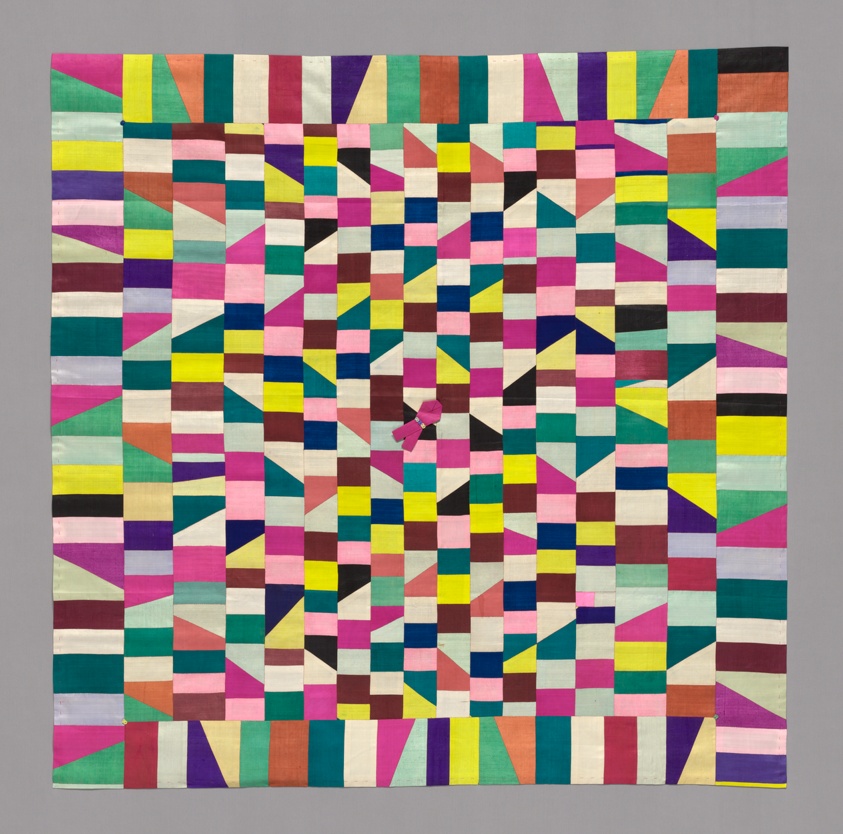
In the rarefied world of heritage textiles, few artifacts embody the confluence of material mastery and cultural narrative as profoundly as the Pojagi—a traditional Korean wrapping cloth. This scholarly artifact, rendered in silk, plain weave, with meticulous piecing and attached ribbon and cord, represents a pinnacle of classic silk craftsmanship and fluid elegance. As a Senior Heritage Specialist at Lauren Fashion Heritage Lab, I approach this object not merely as a utilitarian cloth but as a testament to the interplay between materiality, technique, and aesthetic philosophy. Drawing on the precision and restraint of London Savile Row—where fabric is revered, cut is king, and every stitch carries intent—this paper examines the Pojagi as a heritage research artifact that transcends its origins to inform contemporary luxury and design discourse.
Materiality: Silk, Plain Weave, and the Art of Subtlety
The Silk Foundation
The choice of silk for this Pojagi is deliberate and revealing. Silk, harvested from the cocoons of Bombyx mori, has been prized for millennia for its luster, strength, and drape. In the context of Korean textile heritage, silk was not merely a luxury fiber but a medium of cultural expression, reserved for ceremonial and daily use among the elite. The plain weave structure—the simplest and most fundamental of weaves, where weft threads pass over and under each warp thread—creates a balanced, smooth surface that allows the silk’s natural sheen to dominate. This is not a fabric that shouts; it whispers. The plain weave’s subtlety demands precision in construction, much like a Savile Row tailor’s choice of a worsted wool for a two-piece suit: the material must be flawless, the weave even, and the hand impeccable. Here, the silk’s fluid elegance is paramount, offering a tactile experience that shifts with light and movement.
Piecing: The Geometry of Craft
The pieced nature of this Pojagi introduces a layer of complexity that elevates it from simple cloth to constructed artifact. Piecing involves joining separate panels of silk—often in contrasting colors or patterns—to form a larger whole. This technique is not born of economic necessity alone; it is an aesthetic choice that reflects the Korean principle of jiseung, or the beauty of seams and joins. In Savile Row terms, this is akin to the art of pattern matching and seam alignment in a bespoke jacket, where every panel must align with the next to create a coherent silhouette. The piecing here is executed with such precision that the seams become part of the design language, not interruptions. The ribbons and cords attached to the edges serve both functional and decorative purposes, allowing the cloth to be tied or draped—a nod to the garment’s versatility as a wrap, cover, or ceremonial object.
Context: Classic Silk Craftsmanship and Fluid Elegance
Historical and Cultural Significance
The Pojagi tradition dates back to the Three Kingdoms period (57 BCE–668 CE) and reached its zenith during the Joseon Dynasty (1392–1910). These wrapping cloths were used in daily life to carry goods, protect belongings, and as ceremonial items for weddings and ancestral rites. The use of silk in this artifact signals its elevated status; it was likely owned by a member of the yangban aristocracy or used in a ritual context where material quality reflected social standing. The fluid elegance of the silk—its ability to fall, fold, and catch light—mirrors the Confucian ideals of restraint and harmony that permeated Joseon society. Unlike the bold prints of European silks, Korean silk Pojagi often rely on subtle color gradations and the interplay of pieced panels to create visual interest. This is a quiet luxury, one that aligns with the Savile Row ethos of understated refinement: the cloth speaks for itself, without need for ostentation.
Craftsmanship as Heritage
The attached ribbon and cord are not afterthoughts but integral components that demonstrate the maker’s mastery. The ribbons, often woven from silk threads, are hand-stitched to the edges with invisible seams, while the cords allow for secure closure. This attention to detail recalls the hand-finishing techniques of Savile Row—the buttonholes, the pick stitching, the lining insertion—that distinguish bespoke from ready-to-wear. In the Pojagi, every element serves a purpose: the ribbons prevent fraying, the cords enable function, and the piecing creates a dynamic surface that rewards close inspection. The artifact’s preservation over centuries speaks to the durability of silk when handled with care, as well as the cultural value placed on these objects as heirlooms. They are not disposable; they are repositories of memory and skill.
Interpretation: The Pojagi as a Model for Modern Luxury
Lessons in Material Integrity
For the contemporary luxury industry, the Pojagi offers a masterclass in material integrity. The silk, plain weave foundation reminds us that luxury need not be complex to be profound. In an era of fast fashion and synthetic blends, the Pojagi’s reliance on a single, natural fiber—woven with precision and pieced with intention—challenges designers to reconsider their material choices. The fluid elegance of the cloth is not achieved through embellishment but through the inherent properties of silk and the skill of the maker. This aligns with the Savile Row principle of “cloth first,” where the fabric dictates the design, not the other way around.
Cultural Resonance in a Global Context
The Pojagi’s piecing technique also offers a template for sustainable design. By joining smaller panels, artisans minimized waste—a practice that resonates with modern zero-waste movements. The attached ribbons and cords, often made from offcuts, further demonstrate resourcefulness. In a heritage context, this is not a compromise but a celebration of craft. For the Lauren Fashion Heritage Lab, this artifact serves as a research tool to explore how traditional techniques can inform contemporary luxury, from the ateliers of Paris to the workrooms of Savile Row. The Pojagi is not a relic; it is a living document of how materiality, context, and craftsmanship converge to create objects of enduring beauty.
Conclusion: The Pojagi’s Place in Heritage Discourse
This Wrapping Cloth, Pojagi, in silk, plain weave, with pieced panels and attached ribbon and cord, is a heritage research artifact of profound significance. Its materiality speaks to the mastery of silk craftsmanship, its context to the cultural values of Joseon Korea, and its interpretation to the timeless principles of luxury: quality, restraint, and purpose. As a Senior Heritage Specialist, I position this object within a broader dialogue that bridges East and West, tradition and innovation. The fluid elegance of the silk, the precision of the piecing, and the functionality of the ribbons and cords all echo the ethos of London Savile Row—where every garment is a study in material and form. In preserving and studying such artifacts, we honor not only the past but also the future of design, ensuring that the lessons of heritage continue to shape the luxury of tomorrow.