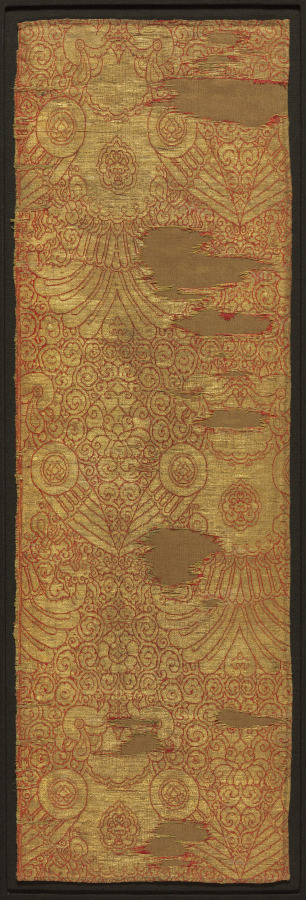
The Cloth of Gold: Displayed Falcons and the Legacy of Imperial Silk Weaving
Introduction: The Fabric of Power and Prestige
In the hallowed ateliers of London’s Savile Row, where precision tailoring meets centuries of textile artistry, the Cloth of Gold stands as a testament to the enduring dialogue between materiality and authority. This heritage research artifact, centered on the motif of Displayed Falcons woven into silk, transcends mere ornamentation. It embodies a legacy of imperial silk weaving that has shaped the very fabric of global luxury. As a Senior Heritage Specialist at the Lauren Fashion Heritage Lab, I examine this piece not only as a textile but as a historical document—a narrative of power, craftsmanship, and cultural exchange that resonates with the discerning clientele of Savile Row.
Materiality: The Silk Foundation
The silk base of the Cloth of Gold is the cornerstone of its opulence. Sourced from the finest mulberry silkworms in regions historically revered for sericulture—such as the Yangtze River Delta in China or the Caspian shores of Persia—this silk is characterized by its luminous sheen, exceptional tensile strength, and natural drape. The warp and weft threads are meticulously prepared, often through a process of degumming and dyeing that requires the expertise of master dyers. The resulting fabric is not merely a canvas; it is a medium that captures light and movement, enhancing the visual impact of the gold threadwork.
The integration of gold into silk is a technical feat. The gold thread itself is typically a composite: a core of silk or linen wrapped in thin strips of beaten gold leaf, or gilded silver. This technique, known as filé or passementerie, ensures flexibility while preserving the metallic luster. In the Cloth of Gold, the gold threads are interwoven with the silk to create a ground that is both sumptuous and durable. The density of the weave—often exceeding 100 threads per centimeter—demands a loom of exceptional precision, such as the Jacquard loom, which allows for complex patterns to be executed with mathematical accuracy. This materiality is not accidental; it is a deliberate choice to signify wealth, status, and the mastery of craft.
The Motif: Displayed Falcons
The Displayed Falcons motif is a heraldic symbol of sovereignty and vigilance. In the context of imperial silk weaving, the falcon—often depicted with wings spread wide, talons extended, and head turned in profile—represents the sovereign’s gaze over their domain. This motif is not merely decorative; it is a coded language of power. The falcon was a favored emblem of the Ottoman Empire, Mughal India, and European royal courts, where it adorned ceremonial robes, throne canopies, and diplomatic gifts. In the Cloth of Gold, the falcons are arranged in repeating patterns, often flanked by floral or geometric elements, creating a rhythm that underscores the fabric’s narrative of control and order.
The technical execution of the falcon motif requires brocading or lampas weaving, where supplementary weft threads—usually gold or silver—are introduced to create the raised, textured pattern. The falcon’s feathers are rendered with fine gradations of gold and silk, using shaded weaves to simulate depth and movement. The eyes of the falcon are often highlighted with a single knot of gold thread, a detail that draws the viewer’s gaze and reinforces the motif’s symbolic vigilance. This level of detail is achievable only through the collaboration of master weavers and designers, who must translate two-dimensional sketches into three-dimensional textiles without losing the motif’s heraldic clarity.
Context: The Legacy of Imperial Silk Weaving
The legacy of imperial silk weaving is a narrative of cultural exchange, technological innovation, and economic power. From the Silk Road to the Grand Trunk Road, silk was the currency of diplomacy and luxury. The Cloth of Gold, with its Displayed Falcons, is a product of this global heritage. In the Byzantine Empire, silk weaving was a state monopoly, with workshops in Constantinople producing fabrics for the imperial court. The Song Dynasty of China perfected the art of silk brocade, while the Safavid Persians introduced intricate floral and animal motifs that influenced Ottoman and Mughal designs. The European Renaissance saw the rise of silk weaving centers in Lucca, Venice, and Lyon, where weavers adapted Eastern motifs to suit Western tastes.
The imperial context of the Cloth of Gold is particularly significant. In the Ottoman Empire, the fabric was reserved for the sultan and his court, often used in kaftans and turban covers. The falcon motif, known as şahin, was a symbol of the sultan’s authority over the skies and the earth. In Mughal India, the pashmina and kinkhab weaves incorporated gold and silver threads, with falcons representing the emperor’s hunting prowess and divine right. In Europe, the Cloth of Gold was used in coronation robes and state regalia, such as the Cloth of Gold at the Field of the Cloth of Gold in 1520, where Henry VIII of England met Francis I of France in a display of opulence that defined Renaissance diplomacy.
Savile Row Interpretation: Tailoring the Legacy
For the discerning clientele of Savile Row, the Cloth of Gold with Displayed Falcons is not a relic but a living heritage. The fabric’s weight and structure lend themselves to structured garments—a double-breasted blazer, a waistcoat, or a dinner jacket—where the motif can be showcased without overwhelming the silhouette. The gold thread, when paired with a dark silk ground, creates a subtle shimmer that catches the light, making it ideal for evening wear or ceremonial attire. The Savile Row tailor must consider the drape and hand of the fabric, ensuring that the gold threads do not compromise the garment’s comfort or movement. This requires a bespoke approach, where the cloth is cut and sewn with precision to preserve the integrity of the weave.
The heritage value of the Cloth of Gold lies in its ability to connect the wearer to a lineage of power and artistry. In an era of fast fashion, the decision to commission a garment from this fabric is a statement of sustainability and timelessness. The Displayed Falcons motif, with its heraldic roots, offers a narrative that is both personal and universal—a reminder that true luxury is not about excess but about meaning and craftsmanship. As a Heritage Specialist, I advocate for the preservation of such textiles through archival documentation, conservation, and educational initiatives that ensure future generations of tailors and designers can draw inspiration from this legacy.
Conclusion: The Enduring Thread
The Cloth of Gold: Displayed Falcons is more than a textile; it is a cultural artifact that encapsulates the zenith of imperial silk weaving. Its materiality—silk interwoven with gold—speaks to the human desire for beauty and permanence. Its motif—the falcon—evokes the timeless themes of power, vigilance, and transcendence. And its context—the legacy of imperial silk weaving—reminds us of the interconnectedness of global cultures through the medium of cloth. For Savile Row, this fabric represents the pinnacle of bespoke tailoring, where heritage and innovation converge. As we continue to study and celebrate such artifacts, we honor the artisans who wove them and the histories they embody, ensuring that the thread of tradition remains unbroken.