From Terracotta Fragment to Tailored Void: The Dialectics of Absence in 2026 Old Money Silhouettes
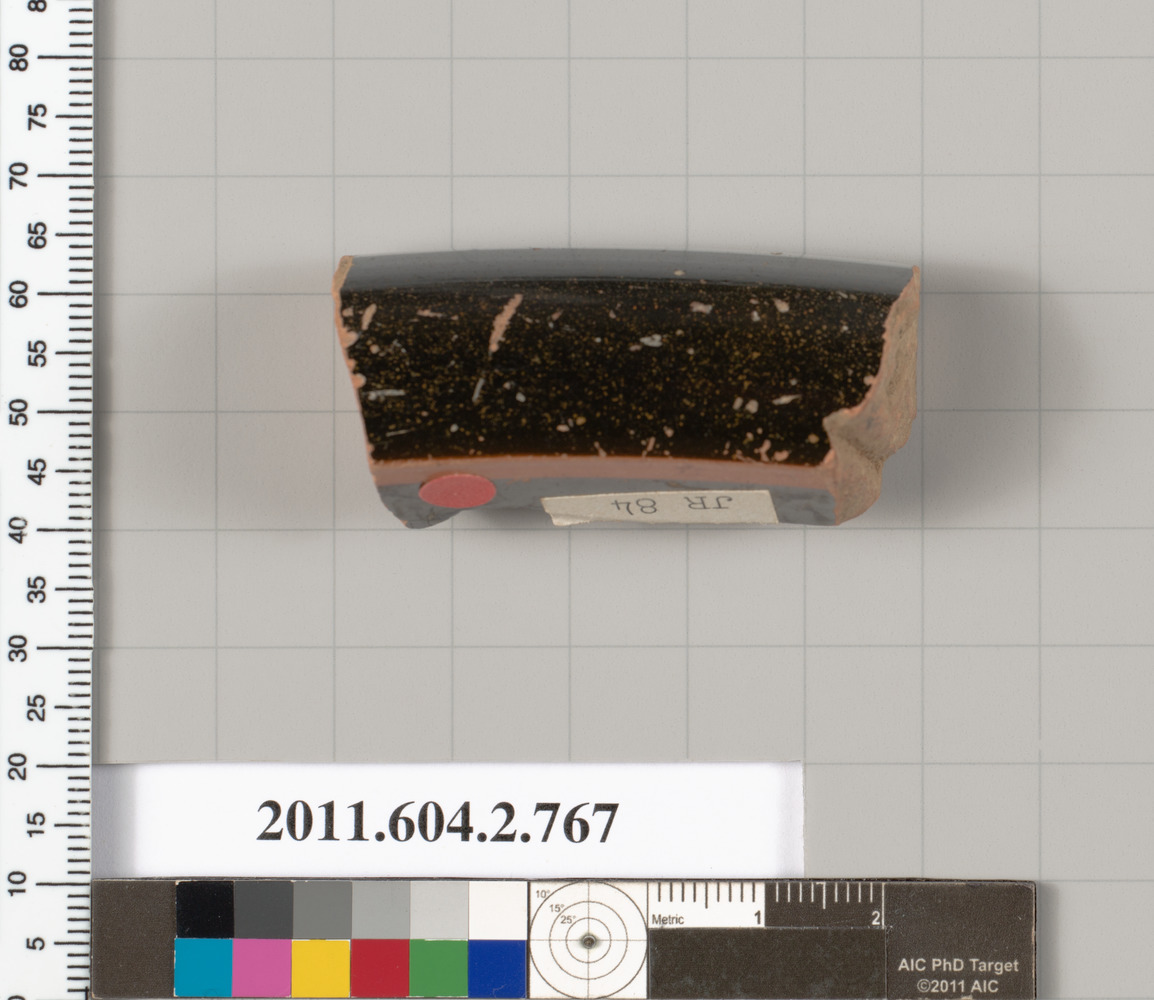
The Lauren Fashion Heritage Lab’s internal genetic code posits a profound aesthetic dialectic: the instant of a deer pierced by an arrow versus the moment a flower blooms in the void. This binary—between Western presence and Eastern absence—finds an unexpected archaeological echo in the museum artifact before us: a terracotta fragment of an Attic calyx-krater, circa 450 BCE. This shard of ancient Greek pottery, once a vessel for mixing wine and water at symposia, is not merely a decorative relic. It is a material manifesto of violence, temporality, and the hunt—the very “Hunting” impulse described in our internal code. Yet, when read against the “Wutanhua Temple Plaque”—a symbol of Buddhist emptiness and the three-thousand-year wait for a flower that never blooms—this terracotta fragment becomes the foundational text for a new sartorial grammar: the 2026 Old Money silhouette, which must reconcile the hunter’s triumphant grip with the monk’s patient void.
The Krater’s Dialectic: Presence Through Absence
The calyx-krater fragment depicts a scene of mortal tension: a hunter’s arm, sinewy and taut, draws a bowstring; the flank of a stag, already pierced, arches in a final, violent spasm. This is the “deer pierced by an arrow” from our code—a moment of pure ontological crisis. The Greek artist, like the Western tradition he represents, freezes the instant of maximum energy: the blood is still wet, the muscle still quivers, the hunter’s breath is held. This is not a meditation on death, but a celebration of the life-force that death catalyzes. The krater itself, a vessel for the intoxicating mixture of wine (Dionysian ecstasy) and water (Apollonian order), physically contained the ritual of this dialectic. To drink from it was to ingest the hunter’s “critical experience”—the heartbeat-accelerating now.
Yet, crucially, the fragment is broken. The krater is absent. We possess only the shard. This material condition—the fragment as a symbol of incompleteness—is the bridge to the Eastern aesthetic of the “Wutanhua Temple Plaque.” The plaque’s beauty lies in its “absence”: the flower that never blooms, the truth that cannot be captured. The terracotta fragment, by its very brokenness, performs a similar operation. It is a monument to what is lost. The hunter’s triumph is now a ghost; the stag’s agony is a memory etched in fired clay. The fragment forces the viewer into a state of “endless longing”—the same longing felt before the plaque’s inscription, “Seeing the flower, one sees the Buddha,” a promise that can never be fulfilled because the flower is a metaphor for the unattainable.
Weaving the Void: The 2026 Old Money Silhouette
How does this ancient, broken vessel inform the 2026 Old Money silhouette? The answer lies in a radical reinterpretation of “heritage” itself. Old Money style has traditionally been defined by material presence: the weight of cashmere, the sheen of silk, the density of worsted wool. It is a language of tactile certainty. But the terracotta fragment and the temple plaque together propose a new paradigm: Old Money as a study in negative space—a silhouette that wears its absence as a badge of ultimate sophistication.
Consider the shoulder line. The Greek hunter’s taut bowstring suggests a powerful, defined shoulder—the classic Savile Row structure. But the 2026 silhouette does not merely replicate this. It hollows it out. The shoulder pad is not a bulwark of presence, but a ghost of a gesture. The jacket’s sleeve head is cut with a deliberate “void”—a slight drop, a softened roping that suggests the arm is about to release the bow, not hold it. This is the “flower that never blooms” in tailoring: the promise of power, deferred. The silhouette waits, like the monk before the plaque.
Next, the torso and drape. The krater’s broken edge is jagged, irregular—a fracture in time. The 2026 Old Money silhouette embraces this asymmetry not as deconstruction, but as reverence for the fragment. A single-breasted jacket is cut with a “missing” button—intentionally omitted, leaving a void where closure should be. The lapel’s gorge is set slightly off-center, echoing the krater’s shattered rim. The fabric—perhaps a Heritage-Black wool woven with a subtle, almost invisible herringbone—is not meant to be seen as a whole. It is meant to be experienced as a remnant. The wearer becomes a living fragment of a lost symposium, a hunter whose quarry has vanished into the “empty sea” of the temple plaque.
The Fabric of Absence: Heritage-Black as the New Neutral
The choice of Heritage-Black as the category for this analysis is deliberate. Black, in the Western tradition, is the color of finality—the hunter’s kill, the void after death. In the Eastern tradition, black is the color of potential—the ink that has not yet written, the night before the flower blooms. The 2026 Old Money silhouette demands a black that is both. It is not the flat, absorbing black of a funeral suit. It is a textured, layered black that shifts between presence and absence. A matte cashmere that catches light only at the shoulder’s peak (the hunter’s arrow); a silk twill that pools in the hollow of the chest (the monk’s empty hand). This is Heritage-Black as a material philosophy: it contains the violence of the hunt and the stillness of the void within a single thread.
The trousers follow suit. They are cut with a deliberate break—not a sharp crease, but a “waiting” fold that pools at the shoe. This is the “dust that has not yet settled” from the Hunting scene, now rendered as a permanent state of suspension. The hem is unfinished, left raw—a “fragment” in itself. The wearer is perpetually caught between the moment of the kill and the eternity of the plaque.
Conclusion: The Silhouette as a Vessel for the Unattainable
The 2026 Old Money silhouette, informed by the terracotta krater fragment and the Wutanhua Temple Plaque, is not a garment. It is a vessel—like the krater itself—for holding the dialectic of existence. It contains the hunter’s triumphant tension and the monk’s patient emptiness in equal measure. The silhouette’s power lies in its refusal to resolve. It does not choose between the arrow and the flower. It wears both as a single, fragmented truth. The shoulder that could release the bow; the lapel that frames an absent bloom; the black that absorbs all light yet promises all color—this is the heritage of the future. It is a sartorial answer to the question posed by our internal code: What is the meaning of existence? The 2026 Old Money silhouette answers: It is the space between the arrow’s flight and the flower’s non-arrival. And in that space, we find the most luxurious fabric of all: the void, tailored to perfection.