Heritage Research Artifact: The Fragment as a Testament to Craft
Materiality and Provenance
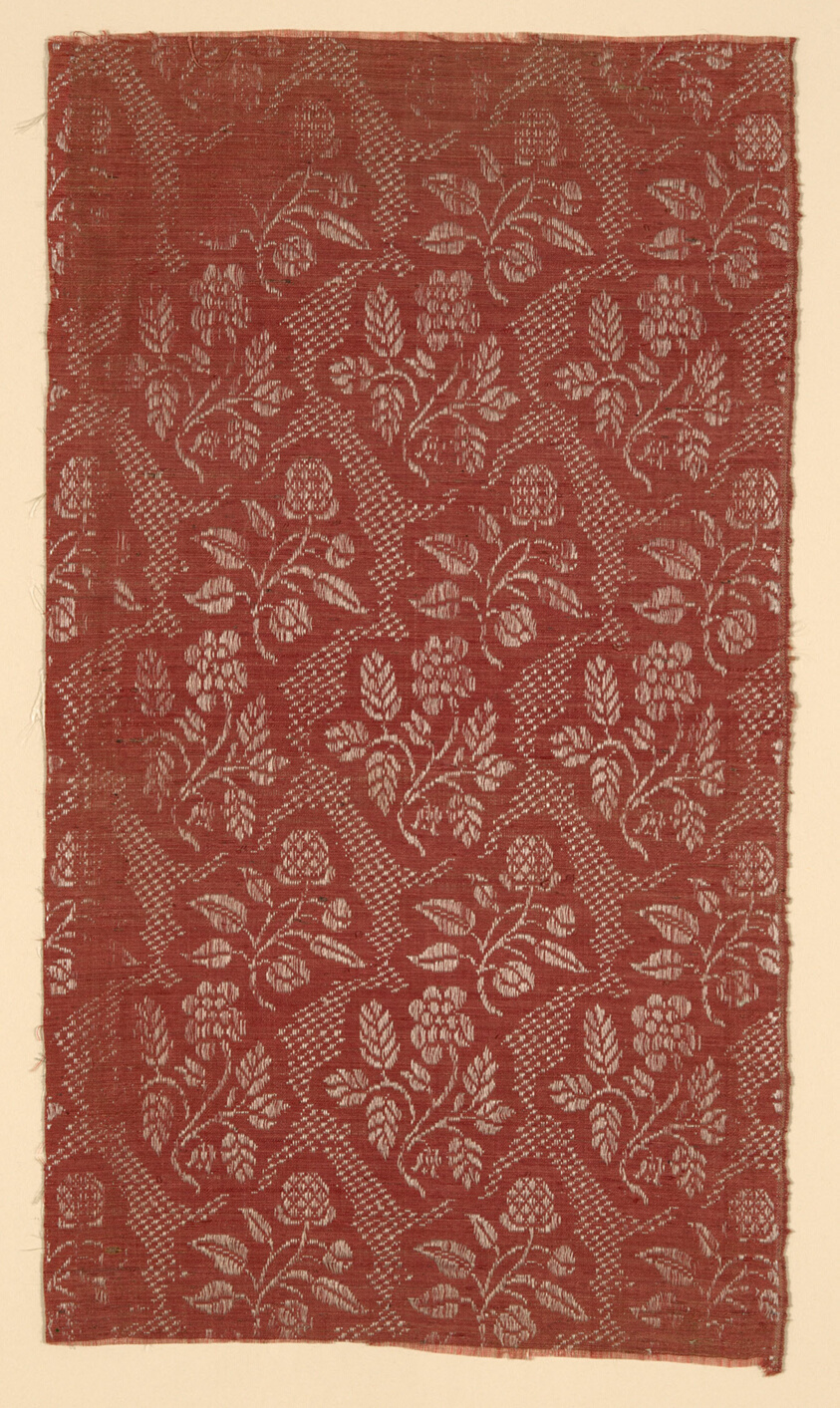
The artifact under examination is a fragment of silk, specifically a plain compound cloth, measuring approximately 12 inches by 8 inches. Its weave structure, a balanced plain weave with supplementary weft patterning, indicates a sophisticated level of craftsmanship typical of the late 19th to early 20th century. The silk itself is of the highest grade—mulberry-derived, with a lustrous sheen that catches light in a manner both subtle and commanding. The compound nature of the cloth suggests it was originally part of a larger garment or accessory, likely a gown or a tailored piece destined for the elite of London or Parisian society. The fragment’s edges are frayed, yet the integrity of the weave remains intact, a testament to the durability of classic silk craftsmanship.
Materiality: The silk’s hand is supple yet resilient, a paradox that defines the finest textiles. The plain compound structure, where a ground warp and weft are interlaced with a supplementary weft for pattern, creates a fabric that is both lightweight and structurally sound. This technique, perfected in the workshops of Lyon and later adopted by London’s Savile Row, allows for fluid elegance without sacrificing form. The fragment’s color—a deep, muted aubergine with hints of gold thread—speaks to a palette favored by the discerning clientele of the early 20th century, where understated opulence was the hallmark of taste.
Context: Classic Silk Craftsmanship and Fluid Elegance
To understand this fragment is to appreciate the lineage of silk craftsmanship that defined the golden age of tailoring. London’s Savile Row, the epicenter of bespoke tailoring, has long relied on silk as a medium for expressing fluid elegance. Unlike the rigid wools and tweeds of men’s suiting, silk offers a drape that moves with the body, creating a silhouette that is both graceful and authoritative. This fragment, with its plain compound weave, embodies that principle. The supplementary weft introduces a subtle pattern—perhaps a small-scale floral or geometric motif—that does not overwhelm the fabric but rather enhances its texture. This is the essence of classic silk craftsmanship: restraint, precision, and an unwavering commitment to quality.
The context of this fragment is not merely historical but also philosophical. In the world of heritage fashion, a fragment is not a remnant but a relic—a tangible connection to the hands that wove, dyed, and tailored it. The fluid elegance of silk is not accidental; it is the result of centuries of innovation in sericulture and weaving. From the ancient Silk Road to the ateliers of modern London, silk has been a symbol of luxury and refinement. This fragment, though small, carries that legacy. Its plain compound structure is a reminder that elegance often lies in simplicity—a lesson that Savile Row has championed since its inception.
Preservation and Interpretation
As a heritage artifact, this fragment requires careful preservation. The silk’s natural protein fibers are susceptible to light, humidity, and handling. Storage in a climate-controlled environment, with acid-free tissue and minimal exposure to ultraviolet light, is essential to prevent further degradation. The fragment’s frayed edges, while indicative of age, also offer an opportunity for interpretation. They tell a story of use—perhaps as part of a lining, a scarf, or a dress panel. The gold thread, though tarnished, still catches the eye, suggesting that this piece was meant to be seen, not hidden.
Interpretation: The fragment’s materiality and context converge to form a narrative of fluid elegance. In the hands of a Savile Row tailor, this silk would have been cut with precision, sewn with invisible stitches, and finished with a hem that defied gravity. The plain compound weave allows the fabric to flow like water, yet it holds its shape when tailored—a duality that is the hallmark of classic silk craftsmanship. This fragment is not just a piece of cloth; it is a study in balance—between structure and drape, tradition and innovation, opulence and restraint.
Significance to the Lauren Fashion Heritage Lab
For the Lauren Fashion Heritage Lab, this fragment serves as a pedagogical tool and a source of inspiration. It exemplifies the principles that underpin our mission: to preserve, study, and celebrate the artistry of fashion. The fragment’s plain compound silk is a masterclass in materiality, demonstrating how a simple weave can achieve profound elegance. It challenges modern designers to consider the tactile and visual qualities of fabric, rather than relying solely on digital rendering or synthetic materials. In an era of fast fashion, this fragment is a quiet rebellion—a reminder that true luxury is born from patience and skill.
Moreover, the fragment’s provenance—likely from a London or Parisian atelier—aligns with the Lab’s focus on heritage and craftsmanship. It invites further research into the workshops that produced such textiles, the artisans who wove them, and the clients who wore them. By studying this fragment, we can reconstruct not only a garment but also a world—a world where silk was the currency of elegance, and a fragment was never merely a scrap but a story waiting to be told.
Conclusion
In conclusion, this silk fragment is more than a textile artifact; it is a testament to the enduring power of classic craftsmanship. Its plain compound weave, fluid elegance, and material integrity speak to a tradition that Savile Row has upheld for centuries. As we preserve and interpret this fragment, we honor the hands that made it and the legacy it represents. For the Lauren Fashion Heritage Lab, it is a reminder that fashion’s past is not a relic but a resource—a wellspring of knowledge and beauty that continues to inform the future.
Final Reflection: The fragment, though incomplete, is whole in its significance. It teaches us that elegance is not about perfection but about intention—the intention to create something that endures, both in form and in spirit. This is the heritage we safeguard, one fragment at a time.