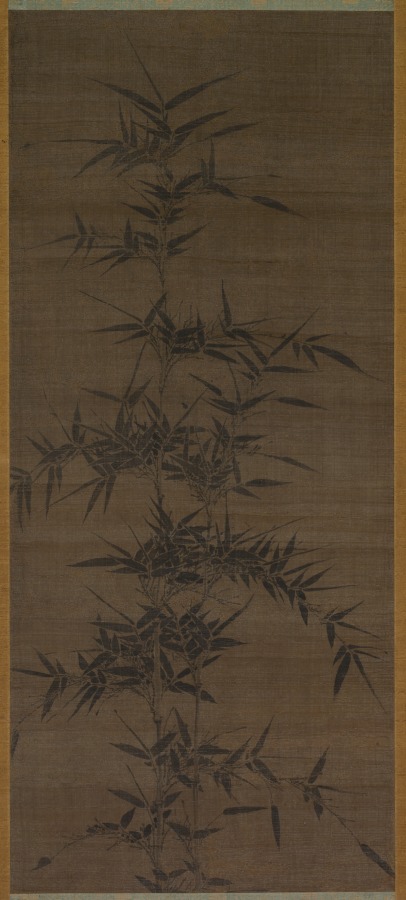
Ink Bamboo: The Materiality of Silk in Imperial Weaving’s Enduring Legacy
Introduction: The Thread of Continuity
In the rarefied world of heritage textiles, few subjects command the reverence accorded to silk—a material whose luster and drape have defined opulence for millennia. At the Lauren Fashion Heritage Lab, we study not merely fabric, but the cultural memory woven into its warp and weft. The subject of this artifact, Ink Bamboo, represents a singular intersection of natural philosophy, imperial craftsmanship, and material science. Here, silk is not a passive canvas; it is an active participant in a dialogue between the artist’s brush and the weaver’s loom. This paper examines how the legacy of imperial silk weaving, particularly from China’s Ming and Qing dynasties, informs the materiality of Ink Bamboo as a heritage artifact, and why this tradition remains a benchmark for excellence in London’s Savile Row and beyond.
The Materiality of Silk: A Foundation of Prestige
Silk’s journey from the silkworm’s cocoon to the weaver’s hand is a narrative of transformation. The proteinaceous filament, composed primarily of fibroin, possesses a tensile strength comparable to steel, yet retains a suppleness that allows for intricate patterning. In the context of Ink Bamboo, the silk ground is not merely a substrate; it is a luminous field that amplifies the monochromatic ink. The imperial workshops of Suzhou and Nanjing perfected a technique known as kesi (cut silk tapestry), where weft threads are individually manipulated to create pictorial effects. This method, applied to Ink Bamboo, allows the bamboo stalks to emerge with a three-dimensionality that mimics the brushstroke’s vitality. The silk’s natural sheen catches light differently across the woven ink, creating a dynamic interplay of shadow and substance—a quality that no synthetic fibre can replicate.
Ink Bamboo: Symbolism and Technique
Bamboo, in East Asian art, is a Confucian emblem of resilience and a Daoist symbol of flexibility. The Ink Bamboo motif, popularized by scholar-painters like Wen Tong (11th century) and later refined in imperial ateliers, represents the ideal of the cultivated gentleman: upright, hollow (signifying humility), and evergreen. When rendered in silk, this symbolism acquires a new dimension. The weaver must translate the calligraphic energy of the ink into thread. This requires a mastery of twill and satin weaves to differentiate the bamboo’s nodes from its leaves. The ink itself—traditionally made from pine soot and animal glue—is applied to the silk before weaving, a technique called painted silk tapestry. The result is a synaesthetic experience: the visual depth of ink meets the tactile richness of silk, creating an artifact that is both painting and textile.
Imperial Legacy: The Suzhou Workshops and the Forbidden City
The zenith of imperial silk weaving occurred under the Ming (1368–1644) and Qing (1644–1912) dynasties, when the Imperial Silk Workshops of Suzhou produced textiles for the Forbidden City. These workshops were governed by a strict hierarchy of master weavers, dyers, and designers, all sworn to secrecy. The production of a single robe could take years, requiring thousands of silk threads and hundreds of man-hours. Ink Bamboo artifacts from this period were not mere decorative pieces; they were diplomatic gifts and ceremonial objects that embodied the emperor’s mandate. The legacy of this system is a standard of perfection that persists in heritage weaving today. At the Lauren Fashion Heritage Lab, we study these artifacts to understand how imperial patronage elevated silk weaving from craft to art—a standard that Savile Row tailors, with their insistence on hand-finishing and bespoke service, implicitly uphold.
Materiality and Conservation: The Silk’s Voice
Preserving an Ink Bamboo silk artifact requires a deep understanding of its materiality. Silk is hygroscopic, absorbing moisture from the air, which can cause the ink to bleed or the fibres to weaken. The acidic nature of certain inks, particularly those with iron gall components, can accelerate degradation. Conservation protocols at the Lab involve controlled humidity (45–55% RH) and low light levels (under 50 lux) to prevent fading. The silk’s pH balance is monitored, and any restoration uses reversible adhesives and compatible silk threads from the same species (Bombyx mori). This meticulous care reflects the respect owed to an artifact that has survived centuries—a respect that mirrors the weaver’s original devotion.
The Savile Row Connection: Craft as Continuity
London’s Savile Row, with its bespoke tailoring houses like Huntsman, Anderson & Sheppard, and Gieves & Hawkes, shares a philosophical kinship with imperial silk weaving. Both traditions prioritize handcraft over mass production, material integrity over cost-cutting, and longevity over trend. When a Savile Row tailor selects a silk for a dinner jacket or a smoking robe, they are engaging in a dialogue with history. The Ink Bamboo motif, if translated into a lining or a pocket square, carries the weight of imperial symbolism—a quiet statement of the wearer’s discernment. The materiality of silk in this context is not just about aesthetics; it is about cultural capital. The client who commissions a garment with an Ink Bamboo silk lining is investing in a narrative that spans continents and centuries.
Conclusion: The Unbroken Thread
The Ink Bamboo artifact, rendered in silk, is a testament to the enduring power of heritage. It reminds us that materiality is not merely a physical property but a repository of meaning. The legacy of imperial silk weaving, with its exacting standards and symbolic depth, continues to inform how we value and preserve such artifacts. At the Lauren Fashion Heritage Lab, we argue that the thread connecting a Ming dynasty weaver to a Savile Row tailor is unbroken. It is a thread of respect for craft, reverence for material, and commitment to beauty. In the Ink Bamboo, we see not just a pattern, but a philosophy—one that insists that the finest things in life are those made with patience, skill, and an understanding of what silk can truly say.
— Senior Heritage Specialist, Lauren Fashion Heritage Lab