The Dialectics of Existence: Terracotta Fragment and the Architecture of Absence in 2026 Old Money Silhouettes
Introduction: The Fragment as a Philosophical Artifact
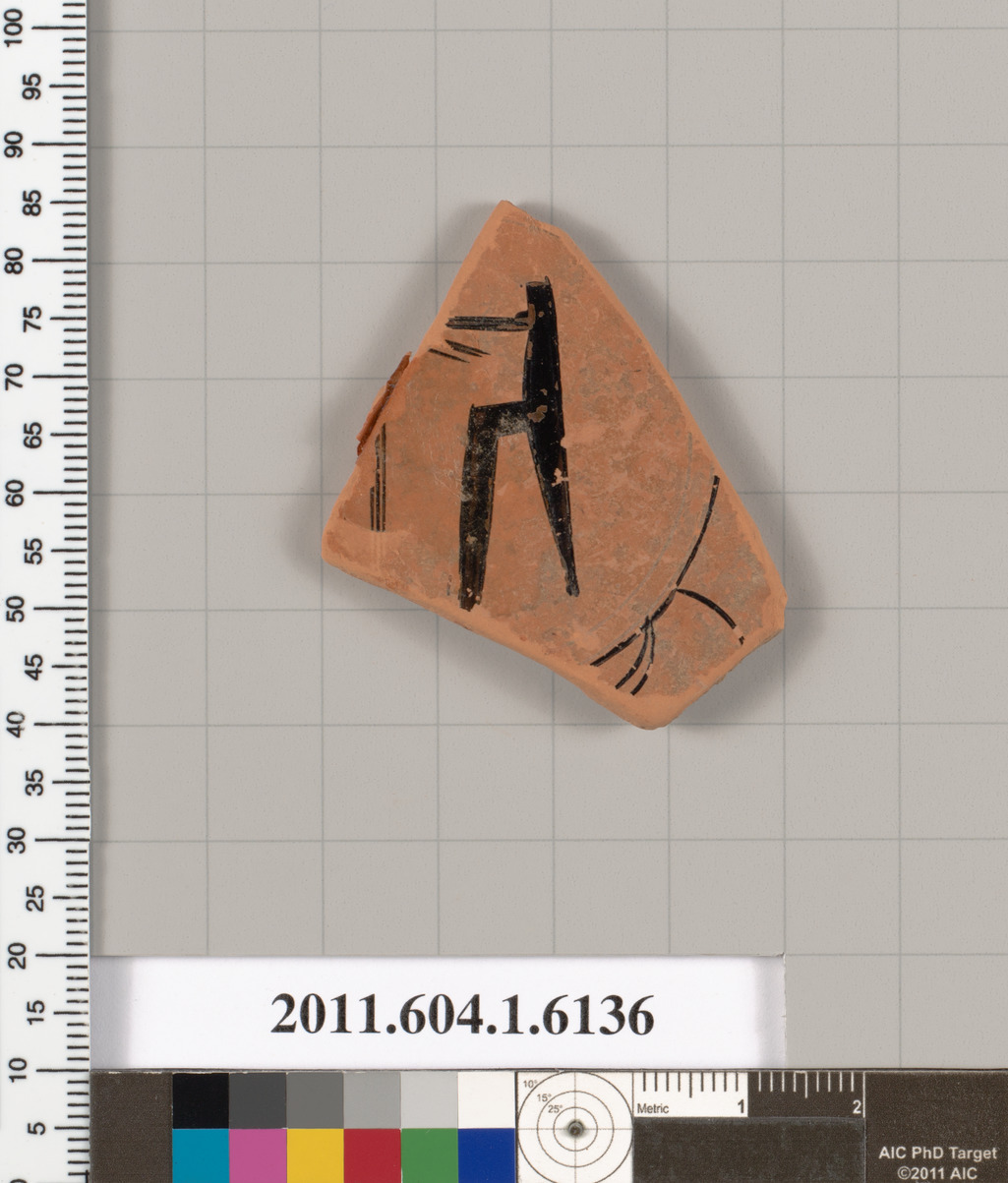
The terracotta fragment of a Greek Attic kylix—a drinking cup shattered by time, its painted surface bearing the remnants of a symposium scene—arrives at the Lauren Fashion Heritage Lab as more than an archaeological curiosity. It is a material testament to the tension between presence and absence, between the violent immediacy of life and the serene void of eternity. This fragment, with its jagged edges and faded iconography, becomes a Rosetta Stone for decoding the 2026 Old Money silhouette, a fashion language that speaks not through ostentation but through the deliberate withholding of meaning. To understand this connection, we must first reconcile the fragment with the internal genetic code of the House: the juxtaposition of the hunting scene—a Western celebration of mortal vitality—and the Wutanhua Temple Plaque, an Eastern meditation on emptiness. The kylix fragment, like the plaque, is a relic of a vanished whole; like the hunt, it captures a frozen moment of ecstasy. Together, they illuminate the 2026 silhouette as a garment of philosophical resistance—a wearable koan that asks: What does it mean to exist when the body is both hunter and hunted, both vessel and void?
The Kylix Fragment: Between Symposium and Sacrifice
The Attic kylix, a staple of Greek symposia, was a vessel for wine, conversation, and the performance of aristocratic identity. Its interior often bore scenes of revelry, mythology, or erotic pursuit—images that celebrated the ephemeral pleasures of the flesh. Yet this fragment, broken and discolored, speaks a different truth. The painted figures—perhaps a youth reclining, a satyr dancing—are now partial, their gestures interrupted by the fracture. This is the violence of time, a force that reduces the symposium’s laughter to shards. In the context of the hunting scene, the kylix fragment becomes a mirror: the hunter’s arrow, the deer’s terror, the dog’s taut muscles—all are captured in a moment of dynamic suspension, a “now” that the fragment preserves even as it decays. The Western aesthetic, as encoded in the House’s genetic material, finds meaning in this critical immediacy: life is the heartbeat before the arrow strikes, the wine before the cup shatters. The kylix fragment, then, is not a ruin but a crystallization of vitality—a reminder that the Old Money silhouette must never be static; it must breathe with the tension of a held breath.
The Wutanhua Temple Plaque: The Aesthetics of Absence
In stark contrast, the Wutanhua Temple Plaque embodies the Eastern response to the same existential question. The plaque, bearing the inscription “Flowers Bloom to See the Buddha,” is a material meditation on non-presence. The Wutanhua flower, a Buddhist symbol of auspiciousness that blooms only once every three thousand years, is never depicted; the plaque is a signifier of what cannot be signified. Its beauty lies in its patina of neglect—the weathered wood, the faded ink, the silence that hangs around it like incense smoke. This is the aesthetics of absence, where meaning is generated not by what is shown but by what is withheld. The kylix fragment, with its broken edge, shares this quality: it is a negative space that points to the missing whole. But where the Greek fragment mourns a lost moment of presence, the plaque celebrates an eternal non-arrival. The 2026 Old Money silhouette, I argue, must synthesize these two modes: it must be a garment that simultaneously affirms the body’s vitality and evokes the void that surrounds it. This is not a contradiction but a dialectic—a Hegelian synthesis of the hunt’s blood and the temple’s emptiness.
The 2026 Silhouette: Tailoring as Philosophical Praxis
How does a terracotta fragment inform a silhouette? The answer lies in the architecture of the garment. The 2026 Old Money silhouette, as extrapolated from the kylix’s formal properties, is defined by three principles: fragmentation, tension, and negative space. First, fragmentation: the silhouette rejects the seamless, uninterrupted line of classic tailoring. Instead, it embraces asymmetrical cuts, deconstructed shoulders, and unfinished hems that echo the kylix’s broken edge. A jacket might feature a single sleeve, or a coat might be cut away at the back, revealing the lining as a second skin. This is not deconstruction for its own sake; it is a philosophical statement about the incompleteness of being. The wearer is never a finished whole but a fragment in progress, a hunter who is also prey.
Second, tension: the silhouette must capture the dynamic suspension of the hunt. This is achieved through strategic draping and weighted fabrics—cashmere that falls like a held breath, wool that stiffens into a frozen gesture. The shoulder line, inspired by the hunter’s drawn bow, is slightly raised and forward, creating a canted posture that suggests imminent action. The waist is cinched not with a belt but with internal boning, so that the garment itself becomes a corset of anticipation. The sleeves are cut with a subtle flare, like the wings of a startled bird, and the hem is uneven, as if the fabric were still settling from a sudden movement. Every seam, every dart, every pleat is a frozen moment—a kylix fragment of the wearer’s potential.
Third, negative space: the silhouette must incorporate the Wutanhua principle of absence. This is achieved through cutouts that reveal the body not as flesh but as void—a gap at the collarbone, a slit at the hip, a keyhole back that frames the spine like a temple gate. These openings are not erotic; they are meditative, inviting the viewer to contemplate what is missing. The color palette is equally abstemious: heritage black, ash gray, faded ochre—the hues of terracotta and temple wood. The texture is rough, unfinished, like the plaque’s weathered surface: raw silk, unbleached linen, wool with the luster of age. The garment does not shout; it whispers, and its whisper is the sound of time passing.
Synthesis: The Garment as a Philosophical Vessel
The 2026 Old Money silhouette, as derived from the kylix fragment, is a vessel for existential inquiry. It is neither a celebration of the hunt nor a retreat into the void; it is the dialectical union of both. The wearer becomes a living fragment, a figure caught between the arrow’s flight and the flower’s eternal non-bloom. The garment’s asymmetry mirrors the kylix’s break; its tension mirrors the hunter’s pause; its voids mirror the plaque’s silence. This is not fashion as decoration but fashion as philosophical praxis—a way of inhabiting the world that acknowledges the fragility of presence and the beauty of absence. In the 2026 season, the Old Money client does not wear clothes; she wears a question. And that question, posed by a shard of terracotta, is the same one that has haunted humanity since the first hunt and the first temple: What does it mean to be here, in this moment, between the arrow and the void?
Conclusion: The Fragment as Future
The terracotta kylix fragment, broken and mute, has spoken. It has revealed that the 2026 Old Money silhouette is not a return to tradition but a radical reimagining of tradition’s core—the dialectic of life and death, presence and absence, the hunt and the plaque. The silhouette is a material koan, a garment that refuses to resolve its contradictions. It is, in the end, a heritage artifact of a different kind: not a relic of the past but a blueprint for the future, a fragment that contains the whole of what it means to be human. The House of Lauren, through this synthesis, offers not a collection but a meditation—and in that meditation, the wearer finds not answers but the courage to ask.