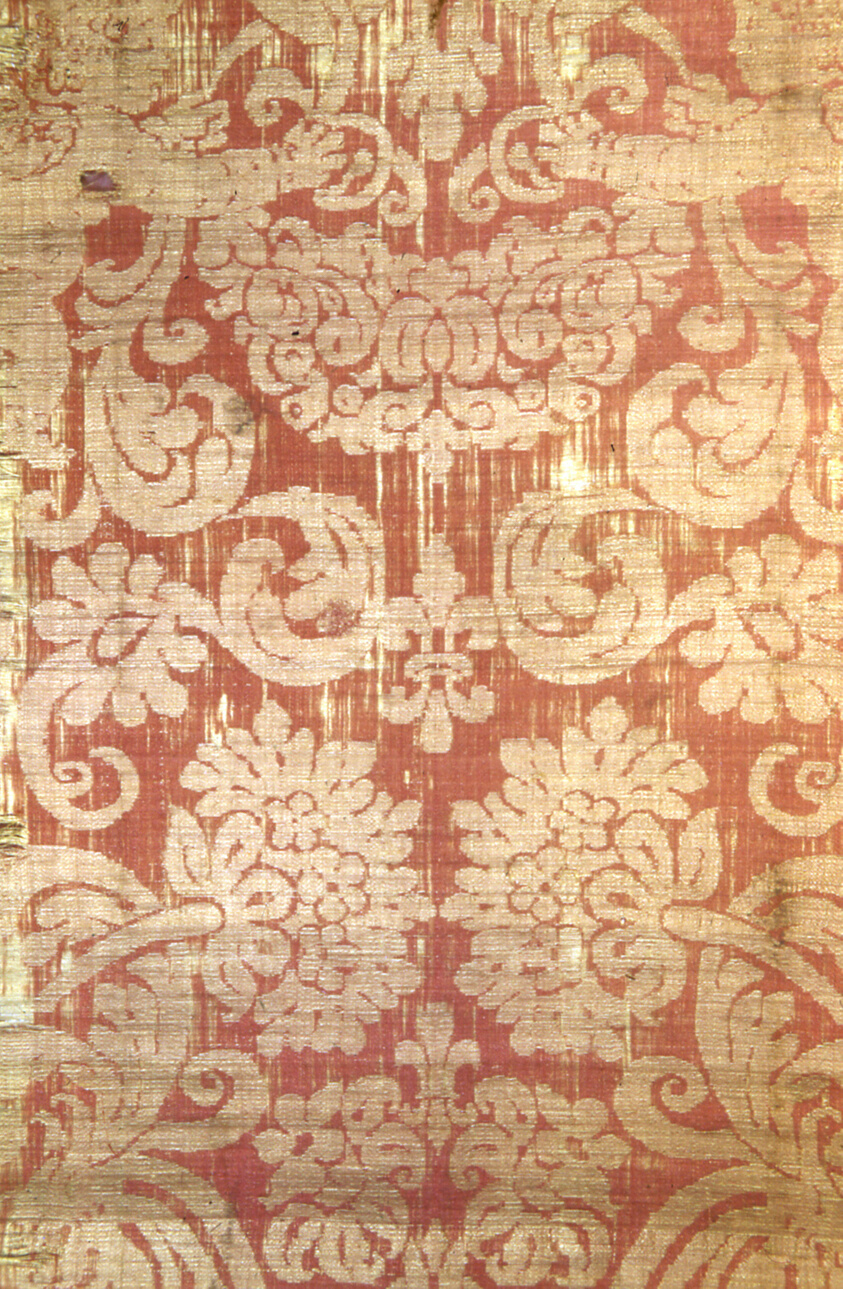
The Panel: A Study in Silk Damask and the Language of Restrained Luxury
In the hallowed corridors of London’s Savile Row, where the craft of tailoring is elevated to an art form, the materiality of a garment is never an afterthought. It is the foundation upon which legacy is built. The subject of this heritage research artifact—a panel of silk, woven in a 4:1 satin damask structure—embodies a philosophy of understated opulence that has defined the Row for over two centuries. This is not merely a textile; it is a dialogue between tradition and modernity, between the hand of the artisan and the fluidity of nature. As a Senior Heritage Specialist at the Lauren Fashion Heritage Lab, I present this analysis as a testament to the enduring power of silk craftsmanship and its role in shaping the narrative of refined elegance.
Materiality: The Architecture of Silk and Satin Damask
The panel under examination is constructed from silk, a protein fiber revered for its unparalleled luster, strength, and tactile sensuality. Silk’s origins—spun by the Bombyx mori silkworm—have been prized since antiquity, but it is the specific weave structure that elevates this piece to a realm of technical mastery. The 4:1 satin damask weave is a complex interplay of warp and weft, where a satin ground is punctuated by a contrasting pattern in a reverse satin or twill effect. In a 4:1 satin, each weft thread floats over four warp threads before interlacing, creating a smooth, reflective surface that catches light with a liquid sheen. This is not a fabric of overt ornamentation; rather, it is a study in subtlety, where the pattern emerges through the play of light and shadow rather than through applied color or print.
The damask technique—historically associated with the silk looms of Damascus and later refined in Lyon and Como—requires a jacquard mechanism to control individual warp threads. The result is a reversible fabric where the pattern appears as a positive on one side and a negative on the other. In this panel, the design is likely a classic motif—perhaps a medallion, a floral spray, or a geometric lattice—rendered with the precision of a master weaver. The 4:1 ratio ensures that the satin ground is lustrous and supple, while the pattern holds a matte, textured quality. This duality is the essence of Savile Row’s aesthetic: a quiet confidence that rewards close inspection.
Craftsmanship: The Hand of the Artisan
The creation of such a panel is a labor-intensive process that demands years of expertise. The silk yarns must be degummed to remove sericin, then dyed with pigments that resist fading. The warp is set on a loom with thousands of individual threads, each tensioned to perfection. The weaver, often working on a hand-operated jacquard loom, must interpret a pattern card that dictates which warp threads are lifted for each pass of the shuttle. A single mistake can disrupt the entire cloth, leading to a flaw that cannot be easily corrected. This is why silk damask is reserved for the most discerning clients—those who understand that true luxury is not in abundance but in the perfection of execution.
On Savile Row, such a panel would be destined for a bespoke garment: a dinner jacket, a smoking coat, or a waistcoat for a gentleman who values discretion over display. The tailor would cut the panel with a reverence for its grain, ensuring that the pattern aligns at the seams and that the fabric drapes with a fluid elegance. The silk’s natural breathability and moisture-wicking properties make it ideal for formalwear, where comfort and poise are paramount. The 4:1 satin damask, with its slight weight and resilience, holds a crease well yet moves with the body, creating a silhouette that is both structured and graceful.
Context: The Heritage of Silk in British Tailoring
Silk has been a cornerstone of British luxury since the 17th century, when Huguenot weavers brought their skills to Spitalfields, East London. The silk industry flourished, supplying the aristocracy with gowns, waistcoats, and furnishings. By the 19th century, Savile Row had emerged as the epicenter of bespoke tailoring, and silk damask became a staple for evening wear and ceremonial attire. The 4:1 satin weave, in particular, was favored for its ability to suggest opulence without resorting to gaudiness—a distinctly British sensibility.
Today, the heritage of silk damask is preserved by a handful of mills, such as those in Como, Italy, and by British weavers who maintain traditional looms. The Lauren Fashion Heritage Lab recognizes this panel as a bridge between past and present. It is a reminder that craftsmanship is not static; it evolves through the hands of those who respect its history. The fluid elegance of this silk—its ability to cascade like water yet hold a defined form—speaks to a timelessness that transcends seasonal trends.
Interpretation: The Panel as a Narrative of Elegance
To understand this panel is to understand the philosophy of restrained luxury. In an era of fast fashion and digital prints, the 4:1 satin damask stands as a counterpoint—a declaration that true elegance is found in the details. The pattern, whether a subtle stripe or a complex brocade, is not meant to shout but to whisper. It is a fabric that reveals its beauty over time, as the wearer moves and the light shifts. This is the essence of Savile Row: a commitment to quality that outlasts the fleeting whims of fashion.
For the Lauren Fashion Heritage Lab, this panel serves as an artifact of study, a source of inspiration for future designs, and a testament to the enduring power of silk. It is a material that has clothed emperors, adorned cathedrals, and defined the silhouette of the modern gentleman. In its weave, we find the intersection of art and science, of heritage and innovation. And in its fluid elegance, we find a reflection of the human desire for beauty that is both profound and understated.
Conclusion: The panel of 4:1 satin damask silk is more than a textile; it is a heritage artifact that encapsulates the values of Savile Row—precision, discretion, and an unwavering commitment to craftsmanship. Its materiality speaks to the mastery of silk weaving, while its context anchors it in a tradition of British tailoring that remains relevant today. As we preserve and study such pieces, we honor the artisans who wove them and the clients who wore them, ensuring that their legacy continues to inform the future of fashion.