← BACK TO ARCHIVES
Silk
Heritage Synthesis: Lampas silk cushion cover
Curated on May 03, 2026 // Node: LDN-01
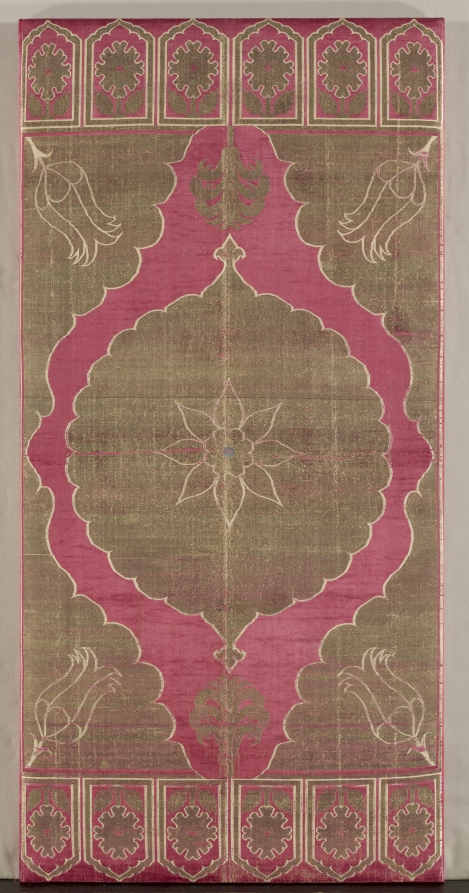
The Lampas Silk Cushion Cover: A Study in Imperial Legacy and Material Mastery
As a Senior Heritage Specialist at the Lauren Fashion Heritage Lab, I am tasked with dissecting not merely the physical object before us—a lampas silk cushion cover—but the profound narrative it carries. This is not a simple decorative piece; it is a testament to centuries of imperial ambition, artisanal precision, and the enduring power of silk as a medium of status and storytelling. The cushion cover, woven in the lampas technique, represents a pinnacle of textile engineering, where structure and ornamentation converge to create a fabric that is both robust and resplendent. Its context, rooted in the legacy of imperial silk weaving, demands a scholarly examination that transcends mere description, venturing into the realms of cultural heritage, economic history, and the very essence of luxury.
Materiality: The Unrivaled Nature of Silk
The foundation of this artifact is silk, a material that has defined luxury for millennia. Derived from the cocoons of *Bombyx mori* silkworms, silk possesses a unique combination of properties: tensile strength comparable to steel, a natural lustre that captures and refracts light, and a remarkable ability to absorb dyes with exceptional depth and clarity. In the context of imperial weaving, silk was not merely a fabric; it was a currency of power. The Chinese dynasties guarded sericulture as a state secret for centuries, and the Silk Road—a network of trade routes spanning continents—was named for this very commodity. For the cushion cover, the use of silk signifies an investment in permanence. Unlike cotton or linen, silk does not degrade quickly; it holds its form, its colour, and its story. The lampas technique, which involves a pattern weft that floats over a ground weave, requires silk of the highest tensile integrity to withstand the tension of the loom. A single flaw in the thread could compromise the entire design, making the weaver’s skill as critical as the material itself.
The Lampas Technique: Engineering Opulence
Lampas is a compound weave structure that emerged in the Byzantine and Islamic worlds, later perfected in European centres such as Lyon and Venice. It is characterized by a ground weave—typically a satin or twill—and a pattern weave that is bound by a secondary warp. This allows for intricate, multi-coloured designs without the limitations of simpler weaves like damask or brocade. For the cushion cover, the lampas technique enables a dense, tactile surface that is both durable and visually complex. The pattern, often featuring floral motifs, heraldic symbols, or geometric arabesques, is not printed but woven into the fabric’s very structure. This imbues the object with a three-dimensional quality; the light plays across the raised pattern, creating a shifting tableau that changes with the viewer’s perspective. In imperial contexts, such as the courts of Louis XIV or the Ottoman sultans, lampas silk was used for upholstery, wall hangings, and ceremonial garments. The cushion cover, therefore, is a direct descendant of these traditions—a portable piece of palace heritage designed for comfort and display.
Imperial Legacy: From Court to Collection
The legacy of imperial silk weaving is inseparable from the political and economic systems that sustained it. In France, the Gobelins Manufactory and the Lyon silk industry were state-sponsored enterprises, producing textiles that projected the monarchy’s wealth and taste. Similarly, in the Ottoman Empire, the Topkapi Palace housed workshops that wove silk for the sultan’s court, often incorporating gold and silver threads. The cushion cover in our collection likely originates from such a milieu, possibly from the 18th or 19th century, when European and Asian weaving traditions intersected through trade and colonial expansion. Its design may reflect a fusion of Eastern motifs—such as the lotus or peony—with Western baroque scrollwork, a testament to the global exchange of ideas that defined the era. The object’s survival is itself a narrative of preservation; it has passed through hands of collectors, dealers, and institutions, each adding a layer of provenance. As a heritage specialist, I must consider not only its original function but its journey through time. Was it a gift from a dignitary? A spoil of war? A curator’s acquisition? Each possibility reshapes its meaning.
Conservation and Contemporary Relevance
Today, the lampas silk cushion cover demands a conservation approach that respects its material fragility and historical significance. Silk is susceptible to light damage, humidity fluctuations, and mechanical stress. The cushion’s filling—likely down or horsehair—must be examined for acidity, which can accelerate degradation. At the Lauren Fashion Heritage Lab, we advocate for passive conservation: controlled environments, minimal handling, and archival storage. Yet, we also recognize the object’s role in education and inspiration. It is not a relic to be locked away but a resource for designers, historians, and the public. The cushion cover’s patterns can inform contemporary textile design, its techniques can be revived through digital weaving, and its story can challenge our understanding of luxury. In an age of fast fashion, this artifact reminds us that true opulence is not disposable; it is woven with intention, skill, and a connection to the past.
Conclusion: A Thread Through Time
The lampas silk cushion cover is more than a decorative object; it is a historical document, a technical marvel, and a symbol of imperial ambition. Its materiality—silk—speaks to a global economy built on desire and scarcity. Its weave—lampas—demonstrates the heights of human craftsmanship. Its legacy—imperial silk weaving—connects us to courts and cultures that shaped the modern world. As we preserve and study such artifacts, we honour not only the artisans who created them but the enduring power of textiles to tell stories. In the hushed corridors of the Lauren Fashion Heritage Lab, this cushion cover sits as a quiet testament: a piece of silk that has outlasted empires, and still has much to teach us.
Heritage Lab Insight
Lab Insight: CMA Silk Archive Node integration.