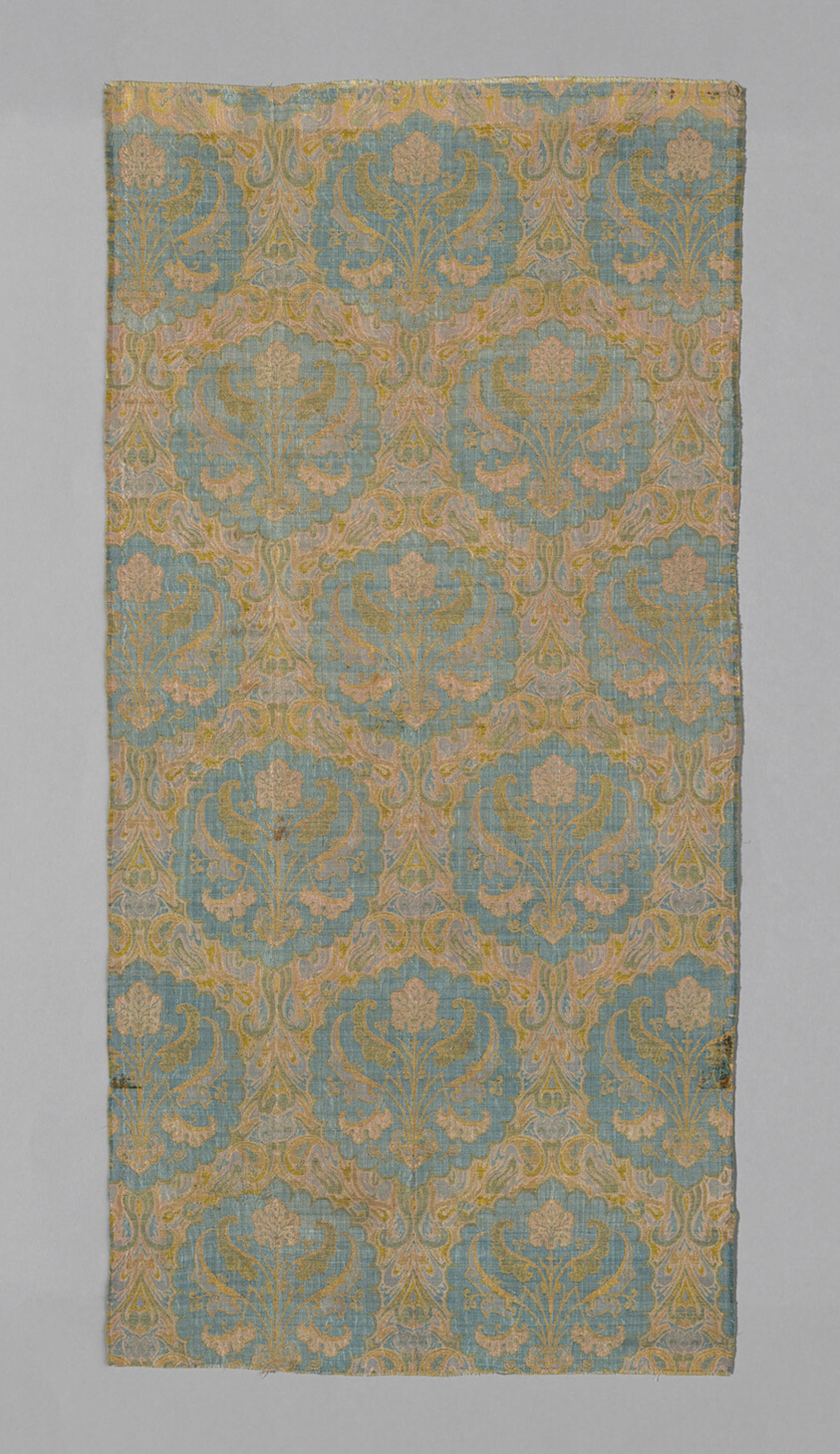
An Examination of Structural Virtuosity: The Double Cloth Silk Panel
To the discerning eye, the mere designation "silk" conveys little of consequence. It is a broad church, sheltering everything from the simplest of habutai to the most exuberant of brocades. Our subject, a panel of dress fabric, demands a more precise liturgy. Here, we are presented not with a singular textile, but with a harmonious duet of structures, a deliberate and sophisticated exercise in material engineering that elevates the base fibre to an artefact of considered luxury. The foundational grammar is a 2:1 twill weave—a classic, robust syntax known for its inherent diagonal lineage, its supple drape, and its admirable resilience. This twill provides the essential ground, the dependable chassis upon which the more complex narrative is built.
The Architecture of Fluidity: Complementary Weft Plain Weave Double Cloth
It is, however, in the application of the complementary weft plain weave double cloth technique that the fabric ascends to its distinguished station. This is not mere surface ornamentation; it is integral construction. The methodology involves the simultaneous weaving of two discrete layers of plain weave cloth, bound at intervals by a shared, or complementary, weft thread. The result is a textile of profound substance and singular character.
Consider the implications. Where a standard silk crepe or satin offers a singular face and hand, this double cloth presents two. Each surface, typically, will exhibit a different colour or shade, a subtle play of tone-on-tone that speaks of depth rather than ostentation. The weight is inherently more substantial, not through cumbersome addition, but through intelligent, layered construction. This yields a gravity of drape that is the very antithesis of flimsiness; the fabric falls not merely with softness, but with a deliberate, parabolic elegance, holding a knife-pleat or a tailored seam with authoritative poise.
The structural genius extends to the tactile experience. The plain weave layers, locked in their delicate embrace, create a micro-texture—a fine, almost imperceptible corded effect—that catches the light with a restrained lustre, quite distinct from the blatant shine of a satin or the matte humility of a taffeta. It is a light of depth, absorbed and re-emitted through the fabric’s strata. Furthermore, this bonded, bi-layer constitution affords a notable integrity. It is resistant to the seam slippage that can plague simpler weaves, and possesses an innate stability that belies its ultimate fluidity, a paradox cherished by the master cutter.
Classic Craftsmanship and the Savile Row Application
This is a fabric that does not shout. It converses, in low, measured tones, with the traditions of classic silk craftsmanship. Its virtues are those of the atelier, not the assembly line: patience, precision, and a profound understanding of the interaction between fibre, loom, and intended form. The complementary weft technique is a relic of thoughtful, unhurried production, where the creation of intrinsic beauty is valued above mere expediency.
In the context of Savile Row and its global progeny, such a panel presents both a promise and a challenge. Its fluid elegance is not that of the languid dressing gown, but of the impeccably tailored evening waistcoat, the fluidly structured blouson, or the evening gown that relies on architecture rather than adornment. For the tailor, it is a demanding collaborator. The shears must be razor-keen to respect the integrity of the weave; the needle must find its path without disturbing the delicate balance of the two cloths; the pressing iron must converse with the silk’s memory to set, not crush, its elegant fall.
The resulting garment possesses a quiet authority. It moves with the wearer, yet retains its essential form. It possesses a richness that is felt before it is seen—a weight in the hand, a decisive swing in the skirt, a crisp yet soft roll on a lapel. In an age of visual noise, this fabric is a sanctuary of substance. It speaks of a wearer who understands that true luxury resides not in logo nor in extreme silhouette, but in the cultivated space between the body and the cloth, in the silent, assured dialogue of superior materials executed with peerless technique.
Conclusion: An Artefact of Considered Luxury
Thus, this silk panel stands as a definitive research artefact in the lexicon of heritage textiles. It transcends the category of mere "dress fabric" to become a case study in material intelligence. The 2:1 twill weave provides the dependable foundation, while the complementary weft double cloth construction builds upon it an edifice of aesthetic and functional refinement. It embodies the principle that elegance is, at its core, a structural virtue—a product of density, weight, and interconnectedness, all culminating in that most prized and elusive quality: a flawless, fluid drape. It is a reminder that in the highest echelons of sartorial endeavour, what is hidden within the weave is often the very source of its visible glory.