From Kylix to Couture: The Terracotta Fragment as a Blueprint for 2026 Old Money Silhouettes
Introduction: The Archaeology of Elegance
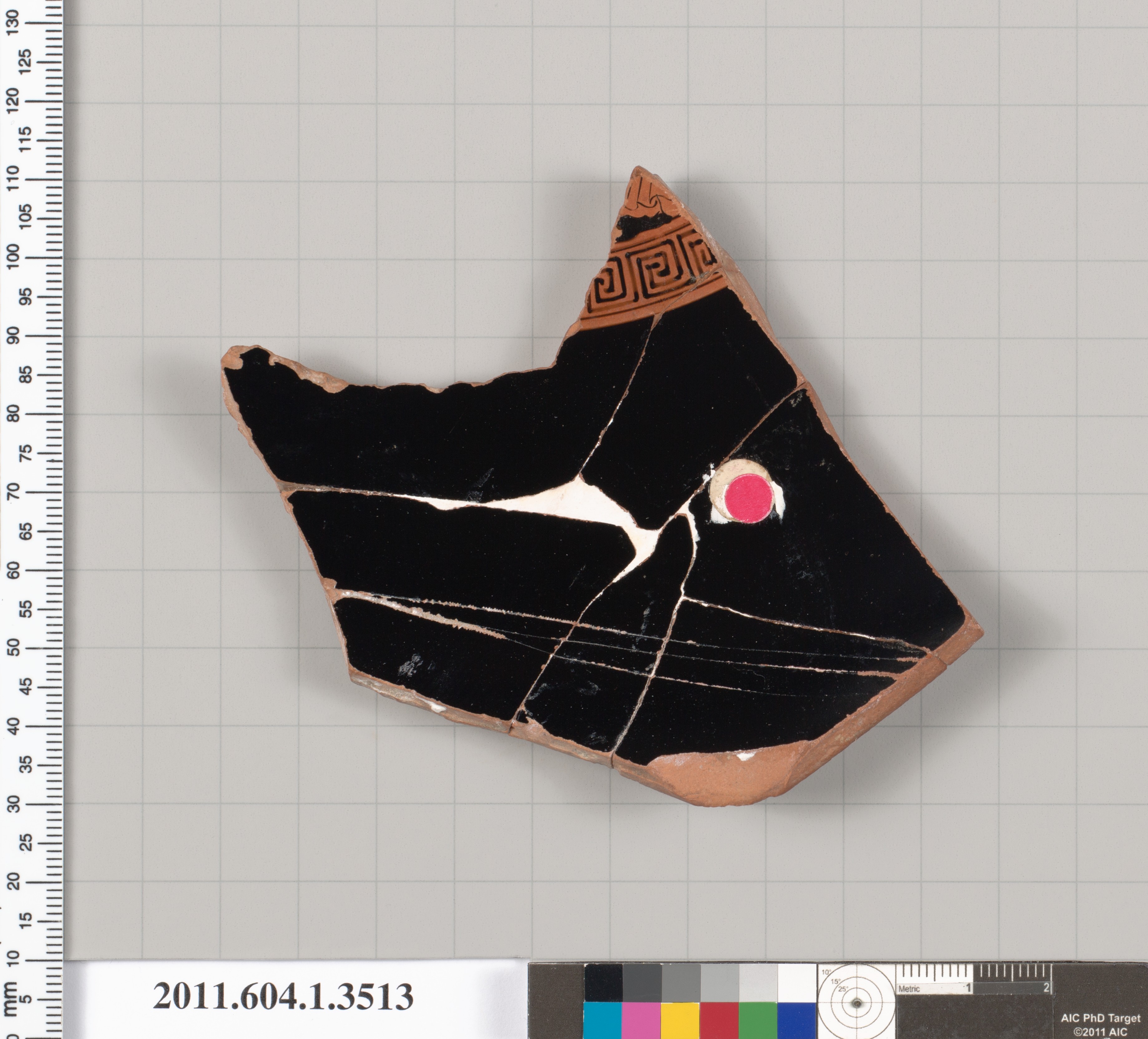
The Lauren Fashion Heritage Lab is tasked with a singular mission: to decode the enduring codes of luxury through the lens of material culture. In this analysis, we examine a Terracotta fragment of a kylix (Greek, Attic, circa 5th century BCE) as a visual source for the 2026 Old Money silhouette. At first glance, a broken drinking cup from antiquity appears distant from the tailored lines of a cashmere blazer or the drape of a silk gown. Yet, within its fired clay, we discover the genetic blueprint for a design philosophy that Lauren Fashion has long championed: the quiet authority of form, the patina of time, and the restraint of ornament.
This fragment is not merely a relic; it is a manifesto. Its curved rim, the residual black-figure glaze, and the tactile roughness of its breakage speak to a culture that valued proportion, balance, and the interplay of light and shadow. For the 2026 Old Money aesthetic—a lexicon of understated wealth, generational continuity, and sartorial permanence—the kylix offers three foundational principles: the architecture of the curve, the discipline of negative space, and the valorization of imperfection.
Principle I: The Architecture of the Curve
The kylix, as a drinking vessel, is defined by its shallow bowl and two opposing handles. Its silhouette is one of controlled asymmetry—a gentle, outward flare that tapers to a stable base. This form is not accidental; it is engineered for the human hand, for the ritual of symposium, for the social choreography of pouring and passing. In the 2026 Old Money wardrobe, this translates directly into the shoulder line and the sleeve volume.
Consider the double-breasted blazer for women, a cornerstone of the Lauren Heritage-Black collection. The kylix’s curve informs a new silhouette: a softly rounded shoulder that extends just beyond the natural line, reminiscent of the vessel’s rim. This is not the aggressive power shoulder of the 1980s, but a muted, architectural sweep that suggests ease and permanence. The fabric—whether a dense wool crepe or a matte cashmere—must hold this curve without stiffness, mimicking the fired clay’s ability to retain shape while appearing organic. The handles of the kylix, often decorated with palmettes or geometric bands, inspire the sleeve vent detailing: a subtle, functional slit that reveals a lining of silk charmeuse, echoing the interior glaze of the ancient cup.
Furthermore, the kylix’s footed base—a low, flared stem—translates into the trouser hem. For 2026, Old Money trousers will feature a slight, almost imperceptible flare from the knee downward, creating a stable, grounded line. This is a direct counterpoint to the skinny or tapered leg; it is a silhouette that commands space without shouting, much like the kylix’s presence on a marble table.
Principle II: The Discipline of Negative Space
The terracotta fragment’s most profound lesson lies in what is absent. The broken edges, the missing handles, the faded glaze—these are not flaws but narratives of use and decay. In the context of the 2026 Old Money aesthetic, this translates into a radical embrace of negative space in garment construction. The kylix teaches us that luxury is not about accumulation of detail, but about the eloquence of the void.
This principle manifests in the neckline and backless designs of evening wear. A gown inspired by the kylix will feature a deep, sculptural cowl at the front—a curve that mirrors the bowl’s interior—while the back is left almost entirely bare, save for a single, thin strap that traces the spine. This is not a display of skin for its own sake; it is a compositional choice that allows the body to become the negative space, the canvas upon which the garment’s architecture is read. The fabric—a liquid silk or a matte jersey—must drape with the same weighted fluidity as the kylix’s clay, pooling at the waist before releasing into a full skirt.
In tailoring, negative space appears in the unlined jacket and the unfinished hem. The 2026 Old Money silhouette will reject the fully constructed, padded interior in favor of a raw, exposed seam—a deliberate nod to the fragment’s broken edge. This is not a trend; it is a philosophical stance. The unfinished hem signals that the garment is a work in progress, a living artifact that will continue to evolve with its wearer. It is the sartorial equivalent of the kylix’s patina, a testament to time and use.
Principle III: The Valorization of Imperfection
The Chinese scholar’s rock, as described in the internal genetic code, celebrates the “thin, wrinkled, leaky, and transparent” as pathways to spiritual transcendence. The kylix fragment, in its broken state, offers a parallel Western aesthetic: the beauty of the incomplete. For the 2026 Old Money silhouette, this means a deliberate departure from the pristine, the new, and the flawless. The wrinkled linen suit, the slightly faded indigo denim, the cashmere sweater with a visible mend—these are not signs of neglect but of curated history.
The kylix’s terracotta color—a warm, earthy orange-brown—becomes a palette anchor for the 2026 collection. This is not a bright, synthetic terracotta, but a muted, mineral tone that shifts in light, much like the ancient clay. It will appear in double-faced wool coats, in leather accessories, and in the lining of a trench. This color is a statement of grounded luxury, a rejection of the ephemeral in favor of the elemental.
Furthermore, the kylix’s black-figure decoration—often depicting mythological scenes—inspires a new approach to embroidery and embellishment. For 2026, Old Money ornament will be subtle, narrative, and almost invisible. A single, hand-stitched motif—a Greek key, a laurel wreath, a geometric band—will appear on the inside of a cuff, the underside of a collar, or the hem of a skirt. This is decoration meant to be discovered, not displayed. It is the secret language of the connoisseur, a direct echo of the kylix’s interior imagery, which was visible only to the drinker.
Conclusion: The Living Artifact
The terracotta fragment of a kylix is not a static object; it is a generative source. Its broken form, its mineral color, and its disciplined curve provide a rigorous framework for the 2026 Old Money silhouette. By synthesizing this Greek artifact with the internal genetic code of the Chinese scholar’s rock, we arrive at a unified design philosophy: luxury as a state of being, not a state of having.
The 2026 Lauren Heritage-Black collection will not chase novelty. Instead, it will excavate the eternal. The kylix teaches us that true elegance is found in the balance between presence and absence, between the whole and the fragment. The Old Money silhouette is not about the garment itself, but about the space it creates around the body—a space of quiet confidence, of generational memory, of the slow, deliberate accumulation of meaning. Just as the kylix once held wine for a philosopher’s symposium, the 2026 silhouette will hold the essence of a life well-lived: measured, refined, and beautifully incomplete.