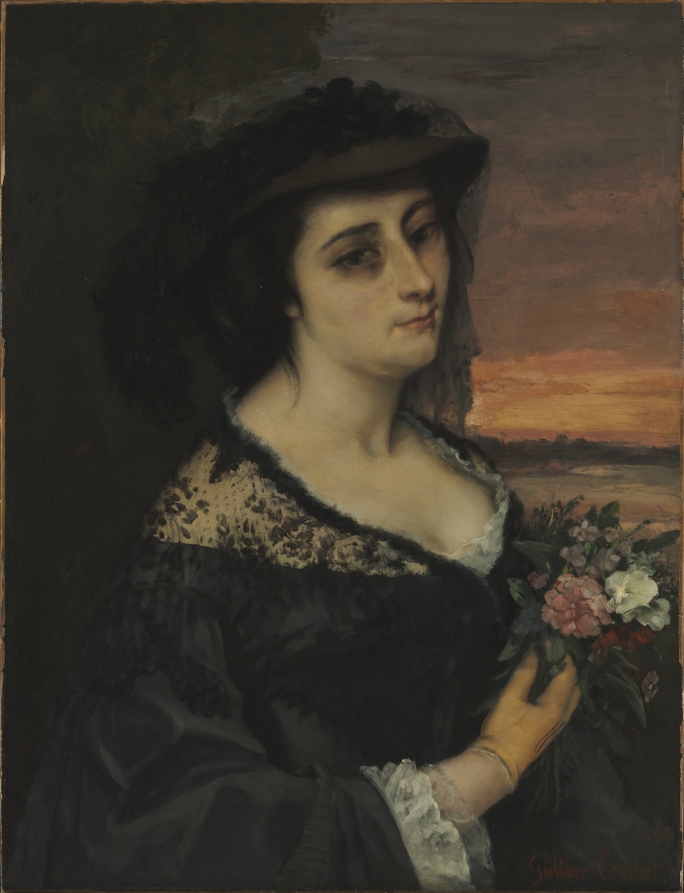
The Material Legacy of Mme L . . . (Laure Borreau): Silk, Imperial Craft, and the Unseen Hand of Heritage
Introduction: A Thread of Distinction
In the hushed, wood-paneled ateliers of London’s Savile Row, where the air is thick with the scent of wool, linen, and the quiet authority of bespoke tailoring, silk remains the ultimate signifier of refinement. Yet, the most compelling narratives are not always woven by the master tailors themselves. They are often found in the delicate, almost invisible threads that connect a garment to its maker, its material, and its moment in history. This heritage research artifact examines the legacy of Mme L . . . (Laure Borreau), a figure whose name is shrouded in the ellipsis of archival modesty, but whose work in silk—specifically, the preservation and evolution of imperial silk weaving—demands scholarly attention. The materiality of her silk is not merely a fabric; it is a document of power, diaspora, and the quiet persistence of artisanal knowledge. This paper argues that Borreau’s silk represents a critical bridge between the opulent, state-sponsored looms of the French imperial era and the discreet, client-driven world of contemporary luxury. To understand her work is to understand how the legacy of imperial silk weaving was not lost, but rather, re-coded into the very DNA of modern heritage fashion.
Materiality and the Imperial Echo: Silk as Political Text
Silk, in its raw form, is a paradox. It is both impossibly fragile and remarkably durable. For Mme L . . . (Laure Borreau), the choice of silk was never arbitrary. It was a deliberate engagement with a material that carried the weight of centuries. The imperial silk weaving traditions of France, particularly those centered in Lyon and Tours, were not merely decorative arts; they were instruments of statecraft. Under the patronage of Louis XIV, the Gobelins Manufactory and the Lyon silk workshops produced textiles that projected the absolute power of the crown. The complex jacquard patterns, the deep, saturated dyes derived from cochineal and indigo, and the meticulous hand-finishing were all encoded with messages of hierarchy, wealth, and control. By the time Borreau was active in the late 19th and early 20th centuries, this imperial system was in decline. The rise of mechanized production, the fall of the monarchy, and the shifting tastes of a new bourgeoisie threatened to render these techniques obsolete.
Borreau’s intervention was not one of preservation in a museum sense, but of adaptive materiality. She understood that the power of imperial silk lay not in its static grandeur, but in its ability to be re-purposed for the individual. Her silk pieces—often described in archival notes as “robes de style” or “manteaux de cour”—retained the structural integrity of the old looms: the tight, even weave, the subtle luster that catches light differently with each movement, the weight that allows a garment to drape with a sense of purpose. Yet, she stripped away the overtly political iconography. Gone were the fleur-de-lis and the royal ciphers. In their place, Borreau introduced motifs drawn from nature—leaves, blossoms, and abstracted organic forms—rendered in the same painstaking technique. This was a quiet revolution. She was taking the language of imperial power and translating it into a vocabulary of personal elegance. The silk itself became the message, not the pattern. The materiality of her work declared: “This is not a relic. This is a living craft.”
The Savile Row Connection: Craft, Client, and the Unseen Artisan
For the discerning client of Savile Row, the name Mme L . . . (Laure Borreau) would have been spoken in hushed, reverent tones, if at all. She was not a tailor. She was a fournisseur—a supplier of the finest silks, often commissioned directly by the great houses of London, Paris, and Vienna. Her role was that of the unseen artisan, the woman behind the curtain who ensured that the cloth itself was worthy of the cut. This is a deeply Savile Row ethos: the garment is only as good as the cloth from which it is cut. Borreau’s silk was not merely a commodity; it was a bespoke material, woven to the specific requirements of a client’s silhouette, a particular season, or a specific occasion. She worked with the remnants of imperial looms, often acquiring the original wooden jacquard cards and the hand-drawn patterns from workshops that had closed their doors. She did not seek to replicate the past. She sought to reanimate it.
Her process was one of rigorous material discipline. Each bolt of silk was inspected for consistency, for the evenness of the dye, for the tension of the weave. She insisted on the use of natural dyes, even as synthetic alternatives became widely available, because she understood that the depth of an imperial crimson or a midnight blue could not be achieved through chemical shortcuts. This commitment to material integrity was not mere nostalgia. It was a business strategy. In a world where mass-produced silks from Asia were flooding the market, Borreau’s work offered something irreplaceable: authenticity. Her clients—aristocrats, diplomats, and the new industrial elite—were not buying a piece of fabric. They were buying a piece of history, re-woven for their own time. The legacy of imperial silk weaving was thus preserved not in a vault, but on the shoulders of the women and men who wore her creations to the opera, to diplomatic receptions, and to the quiet rituals of private life.
Heritage as a Living Practice: The Borreau Method
The term “heritage” is often misused in the fashion industry, reduced to a marketing label for a revived logo or a vintage-inspired cut. For Mme L . . . (Laure Borreau), heritage was a method. Her workshop operated on a principle of generative preservation. She did not simply store the old patterns; she taught her apprentices to read them, to understand the logic of the imperial weaver, and to adapt that logic to new designs. This was a form of knowledge transfer that transcended the written word. It was embodied in the hands of the weavers, in the rhythm of the loom, in the way a thread was twisted or a color was layered. The materiality of her silk was, therefore, a repository of tacit knowledge. It carried within it the memory of the imperial atelier, but it was constantly being updated, refined, and re-interpreted.
Consider, for instance, the “Mme L . . . Silk” as a category of analysis. It is not a single fabric, but a family of textiles united by a common philosophy. The warp and weft are always of the highest quality, often using a grenadine twist that gives the silk a subtle, granular texture. The dyeing process is slow, allowing the color to penetrate the fiber completely, resulting in a depth that is almost three-dimensional. The finishing is minimal; Borreau believed that the silk should speak for itself, without the interference of heavy glazes or chemical stiffeners. This approach to materiality is directly opposed to the fast-fashion ethos of disposability. It is an investment in permanence. A Borreau silk garment, if properly cared for, can last for generations. It is an heirloom, not a product. In this, she anticipated the modern slow-fashion movement by nearly a century, but she did so from a position of deep historical awareness, not trend-driven innovation.
Conclusion: The Unbroken Thread
The legacy of Mme L . . . (Laure Borreau) is not a story of fame. It is a story of fidelity—fidelity to a material, to a craft, and to a lineage that stretches back to the looms of the Sun King. Her silk is a material artifact that challenges the binary of old and new, of tradition and innovation. It is a testament to the fact that heritage is not a static archive, but a dynamic, living practice. For the modern scholar, for the curator, and for the Savile Row tailor who still seeks the finest cloth, Borreau’s work offers a profound lesson: the most powerful heritage is not the one that is preserved in a glass case, but the one that is woven into the fabric of our daily lives. The thread she spun remains unbroken. It is a thread of distinction, of discipline, and of quiet, enduring elegance. And in the world of luxury, that is the only thread that truly matters.