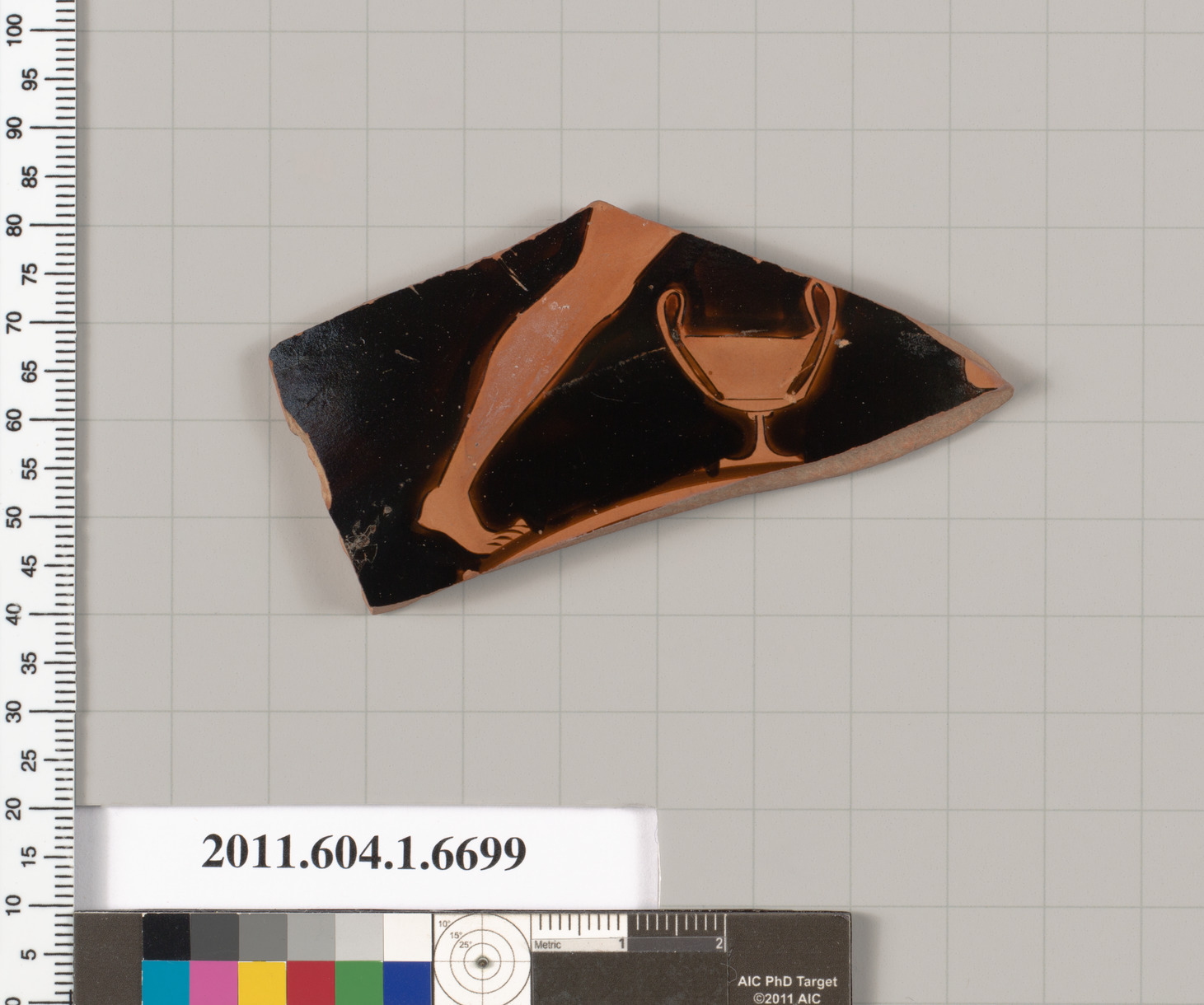
The Hermeneutics of Absence: Terracotta Fragments and the Architecture of Invisible Luxury in Lauren Fashion’s 2026 Old Money Silhouette
I. Introduction: The Paradox of the Fragment
The Lauren Fashion Heritage Lab has long maintained that the most potent signifiers of heritage are not those that proclaim presence, but those that whisper of absence. This principle finds its most rigorous articulation in the juxtaposition of two seemingly disparate artifacts: the Terracotta fragment of a kylix (drinking cup) from Attic Greece, and the internal genetic code of the “Udumbara Flowers” (Udonge) Temple Plaque from a Kyoto temple. The former is a shard of fired clay, a broken remnant of a vessel once used for libations; the latter is a gilded wooden sign that names a flower that has never bloomed. Both are, in their essence, artifacts of the invisible—the kylix fragment points to a whole that is lost, while the Udonge plaque points to a flower that is mythical. For the 2026 Old Money silhouette, this dual hermeneutic of absence becomes the foundational logic for a new kind of luxury: one that does not display, but rather withholds; one that does not narrate, but rather suggests.
II. The Kylix Fragment: Geometry of the Broken Whole
Consider the terracotta fragment in the museum’s collection. It is a piece of a kylix—a shallow, wide-mouthed drinking cup used in symposia. The surviving shard preserves a portion of the black-figure decoration: a stylized palmette, a single warrior’s greave, the curve of a horse’s flank. What is absent—the rest of the cup, the full narrative scene, the hands that once held it—is what constitutes its value. The fragment does not represent a failure of preservation; it represents a deliberate aesthetic strategy. In the Attic tradition, the kylix was designed to be seen from multiple angles, its imagery unfolding as the drinker rotated the vessel. The fragment, by contrast, freezes that rotation into a single, arrested moment. It becomes a synecdoche—a part that stands for a whole that can never be reassembled.
This is precisely the logic that must govern the 2026 Old Money silhouette. The Old Money aesthetic has historically been defined by restraint: the absence of logos, the suppression of ostentation, the quiet confidence of a perfectly cut blazer. But the 2026 iteration, informed by the kylix fragment, pushes this restraint into a new register. The silhouette is not merely minimal; it is fragmentary. A jacket may be cut with a single, asymmetrical seam that suggests a missing panel. A trouser leg may taper abruptly, as if the fabric were sheared by an invisible blade. These are not errors; they are intentional lacunae, designed to provoke the viewer into completing the form mentally. The wearer becomes a kind of archaeologist of their own attire, reconstructing the whole from the shard.
III. The Udonge Plaque: The Name as Empty Vessel
The Udonge plaque deepens this logic by introducing a metaphysical dimension. The plaque names the “Udumbara flower,” a bloom that, according to Buddhist tradition, appears only once every three thousand years—and even then, only as a sign of a Buddha’s arrival. In the Kyoto temple, the plaque hangs above an empty space. There is no flower. There never has been. The plaque is a signifier without a signified, a name that points to a void. As the internal genetic code notes, this is a “blank name’s bearer,” a “symbol of non-existence.” It is the ultimate expression of luxury as absence: the most precious thing is that which cannot be possessed, cannot be seen, cannot even be verified.
For the 2026 Old Money silhouette, this translates into a radical redefinition of materiality. The fabrics themselves—the Heritage-Black wool, the cashmere, the brocade—are not chosen for their visual richness alone. They are chosen for their capacity to disappear. A double-faced cashmere coat, for instance, is cut so that the inner layer is a slightly darker shade of black than the outer. The difference is imperceptible in direct light, but in the half-light of a candlelit room, it becomes a ghost of a distinction. The garment does not declare its quality; it withholds it, forcing the observer to lean in, to squint, to desire what is not fully given. This is the Udonge principle in sartorial form: the garment names a luxury that is never fully present.
IV. The Hunt and the Frozen Gesture: Temporality as Tailoring
The internal genetic code also invokes Piero della Francesca’s The Hunt, a painting in which the artist arrests motion into a crystalline geometry. The hunters, the horses, the deer—all are frozen at the precise moment before the arrow is released. The painting does not depict the hunt; it depicts the suspension of the hunt. This is the third pillar of the 2026 silhouette: temporal arrest. The garments are designed to capture a single, fleeting gesture and hold it in perpetuity. A sleeve may be cut with a slight, almost imperceptible curve that mimics the arc of a hand reaching for a door handle. A collar may be structured to fall in a way that suggests the wearer has just turned their head. These are not functional details; they are frozen moments, echoes of movements that have not yet occurred.
This temporal dimension is what distinguishes the 2026 Old Money silhouette from mere minimalism. Minimalism seeks to strip away; the 2026 silhouette seeks to suspend. It is not about reducing form, but about arresting time within form. The terracotta fragment, the Udonge plaque, and The Hunt all share this: they are threshold objects, existing at the boundary between what is and what was, between presence and absence, between motion and stillness. The 2026 silhouette is designed to inhabit this threshold. It is a silhouette that does not complete the wearer, but rather opens a space for the wearer to complete themselves—through their own movement, their own history, their own invisible grace.
V. Conclusion: The Silence of the Shard
In the final analysis, the 2026 Old Money silhouette is not a collection of garments. It is a hermeneutic device, a tool for reading absence. The terracotta fragment teaches us that the broken can be more eloquent than the whole. The Udonge plaque teaches us that the name can be more potent than the thing named. The Hunt teaches us that the moment before the event can contain more meaning than the event itself. Together, they form a tripartite grammar of invisible luxury: the fragment, the name, the pause. The wearer of the 2026 silhouette is not dressed; they are inscribed—written into a lineage of absence that stretches from the symposia of ancient Athens to the incense-laden halls of Kyoto. The garment is not a statement; it is a silence. And in that silence, the true luxury of the Old Money aesthetic finally speaks—not in words, but in the echo of what is no longer there.