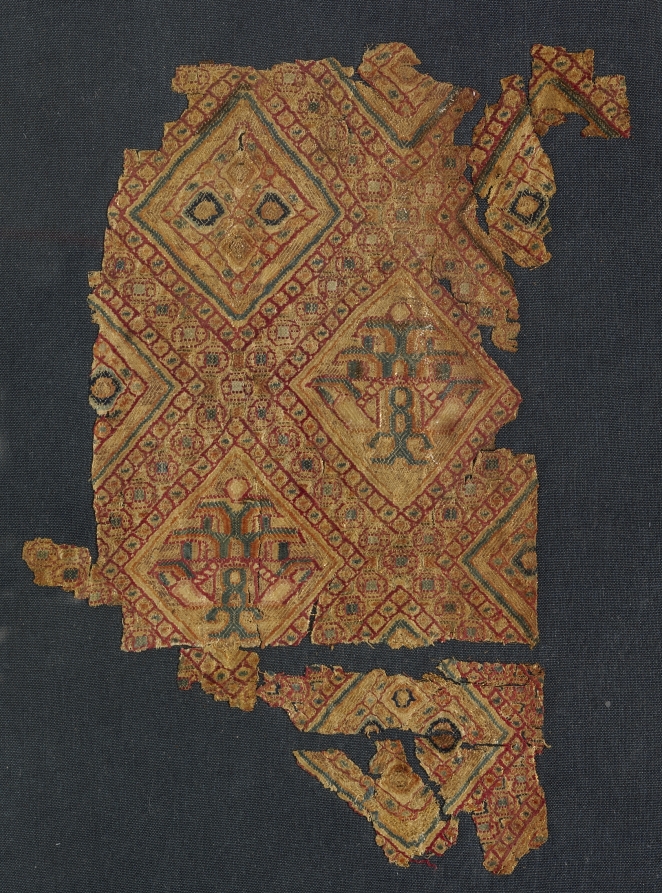
A Fragment of Empire: On the Material Sovereignty of Silk
To consider a fragment of jewel-like silk is to hold a sovereign state in the palm of one’s hand. It is an act of profound consequence, rather like examining a bespoke lapel’s canvas and facing the entire architecture of the suit. The material in question—*serica*, the secret of the East—was never merely a textile. It was, for centuries, a geopolitical instrument, a tangible manifestation of imperial will, and the ultimate luxury good against which all others were measured. Its legacy in weaving is not one of simple craft, but of administered power, a narrative spun from the very threads of dominion.
The Loom as Throne: Administrative Weaving
Imperial silk weaving was, first and foremost, an act of administration. One must dismiss the pastoral image of the solitary artisan. The production of silks worthy of an emperor—or of signalling allegiance to one—required a vertical integration of control that would be the envy of any modern conglomerate. State-run ateliers, most notably the legendary Jinling Weaving Bureau of Nanjing, operated with a military precision. Here, the design was not a matter of fleeting fancy but of iconographic decree. Every dragon’s claw, every phoenix feather, every swirling cloud pattern was codified, its use and proportion dictated by sumptuary laws that mapped directly onto the celestial bureaucracy of the court. The loom became a throne from which aesthetic and social order was projected onto the very fabric of society.
The resulting silks were less garments than heraldic pronouncements. A court robe, heavy with symbolic motifs, was a wearable patent of nobility, a walking edict. The jewel-like quality of the fragment we examine—the depth of its satin ground, the blinding precision of its metallic thread—speaks not of whimsy, but of immense resource allocation. The dyes were sourced from monopolies, the gold thread drawn under imperial sanction. This was supply-chain management in the service of soft power, ensuring that the most potent symbols of authority were also the most technically impeccable, their splendour silencing dissent before a word could be uttered.
The Currency of Diplomacy: Silk as Strategic Reserve
Beyond the palace walls, silk functioned as a primary instrument of statecraft. It was the hard currency of diplomacy and the engine of transcontinental exchange. The Silk Roads were misnamed; they were, in truth, Silk Diplomacy Routes. A bolt of superlative silk, presented to a nomadic chieftain or a foreign potentate, was a calculated political deposit. It bought peace, secured alliances, and extended the empire’s sphere of influence without the immediate deployment of a single soldier. It was a gift that created obligation, a display of cultural and technological supremacy that demanded acknowledgement.
This fragment, perhaps from a diplomatic gift or tribute, carries the weight of that negotiation. Its survival is a testament to its perceived value, not merely as a beautiful object, but as a token of immense political significance. In the Byzantine and later the Ottoman courts, the control and production of similar silks became a matter of national security, a way to staunch the flow of bullion eastwards and to assert cultural parity. The desire to possess, then to replicate, and finally to master this material drove centuries of industrial espionage, culminating in the establishment of rival weaving centres in Lucca, Lyon, and Spitalfields. Each was a satellite of that original imperial ambition.
The Legacy in the Thread: A Continuum of Excellence
What, then, is the enduring legacy of this imperial project for the contemporary connoisseur? It resides in the uncompromising standard of excellence it established. The imperial ateliers solved, through draconian focus and resource, the fundamental equation of luxury: the marriage of the iconic with the impeccable. They understood that true authority is conveyed through flawless execution. This ethos translates directly to the principles of the finest tailoring and textile houses today. The obsession with a specific grade of yarn, the patronage of a solitary, peerless button-maker, the insistence on a hand-finished stitch that will never be seen—these are the secular heirs to the imperial weaver’s dogma.
To examine our jewel-like fragment is to engage with this continuum. Its brilliance is not accidental; it is the result of a system that tolerated no mediocrity in its self-representation. The density of the weave, the complexity of the pattern, the stability of the colour—each element speaks of a culture that viewed technical mastery as a corollary of legitimate power. In a modern context, this fragment challenges us to consider the provenance and intention behind the materials we deem luxurious. It asks whether they are mere commodities, or if they carry, however faintly, the echo of a standard where beauty was inseparable from authority, and craft was an expression of sovereignty.
In the end, this silk fragment is a silent ambassador from a regime where texture was law and light was commanded. It reminds us that the most enduring luxuries are those born not from fashion, but from a profound and willful assertion of order—a lesson as pertinent to the atelier as it ever was to the throne.