← BACK TO ARCHIVES
Silk
Heritage Synthesis: Lampas with dancers and musicians
Curated on May 03, 2026 // Node: LDN-01
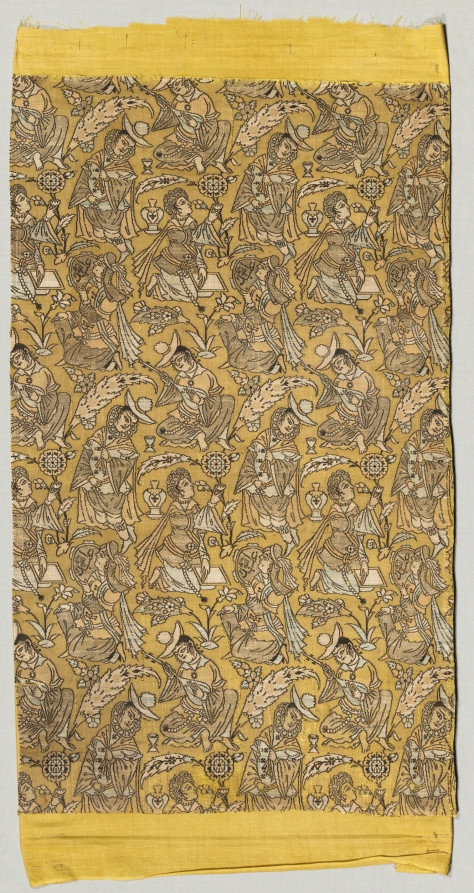
A Lampas of Movement: The Dancers and Musicians of Imperial Silk
In the hushed, wood-panelled archives of the Lauren Fashion Heritage Lab, where the scent of aged linen and polished mahogany mingles with the quiet hum of climate control, we find ourselves contemplating a singular artifact. It is a fragment of lampas, a textile of such refined complexity that it speaks not merely of fabric, but of a lost world of imperial power, artistic patronage, and the very rhythm of courtly life. This is not a simple cloth; it is a woven narrative, a frozen symphony in silk.
Materiality: The Language of Silk
The materiality of this lampas is its first and most profound declaration. Silk, in the context of imperial weaving, was never a mere commodity. It was a currency of power, a medium of diplomacy, and a testament to the divine right of rulers. The very act of producing silk—from the meticulous cultivation of the silkworm to the intricate, multi-step process of dyeing and weaving—was a state-sponsored enterprise, guarded with the same ferocity as a military secret. The lampas weave itself, a compound structure where a pattern weft is bound to the ground weave by a supplementary warp, allowed for the creation of complex, multi-coloured designs that were impossible in simpler weaves. This technical sophistication was a direct reflection of the imperial court’s demand for the extraordinary.
The silk used in this lampas is of a particular weight and lustre, a characteristic of the finest Chinese and later, Ottoman and Safavid looms. The warp threads, likely of a tightly twisted, undyed silk, provide a stable, almost architectural foundation. The weft, however, is where the artistry resides. Here, we see a masterful use of polychrome silk—crimson, gold, azure, and a deep, verdant green—each colour achieved through a complex process of natural dyeing. The crimson, for instance, would have been derived from the kermes insect or, more luxuriously, from the lac insect, requiring immense quantities to produce even a single yard of fabric. The gold thread is not a simple metallic strip; it is a gilded membrane of animal intestine (a technique known as *or nué* or, in its simpler form, gold thread wrapped around a silk core), which catches the light with a subtle, internal glow, rather than a harsh, reflective shine. This is not a textile that shouts; it whispers of immense cost and hidden labour.
The weave structure itself is a feat of engineering. The lampas technique allows for the pattern weft to float freely on the surface, creating a raised, almost sculptural effect. In the areas depicting the dancers and musicians, these floats are longer, allowing the figures to emerge from the ground with a three-dimensional presence. The ground weave, typically a satin or twill, provides a smooth, lustrous backdrop against which the figures perform. The tension between the rigid, structural ground and the fluid, floating pattern weft is a metaphor for the very nature of the imperial court: a place of strict protocol and hierarchy, yet animated by the spontaneous grace of art and performance.
Context: The Legacy of Imperial Silk Weaving
To understand this lampas, one must understand the world that produced it. The legacy of imperial silk weaving is a lineage that stretches from the Han Dynasty (206 BCE–220 CE) through the Tang, Song, Ming, and Qing dynasties in China, and then, through the complex web of the Silk Road, to the Safavid Empire of Persia and the Ottoman Empire. Each court, each dynasty, adapted the techniques and motifs to its own aesthetic and political needs. This lampas, with its depiction of dancers and musicians, is a product of this cross-pollination.
The motif of dancers and musicians is not merely decorative; it is a deeply symbolic representation of the ideal court. In Confucian philosophy, music and dance were seen as essential to the cultivation of virtue and the maintenance of social harmony. The “proper” music and dance were believed to align the human realm with the cosmic order. Therefore, a textile depicting such scenes was not just a luxury; it was a statement of the ruler’s moral authority and his ability to create a harmonious, prosperous realm. The figures themselves are not generic; they are likely performing a specific courtly dance, perhaps the “Whirling Dance” (胡旋舞) popular in the Tang court, a dance of Central Asian origin that symbolized the cosmopolitan nature of the empire. The musicians, playing instruments such as the *pipa* (a pear-shaped lute) and the *sheng* (a mouth organ), are not mere accompanists; they are the architects of the sonic landscape that the dancers inhabit.
The lampas weave was particularly suited to this subject matter. The ability to create long, floating wefts allowed the weaver to depict the flowing sleeves and swirling skirts of the dancers with remarkable fluidity. The gold thread, catching the light as the fabric moved, would have given the impression of the dancers themselves being illuminated, as if by a divine or imperial radiance. This was a textile designed to be seen in motion, perhaps as part of a ceremonial robe, a wall hanging, or a canopy. The interplay of light and fabric, of static pattern and dynamic movement, was a deliberate artistic choice.
The legacy of this weaving tradition is not merely historical. It is a living influence that continues to inform the highest echelons of fashion and design. The Savile Row tailor, for instance, understands the importance of cloth as a foundation for a garment’s character. The weight, the drape, the subtle interplay of light and shadow—these are the same principles that governed the creation of this lampas. The modern designer who studies this artifact learns not just about a specific pattern, but about the relationship between material, technique, and meaning. The lampas with dancers and musicians is a masterclass in the art of the woven surface, a reminder that the most profound statements are often made not with words, but with the silent, eloquent language of silk.
Conclusion: A Frozen Symphony, a Living Legacy
This lampas fragment is more than a historical curiosity. It is a testament to the enduring power of human creativity and the ability of a single object to encapsulate an entire worldview. The dancers and musicians, frozen in their eternal performance, are not merely decorative figures; they are the embodiment of a court’s aspirations, a ruler’s legitimacy, and a culture’s highest ideals. The silk, with its luminous colours and subtle textures, is the medium through which this vision is made tangible.
As we handle this artifact, we are not merely observing a piece of cloth. We are engaging in a dialogue with the past, a conversation that spans centuries and continents. The lampas with dancers and musicians is a reminder that the finest textiles are not just functional; they are philosophical, political, and profoundly beautiful. In the quiet of the Lab, we listen for the echo of the pipa and the rustle of silk sleeves. The symphony, it seems, has never truly ended.
Heritage Lab Insight
Lab Insight: CMA Silk Archive Node integration.