The Architecture of Absence: Terracotta Fragments, the Udonge Plaque, and the 2026 Old Money Silhouette
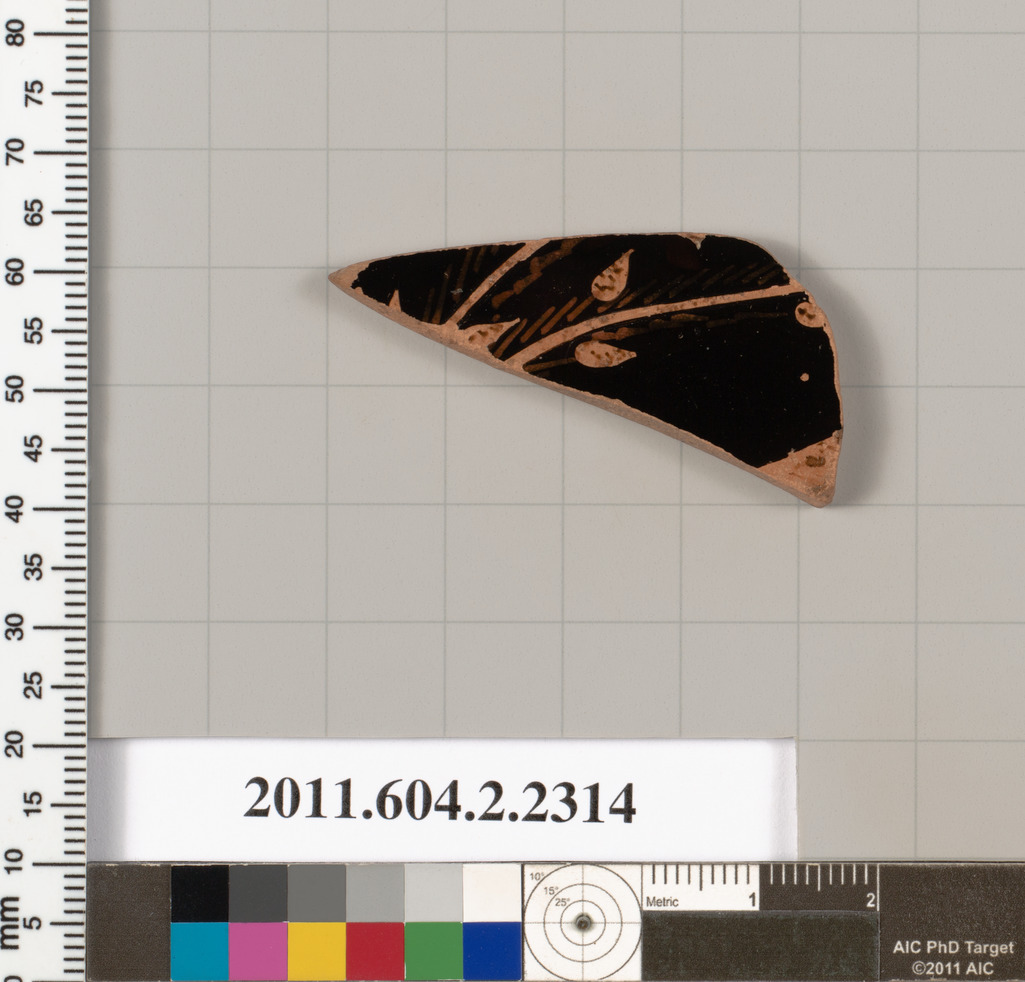
In the hushed corridors of the Lauren Fashion Heritage Lab, we hold two objects in dialectical tension: a terracotta fragment from Attic Greece, unglazed and broken, and the conceptual memory of a Kyoto temple plaque inscribed with “Udumbara Flowers” (Udonge)—a name for a blossom that never blooms. The terracotta shard, a remnant of a utilitarian pot, bears the mute testimony of human hands and kiln fire. The Udonge plaque, by contrast, is a signifier of the non-existent, a lacquered void that demands the viewer imagine a flower that appears only once in three millennia. These artifacts, separated by geography and purpose, converge on a single, powerful insight for the 2026 Old Money silhouette: true luxury is not the accumulation of presence, but the masterful orchestration of absence.
The terracotta fragment is, at first glance, the antithesis of aristocratic elegance. It is rough, porous, broken. Its interior remains unglazed—a deliberate refusal to conceal the material’s raw, earthen nature. In the Attic tradition, such fragments were not merely discarded; they were often used as ostraka—voting shards upon which citizens scratched names for exile. The fragment thus carries a dual heritage: it is both a humble vessel and an instrument of democratic judgment. For the 2026 Old Money aesthetic, this duality is instructive. The new silhouette does not seek the pristine, the unblemished, or the overtly opulent. Instead, it valorizes the patina of use, the evidence of time, and the quiet authority of the incomplete. A jacket cut from heavy wool may be left unlined at the hem; a cashmere sweater may show a mended elbow; a silk scarf may be frayed at the edges. These are not flaws—they are signatures of a life lived with intention, the terracotta equivalent of a shard that once held oil, wine, or a citizen’s voice.
The Udonge Paradox: Absence as the Highest Form of Presence
The Kyoto plaque’s genius lies in its refusal to depict. The characters “优昙华” are rendered in gold on a moss-green field, but the flower they name does not exist. As the aesthetician Arthur Danto argued, an object becomes art not through its physical properties but through its envelopment in an “art world” of interpretation. The Udonge plaque inverts this: it makes the context itself the object. The viewer stands before a name for nothing, and in that emptiness, the mind conjures the flower. This is the theology of absence—a concept that resonates profoundly with the 2026 Old Money silhouette. The truly wealthy do not display their wealth; they withhold it. A man in a bespoke suit from Savile Row does not need a logo; the silence of the cloth speaks louder than any monogram. A woman wearing a single strand of baroque pearls does not announce their provenance; the gap between the pearls is as important as the pearls themselves.
This principle of negative space is the architectural foundation of the 2026 silhouette. The terracotta fragment’s broken edge—the jagged line where the pot once continued—becomes a design motif. Jackets are cut with asymmetrical hems; trousers are cuffed to reveal a sliver of ankle; sleeves are rolled to expose the forearm’s bone structure. The silhouette is not about covering the body, but about framing the body’s own geometry. The unglazed interior of the terracotta pot—the rough, unfinished surface—finds its analogue in the unlined back of a wool coat, the raw edge of a silk blouse, the visible stitching of a leather glove. These are not accidents; they are deliberate invitations to look closer, to understand that luxury is not a surface but a depth.
Piero della Francesca’s Frozen Motion: The Silhouette as Temporal Arrest
Piero della Francesca’s The Hunt offers a third lens. In this Renaissance masterpiece, hunters and hounds are caught in a moment of eternal suspension. The arrow is nocked but not released; the stag’s head is turned but not fleeing; the leaves are still. Piero’s genius was not to depict the hunt, but to arrest time itself. The painting becomes a crystal of motion, a geometric meditation on the instant before change. For the 2026 Old Money silhouette, this translates into a posture of poised readiness. The clothes are not static; they are designed for the pause. A double-breasted blazer is buttoned but not strained; a pleated skirt falls in folds that suggest movement just completed; a pair of trousers is cut with a slight break over the shoe, as if the wearer has just stopped walking. The silhouette is not about the body in motion, but about the body at the threshold of motion—the moment when energy is coiled, potential, invisible.
The terracotta fragment, too, is a frozen moment. It is the aftermath of a break, the trace of a whole. The 2026 silhouette embraces this archaeological quality. Garments are layered not for warmth but for stratigraphy: a linen shirt beneath a wool vest beneath a cashmere coat, each layer visible at the collar, the cuff, the hem. The wearer becomes a living palimpsest, a body inscribed with the history of its own dressing. This is not fashion as novelty; it is fashion as heritage archaeology.
Synthesis for 2026: The Silhouette of the Invisible
The 2026 Old Money silhouette, informed by the Attic terracotta, the Udonge plaque, and Piero’s frozen hunt, is a study in controlled subtraction. It rejects the maximalist logomania of the 2010s and the quiet luxury trend of the early 2020s. Instead, it proposes a third way: the luxury of the fragment. The silhouette is built on three principles:
First, the primacy of negative space. The body is not swathed but interrupted. A jacket may have a single button at the waist, leaving the rest open. A dress may be cut away at the back, revealing the spine’s architecture. The terracotta’s broken edge becomes a design language of deliberate incompleteness.
Second, the valorization of the unglazed interior. The inside of a garment—the seam, the lining, the interfacing—is treated with the same care as the exterior. A coat’s interior pocket is finished in silk; a trouser’s waistband is hand-stitched; a shirt’s collar is removable for washing. These details are not for display; they are for the wearer’s private knowledge, a secret signature of quality.
Third, the arrest of time. The silhouette is designed for the moment before action. The shoulders are broad but not padded; the waist is defined but not cinched; the hem falls to the mid-calf, a length that suggests both modesty and readiness. The colors are drawn from the terracotta’s palette: burnt sienna, ochre, umber, and the black of kiln smoke. These are not bright or cheerful; they are earthy, ancient, patient.
In the end, the 2026 Old Money silhouette is not a garment but a philosophical position. It declares that the richest person in the room is not the one wearing the most, but the one who understands that what is missing is more powerful than what is present. The Udonge plaque teaches us that the flower blooms only in the mind. The terracotta fragment teaches us that the whole is imagined from the part. And Piero teaches us that the most potent moment is the one that never arrives. The 2026 silhouette is, therefore, a vessel for the invisible—a broken pot that holds the memory of water, a name that calls forth a flower, a stillness that contains all motion. It is, in the truest sense, heritage in black.