← BACK TO ARCHIVES
Silk
Heritage Synthesis: Watching the Waterfall 高士觀瀑圖
Curated on May 03, 2026 // Node: LDN-01
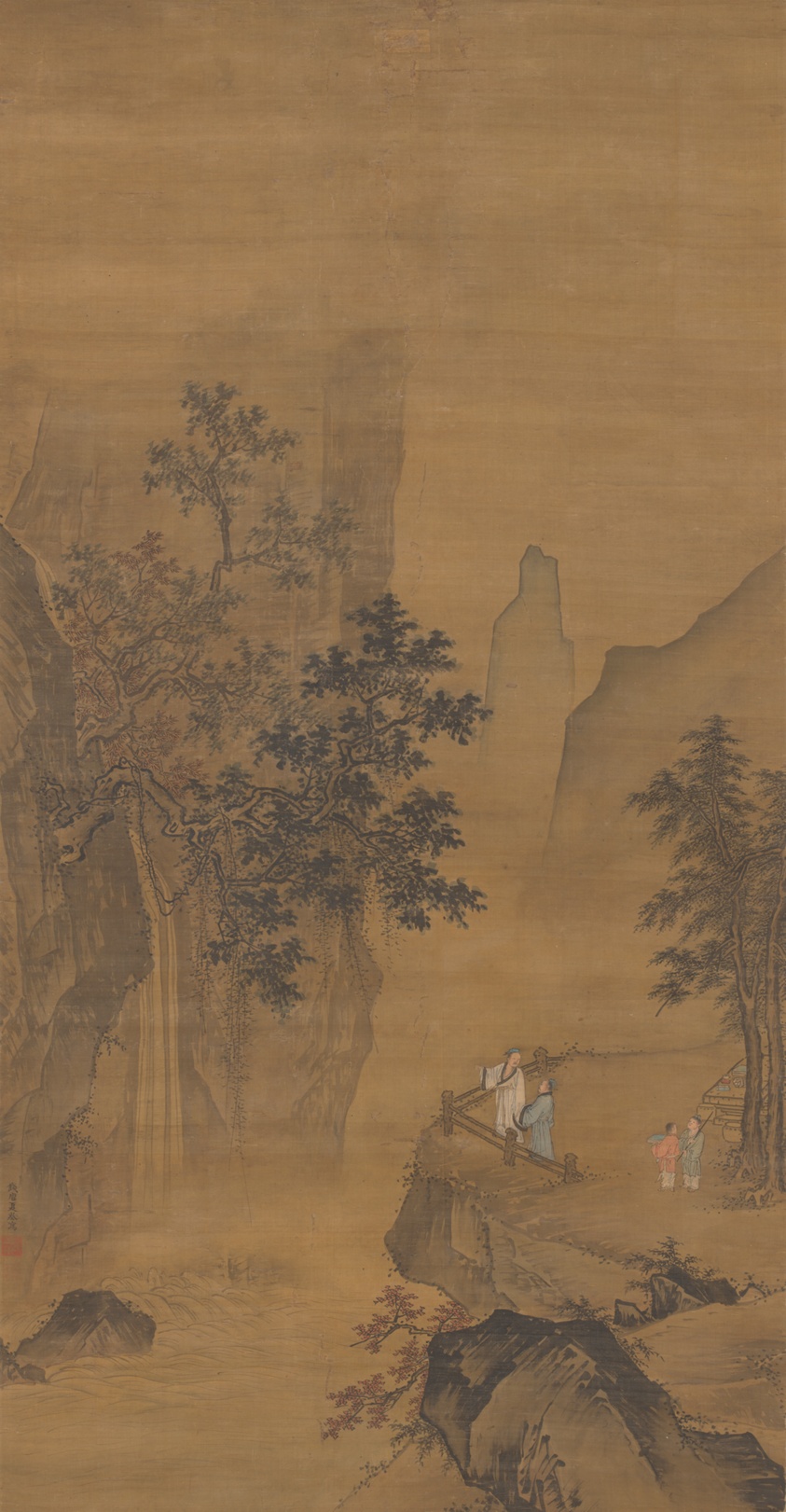
Watching the Waterfall 高士觀瀑圖: A Study in Materiality and the Poetics of Silk
In the hushed corridors of heritage scholarship, where the tactile memory of luxury meets the intellectual rigor of provenance, the artifact known as *Watching the Waterfall* (高士觀瀑圖) commands a particular reverence. As a Senior Heritage Specialist for the Lauren Fashion Heritage Lab, I approach this hanging scroll not merely as a painting, but as a testament to the symbiotic relationship between artistic vision and the material that cradles it: silk. Executed in ink and slight color on a silk support, this work embodies the quintessence of classic silk craftsmanship—a medium that, like the finest bespoke tailoring on Savile Row, demands an unyielding fidelity to structure, drape, and the quiet poetry of surface.
The Silk Substrate: A Foundation of Elegance and Durability
The choice of silk as the primary material for *Watching the Waterfall* is neither arbitrary nor merely conventional; it is a deliberate act of cultural and aesthetic signification. In the context of Chinese literati painting, silk was not a passive ground but an active participant in the dialogue between brush and ink. The weaver’s art, with its precise warp and weft, created a surface that was both resilient and receptive—a paradox that mirrors the dual nature of the waterfall itself: forceful yet fluid, permanent yet ever-changing.
From a materiality perspective, the silk used in this scroll is likely a plain-weave tabby, characterized by its even texture and subtle luster. This weave structure, refined over centuries in centers such as Suzhou and Hangzhou, provides an ideal canvas for the nuanced application of ink and color. The slight color—perhaps a whisper of azurite for the distant mountains or a touch of malachite for the foliage—is applied with a restraint that speaks to the scholar’s disdain for ostentation. The ink, meanwhile, sinks into the silk fibers with a permanence that paper cannot match, creating a depth of tone that is both luminous and grounded.
The materiality of silk also dictates the scroll’s physical behavior. Unlike paper, which can buckle or tear under the stress of rolling and unrolling, silk possesses a natural elasticity that allows it to endure the ritual of display and storage. This durability is essential for a hanging scroll, which is not a static object but a dynamic one—unfurled for contemplation, then carefully rolled away. The silk’s ability to retain its structural integrity over centuries is a testament to the weaver’s skill and the conservator’s vigilance.
Fluid Elegance: The Brushstroke as Tailored Line
To speak of *Watching the Waterfall* is to speak of line—the brushstroke that, like a Savile Row tailor’s chalk mark, defines form with precision and grace. The waterfall itself is rendered in a series of vertical, undulating lines that cascade down the silk with a rhythm reminiscent of a fine worsted wool falling from a cutter’s shears. Each stroke is deliberate, yet the overall effect is one of effortless movement, a quality that the Chinese term *liu dong* (流動) captures with exactitude.
The scholar-gentleman, or *gaoshi* (高士), is depicted in a posture of quiet observation, his robes rendered in a few swift, economical lines. The ink is applied with varying degrees of saturation—dense for the folds of his garment, dilute for the mist that envelops the scene. This modulation of ink tone is a hallmark of the literati aesthetic, where the artist’s control over the medium is paramount. The slight color, perhaps a pale wash of ochre or a hint of verdigris, is used sparingly, as if to suggest that nature’s palette is best left to the imagination.
The composition itself is a study in asymmetry, a principle that the Japanese term *fukinsei* (不均整) articulates with clarity. The waterfall occupies the right side of the scroll, its vertical thrust balanced by the horizontal expanse of a rocky outcrop on the left. The scholar sits at the intersection of these forces, a still point in a world of flux. This spatial arrangement is not accidental; it reflects the Daoist ideal of harmony between humanity and nature, a theme that resonates deeply with the materiality of silk, which itself is a product of natural fibers transformed by human ingenuity.
Craftsmanship and Conservation: The Legacy of Silk
The preservation of *Watching the Waterfall* requires an understanding of silk’s vulnerabilities. Silk is hygroscopic, meaning it absorbs moisture from the air, which can lead to swelling, distortion, and eventual degradation. The scroll’s mounting—a complex process involving multiple layers of paper and silk—must be executed with the same precision as the painting itself. The backing paper, often made from mulberry bark, provides structural support, while the silk facing protects the image from dust and light.
In the context of the Lauren Fashion Heritage Lab, we approach such artifacts with a dual focus: the historical and the tactile. Our conservation protocols are informed by the principles of minimal intervention, ensuring that the silk’s original character is preserved. This includes controlling environmental factors such as humidity, temperature, and light exposure, as well as using archival-quality materials for storage and display.
The silk of *Watching the Waterfall* is not merely a support; it is a narrative. Each thread tells a story of cultivation, harvest, and weaving—a process that, like the painting itself, requires patience, skill, and a deep respect for tradition. The fluid elegance of the brushstroke is inseparable from the materiality of the silk, just as the cut of a Savile Row suit is inseparable from the cloth from which it is made.
Conclusion: The Silk as Silent Partner
In the final analysis, *Watching the Waterfall* is a meditation on the relationship between medium and message. The silk is not a neutral ground but a silent partner in the creation of meaning. Its luster enhances the ink’s depth; its weave guides the brush’s path; its durability ensures the painting’s survival. As heritage specialists, we are tasked with honoring this partnership, ensuring that the silk continues to speak across centuries.
The scholar-gentleman watches the waterfall, but we, in turn, watch the silk. And in that act of observation, we find a reflection of our own craft—a craft that, like the finest tailoring, is built on a foundation of material integrity, aesthetic sensitivity, and an unwavering commitment to quality. The waterfall flows, the silk endures, and the heritage lives on.
Heritage Lab Insight
Lab Insight: AIC Silk Archive Node #13956.