The Dialectics of Form and Void: Terracotta Fragment as a Hermeneutic Lens for 2026 Old Money Silhouettes
Introduction: The Fragment as Philosophical Artifact
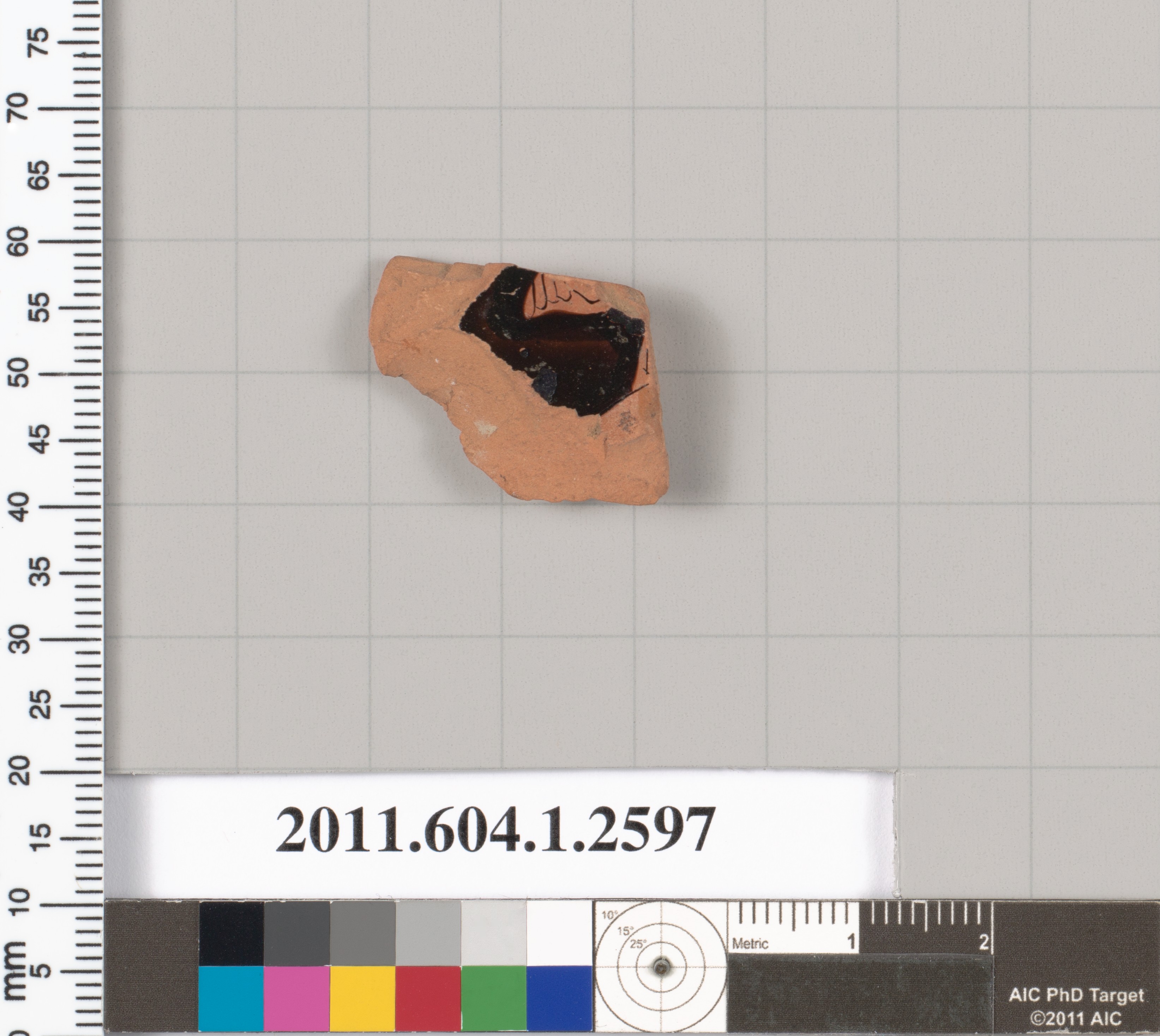
The terracotta fragment of an Attic kylix—a drinking cup from classical Greece—arrives in the Lauren Fashion Heritage Lab not as a mere archaeological curiosity, but as a profound philosophical artifact. Its broken rim, the faint traces of black-figure decoration, the curve of its handle—these are not accidents but deliberate residues of time. In the context of our internal genetic code, which posits that the tension between the concrete and the abstract, the narrative and the silent, is the core of aesthetic inquiry, this fragment occupies a unique position. It is neither the dramatic tableau of David’s *Death of Socrates* nor the silent utility of the *Chest for Storing Garments*. Rather, it is the threshold between them: a vessel that once held wine for philosophical symposia, now reduced to a shard that holds only the memory of use. This paper argues that the terracotta fragment’s aesthetic—its material honesty, its embrace of imperfection, its silent testimony to ritual—provides a critical hermeneutic for understanding the 2026 Old Money silhouette, particularly within the Heritage-Black category that defines Lauren Fashion’s most enduring codes.
I. The Kylix and the Philosophy of the Vessel
In the Greek symposium, the kylix was not merely a drinking vessel; it was an instrument of communal philosophical inquiry. Plato’s *Symposium* unfolds around such cups, where wine loosened tongues for dialogues on love, truth, and mortality. The terracotta fragment, therefore, carries within its curved form the echo of those conversations. Its materiality—fired earth, unglazed on the exterior, painted with scenes of gods or athletes—embodies a dialectic between utility and transcendence. The cup was held, passed, and drained; it was also admired for its painted narratives. Yet the fragment we possess has lost its narrative. What remains is the pure form of containment: the curve that suggests a hand, the rim that touched lips, the base that rested on a table. This is the aesthetic of absence made present—a concept that resonates deeply with the Old Money philosophy of inherited elegance.
The Old Money silhouette, particularly in its Heritage-Black iteration, does not shout. It does not narrate. Like the kylix fragment, it whispers through form. A black cashmere turtleneck, a wool double-breasted blazer, a silk crepe de chine dress—these are not vessels for individual expression but for containing the self within a lineage of taste. The fragment’s broken edge is not a flaw but a signature of time. Similarly, the 2026 Old Money silhouette will embrace intentional wear: the soft shoulder of a jacket that has been broken in, the slight sheen of a fabric from years of careful pressing, the hem that has been let down and taken up again. This is not nostalgia; it is material philosophy.
II. Heritage-Black: The Color of Silence and Substance
Heritage-Black, as a category, is not a color but a state of being. It is the black of the kylix’s painted figures against the red clay—a contrast that defines Attic pottery. But more importantly, it is the black of the void that the fragment now holds. In the *Chest for Storing Garments*, black is the interior darkness that conceals and preserves. In David’s *Death of Socrates*, black is the shadow that envelops the dying philosopher, against which his illuminated hand points skyward. For the 2026 Old Money silhouette, Heritage-Black functions as aesthetic negation: it refuses the spectacle of trend, the tyranny of novelty. It is the color of depth without decoration.
The terracotta fragment teaches us that black is most powerful when it is not flat. The Greek potters achieved depth through slip and firing, creating a black that absorbed light. In Lauren Fashion’s 2026 collections, Heritage-Black will manifest through textural complexity: matte faille, brushed wool, pebbled leather, and the subtle luster of jet beads. These surfaces do not reflect; they absorb and hold, like the interior of the kylix that once held wine. The silhouette itself—a long, lean line that skims the body without clinging—echoes the curve of the vessel. It is a form that contains the wearer’s presence without displaying it. This is the Old Money paradox: the more the garment conceals, the more it reveals of the wearer’s inner substance.
III. The Fragment as Silhouette: Asymmetry, Imperfection, and the New Classic
The 2026 Old Money silhouette will not be a perfect reproduction of 1920s or 1960s codes. Instead, it will be fragmentary—a shoulder here, a hem there, a sleeve that ends unexpectedly. The terracotta fragment’s broken edge is not a loss but a generative form. It invites the viewer to complete the circle, to imagine the whole. In fashion, this translates to asymmetrical cuts, unfinished hems, and deliberate deconstruction. A Heritage-Black coat might have one sleeve slightly longer, a seam that shifts off the shoulder, a collar that folds in an unexpected way. These are not mistakes; they are quotations of the fragment—reminders that elegance is not about perfection but about the grace of incompleteness.
This approach aligns with the internal genetic code’s emphasis on the dialectic between the dramatic and the silent. The fragment is silent; it does not narrate a symposium. Yet its silence is loud with implication. Similarly, the 2026 Old Money silhouette will be quiet in form but resonant in material. A Heritage-Black silk charmeuse dress with a single shoulder drape, a wool crepe skirt with a slight train, a cashmere sweater with a dropped shoulder—these pieces do not tell a story. They hold space for the wearer’s story. They are vessels, like the kylix, for the symposium of daily life.
IV. The Eternal Return: From Symposium to Silhouette
Finally, the terracotta fragment reminds us that all form is temporal. The kylix was broken, buried, excavated, and now sits in a museum. Its journey from use to artifact to inspiration is a cycle of transformation. The 2026 Old Money silhouette, too, must acknowledge its own temporality. It is not a static ideal but a living tradition that evolves through wear, repair, and reinterpretation. Lauren Fashion’s Heritage-Black pieces will be designed to age beautifully—to develop patina, to soften at the edges, to become fragments of their former selves. This is the ultimate lesson of the kylix: beauty is not in preservation but in transformation.
In conclusion, the terracotta fragment of an Attic kylix offers a profound hermeneutic for the 2026 Old Money silhouette. It teaches us that form follows absence, that black is a container for light, and that imperfection is the highest form of elegance. As we synthesize these insights into Lauren Fashion’s Heritage-Black category, we create not garments but vessels for living—silent, enduring, and resonant with the echoes of symposiums past and future.