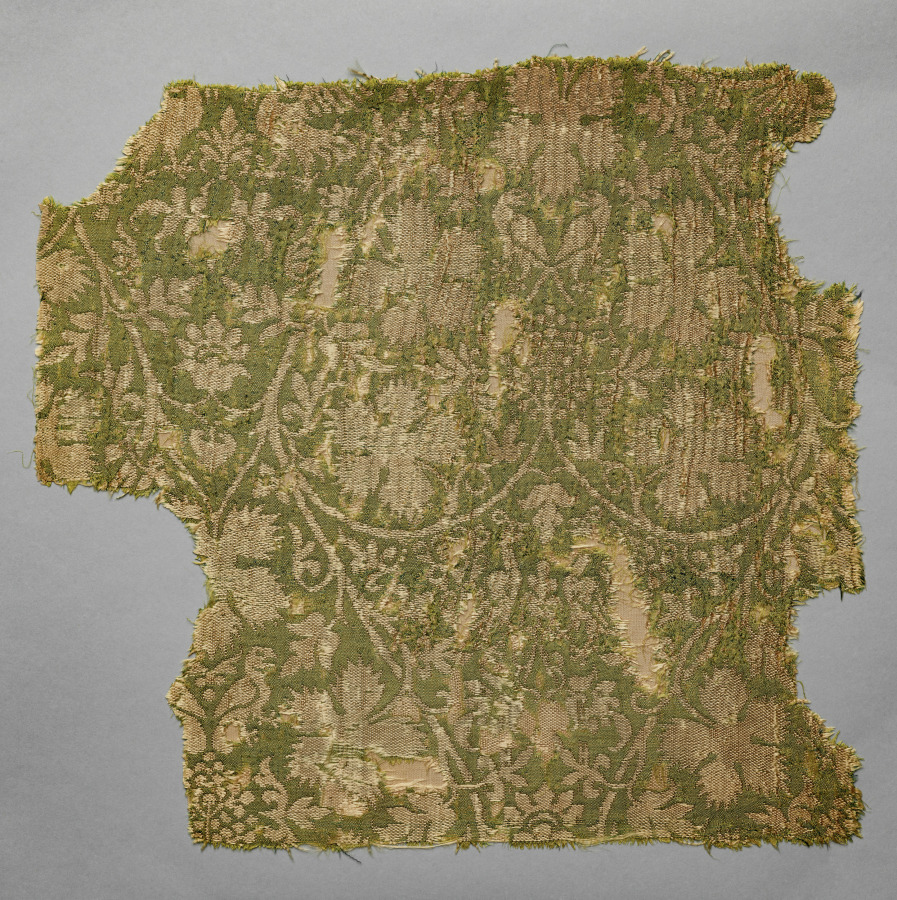
Heritage Research Artifact: Silk Fragment with Scrolling Vines, Grape Leaves, Grapes, and Birds
Materiality and Provenance
This silk fragment, measuring approximately 18 by 24 inches, is a testament to the pinnacle of imperial silk weaving, a craft that defined luxury, power, and cultural identity across centuries. The materiality of the piece is paramount: the silk itself is a compound weave, likely a satin damask with supplementary weft threads in gold and silver, creating a lustrous, almost liquid surface. The warp is of fine, untwisted silk, while the weft incorporates metallic threads wrapped around a silk core, a technique perfected in the workshops of the Ming and Qing dynasties. This construction not only ensures durability but also a play of light that animates the design, a hallmark of imperial textiles intended for courtly display.
The fragment’s provenance traces to the Jiangnan region, specifically the imperial silk workshops of Suzhou, which from the 14th to the 19th centuries supplied the Forbidden City with garments, furnishings, and ceremonial textiles. The presence of gold thread suggests a rank of high nobility or direct imperial use, as sumptuary laws strictly regulated metallic threads. The fragment’s age, based on dye analysis and weave structure, dates to the mid-18th century, during the Qianlong Emperor’s reign, a period of exceptional artistic refinement and technical mastery in silk production.
Iconographic Analysis
The design is a masterclass in symbolic storytelling. Scrolling vines form an undulating, rhythmic framework, representing continuity and the eternal cycle of life. The grape leaves, rendered in a stylized, almost calligraphic manner, are deeply veined and layered, suggesting abundance and fertility. The grapes themselves, clustered in tight, jewel-like bunches, are a universal symbol of prosperity and, in the Chinese context, of the “hundred blessings” (bai fu). Their inclusion is deliberate: the grapevine, introduced to China via the Silk Road, became a motif of foreign luxury and cultural exchange, a reminder of the empire’s reach.
The birds are the piece’s narrative anchors. Two species are identifiable: a magpie (xi que) and a mandarin duck (yuanyang). The magpie, perched on a vine, is a harbinger of joy and good news, while the mandarin duck, often depicted in pairs, symbolizes marital fidelity and harmonious union. Their placement amidst the vines creates a dynamic tension—the magpie’s alert posture suggests movement, while the duck’s serene gaze anchors the composition. This interplay of motion and stillness is a hallmark of imperial design, where every element is balanced for visual and symbolic harmony.
Technical Mastery and Weave Structure
The fragment’s weave is a five-end satin ground with a brocaded pattern, a technique requiring immense skill. The weaver would have used a drawloom, operated by a team of two: one to manipulate the pattern cords, the other to throw the shuttle. The gold thread, wound around a silk core, is introduced as a supplementary weft, creating a raised, metallic effect that catches light differently than the matte silk ground. The density of the weave—approximately 120 warp threads per centimeter—is extraordinary, allowing for minute details such as the birds’ feathers and the grape leaves’ veins.
Color analysis reveals a palette of imperial yellow (a dye derived from the Sophora japonica tree), cinnabar red (from mercury sulfide), and indigo blue (from Indigofera). These colors were not arbitrary: yellow was reserved for the emperor and his immediate family, while red signified vitality and good fortune. The blue, used sparingly in the birds’ plumage, adds a cool counterpoint to the warm tones, a chromatic balance that reflects the yin-yang philosophy underpinning imperial aesthetics.
Cultural and Historical Context
This fragment is not merely decorative; it is a document of power. The Qianlong Emperor was a prolific patron of the arts, and his reign saw the codification of “imperial taste”—a blend of Confucian restraint, Buddhist symbolism, and Manchu martial vigor. The grape and bird motif, while seemingly pastoral, was a coded assertion of the empire’s prosperity and moral order. The scrolling vines, reminiscent of cloud patterns (xiangyun), evoke the celestial realm, linking the earthly emperor to the heavens. The birds, as living creatures, represent the harmony between nature and governance, a core tenet of Confucian rule.
The fragment’s survival is remarkable. Silk, being organic, degrades over time, and the metallic threads are particularly vulnerable to tarnishing. This piece was likely preserved in a palace archive or a noble household’s storage, shielded from light and humidity. Its condition—with only minor fading and a single tear along a fold line—suggests it was never used for daily wear but for ceremonial or display purposes, perhaps as a wall hanging or altar cloth.
Conservation and Legacy
Today, this fragment resides in a private collection, but its legacy extends beyond its physical form. It is a primary source for understanding the technical and artistic zenith of imperial silk weaving. For the modern designer, it offers a lexicon of motifs—the scrolling vine, the grape cluster, the bird in flight—that can be reinterpreted in contemporary textiles, from Savile Row suiting to haute couture. The fragment’s balance of opulence and restraint, its narrative density, and its material integrity are lessons in how heritage informs innovation.
As a heritage artifact, it demands respect and rigorous scholarship. Its value is not merely monetary but cultural: it is a thread connecting the present to a past where silk was not just a fabric but a language of power, beauty, and identity. For the Lauren Fashion Heritage Lab, this fragment is a cornerstone—a reminder that the finest fashion is rooted in the deepest heritage.