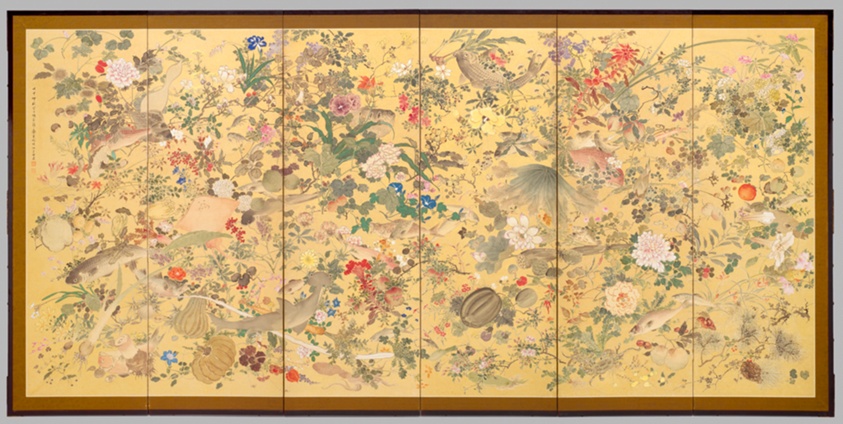
Heritage Research Artifact: The Six-Panel Screen of Aquatic Harmony
Introduction: The Convergence of Craft and Narrative
Within the hallowed corridors of Lauren Fashion Heritage Lab, we examine artifacts that transcend mere decoration to embody the very essence of cultural storytelling. The subject of this research—a single six-panel screen rendered in ink, color, and gold on silk—represents a pinnacle of classic silk craftsmanship. Its depiction of fish and plants, executed with fluid elegance, offers a profound window into the symbiosis between natural motifs and the materiality of silk. This artifact, likely originating from the Edo period of Japan (1603-1868) or a later revival, is not merely a decorative object but a testament to the meticulous artistry that defines heritage luxury. The screen’s composition, where aquatic life and botanical forms intertwine, speaks to a philosophy of balance and transience, echoing the principles that underpin the finest tailoring on Savile Row: precision, harmony, and an enduring respect for tradition.
Materiality and Craftsmanship: The Silk as Canvas
The choice of silk as the foundational material is deliberate and significant. Silk, with its natural luster and tensile strength, has been revered for millennia as a medium for artistic expression. In this screen, the silk is not merely a support but an active participant in the visual narrative. The application of ink, color, and gold leaf requires a masterful understanding of the fabric’s absorbency and reflectivity. The ink, often derived from soot or plant-based pigments, seeps into the silk’s fibers, creating soft, ethereal gradients that mimic the movement of water. The gold, applied in fine flakes or powder, catches ambient light, imbuing the panels with a dynamic luminosity that shifts with the viewer’s perspective. This interplay of matte and reflective surfaces mirrors the duality of the natural world: the stillness of a pond versus the shimmer of a fish’s scales.
From a technical standpoint, the screen’s construction adheres to the highest standards of Japanese craftsmanship. Each panel is mounted on a wooden frame, with the silk stretched taut to prevent distortion. The hinges, often made of brass or bronze, allow the screen to fold while maintaining structural integrity. This portability was essential for its original purpose: to partition spaces in aristocratic residences or tea houses, where it served both functional and aesthetic roles. The six-panel format, known as *byobu*, is particularly significant, as it allows for a continuous composition across multiple planes, encouraging the viewer to move along the screen to fully appreciate the narrative flow.
Iconography: Fish and Plants as Symbols
The imagery of fish and plants is rich with symbolic meaning, particularly within East Asian art. Fish, especially carp, represent perseverance, abundance, and transformation. In Japanese culture, the carp (*koi*) is celebrated for its ability to swim upstream, symbolizing strength in adversity. The presence of multiple fish in this screen suggests a thriving ecosystem, a metaphor for prosperity and familial harmony. The plants, likely water lilies, lotus, or reeds, are equally laden with significance. The lotus, rising from muddy waters to bloom unblemished, embodies purity and spiritual awakening. Reeds, with their flexible stems, denote resilience and adaptability. Together, these elements create a microcosm of the natural world, where each component supports the other in a delicate balance.
The composition’s fluid elegance is achieved through the artist’s mastery of *sumi-e* (ink wash) techniques. The fish are rendered with swift, confident brushstrokes, their bodies curving as if in mid-swim. The plants, by contrast, are painted with meticulous detail, each leaf and petal delineated with precision. This contrast between motion and stillness creates a dynamic tension, drawing the eye across the panels. The gold accents, applied sparingly, highlight key elements—a fish’s dorsal fin, a lotus petal—without overwhelming the composition. This restraint is a hallmark of classic silk craftsmanship, where the medium is allowed to speak for itself.
Contextual Significance: The Screen in Historical and Modern Contexts
To fully appreciate this artifact, we must consider its historical context. The six-panel screen emerged as a prominent art form during the Momoyama period (1573-1615), a time of political unification and cultural flourishing. Screens were commissioned by samurai lords and wealthy merchants to display their status and sophistication. The choice of fish and plants as subject matter reflects the influence of Zen Buddhism, which emphasizes the interconnectedness of all living things. The screen would have been placed in a room overlooking a garden, creating a seamless transition between the interior and exterior worlds. This integration of art and environment is a principle that resonates with modern luxury design, where spaces are curated to evoke a sense of calm and continuity.
In the context of London’s Savile Row, this artifact offers a compelling parallel to the bespoke tailoring tradition. Just as a master tailor selects the finest cloth and cuts it with precision to create a garment that enhances the wearer’s form, the artisan of this screen chose silk and applied pigment with an eye for proportion and flow. The screen’s ability to transform a space—to create intimacy or grandeur—mirrors the way a well-tailored suit can alter a person’s presence. Both crafts demand an understanding of materiality, an appreciation for detail, and a commitment to timeless elegance.
Preservation and Legacy: The Artifact as Living Heritage
Preserving an artifact of this nature requires specialized care. Silk is sensitive to light, humidity, and temperature fluctuations, which can cause fading, brittleness, or mold. The gold leaf, while durable, can flake if the screen is handled improperly. Conservation efforts focus on stabilizing the silk and pigments while maintaining the screen’s original structure. This includes storing it in a climate-controlled environment, using UV-filtering glass for display, and limiting exposure to pollutants. The goal is not to freeze the artifact in time but to allow future generations to experience its beauty as intended.
At Lauren Fashion Heritage Lab, we view such artifacts as living documents. They inform our understanding of historical aesthetics and inspire contemporary design. The fish and plants of this screen, with their fluid elegance, remind us that luxury is not about opulence alone but about the thoughtful integration of nature, craft, and narrative. As we continue to study and preserve these treasures, we honor the artisans who created them and the cultures that nurtured them.
Conclusion: A Testament to Timeless Craft
This six-panel screen, with its ink, color, and gold on silk, stands as a masterwork of heritage craftsmanship. Its depiction of fish and plants transcends mere decoration, offering a meditation on life, resilience, and beauty. Through its materiality, iconography, and context, it embodies the principles that define the finest luxury: meticulous attention to detail, a deep respect for tradition, and an ability to evoke emotion. For those of us on Savile Row, where every stitch tells a story, this artifact is a kindred spirit—a reminder that true elegance endures.