← BACK TO ARCHIVES
Heritage-Black
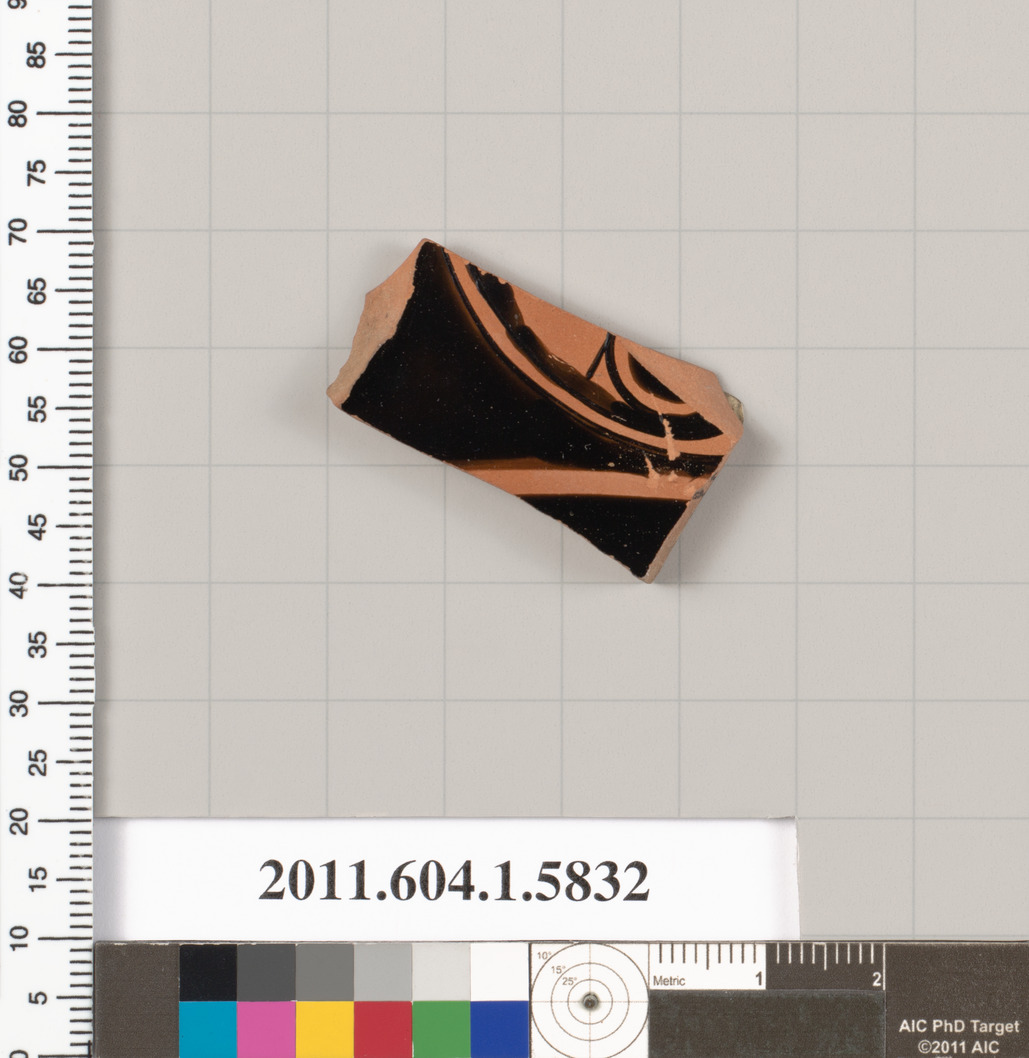
Heritage Synthesis: Terracotta fragment of a kylix: eye-cup (drinking cup)
Curated on May 04, 2026 // Node: LDN-01
The Gaze of Antiquity: How an Attic Eye-Cup Informs the 2026 Old Money Silhouette
The Lauren Fashion Heritage Lab’s internal genetic code—which juxtaposes a Buddhist *Bodhisattva* with an Egyptian *Bull-Headed Amulet*—reveals a profound truth: that all sacred objects are, at their core, attempts to anchor the invisible within the visible. This principle of “sacred manifestation” is not confined to religious statuary. It extends to the most quotidian of artifacts, including the terracotta fragment of a kylix, or drinking cup, from Attic Greece. This object, a shard of a once-communal vessel, is not a devotional icon. Yet it performs an analogous function: it materializes a social covenant, a shared identity, and a specific aesthetic of power. For the 2026 Old Money silhouette, this fragment is not merely a decorative reference; it is a philosophical blueprint. It teaches us that true heritage is not about opulent display, but about the disciplined, almost ritualistic, encoding of status within form, proportion, and the very act of looking.
The Eye-Cup as a Social Artifact: The Gaze as a Marker of Belonging
The kylix, particularly the “eye-cup” variant, was a staple of the Greek symposium—a male-dominated drinking party that was as much a political and philosophical forum as a social one. The large, painted eyes on the cup’s exterior were not merely decorative. They were a functional and symbolic innovation. As a drinker raised the cup to his lips, the eyes on the exterior would appear to stare back at him, creating a moment of self-awareness and mutual recognition. The cup itself became a mask, a surrogate face. This design transformed a simple act of drinking into a performance of identity. The symposium was a space of *paideia*—the cultivation of the aristocratic self. The eye-cup, therefore, was not a vessel for intoxication but a tool for social cohesion. It reminded the drinker that he was being watched, not by a deity, but by his peers. His bearing, his conversation, his very *ethos* were on display.
For the 2026 Old Money silhouette, this concept of the “gaze” is paramount. The Old Money aesthetic is not about shouting wealth; it is about whispering belonging. It is a language of subtle signals understood only by those within the circle. The Attic eye-cup teaches us that the most powerful markers of status are not the most visible, but the most *recognizable* to the initiated. The silhouette for 2026 must therefore be constructed around a principle of *controlled visibility*. This manifests in several key ways:
- **The “Internal Gaze” of Construction:** Just as the eye-cup’s design forces the drinker to confront his own reflection, the 2026 silhouette should demand a similar self-awareness from the wearer. This is achieved through impeccable tailoring that creates a second skin—a “sacred body” of fabric. Shoulders are structured but not exaggerated, creating a clean line that speaks of discipline. The waist is defined but not constricted, suggesting ease and command. The garment does not scream for attention; it *waits* to be noticed by those who understand the language of cut and drape.
- **The “External Gaze” of Detail:** The eyes on the kylix are a focal point, but they are not chaotic. They are rendered with precise, geometric symmetry. Similarly, the 2026 Old Money silhouette employs *strategic focal points* that are not decorative but functional. A single, perfectly placed pocket. A lapel that rolls with mathematical precision. A button made of horn or mother-of-pearl, not brass. These details are the “eyes” of the garment. They do not distract; they *direct* the gaze of the knowledgeable observer to the quality of the construction. They are the equivalent of the Bodhisattva’s serene hand gesture—a coded message of inner mastery.
The Terracotta Fragment and the Philosophy of Material Restraint
The kylix fragment is made of terracotta—common, fired clay. It is not gold, not marble, not a precious stone. Its value lies not in its material cost, but in the *craft* and *cultural meaning* imbued within it. This is a direct analogue to the Old Money ethos of “quiet luxury.” The 2026 silhouette must reject the flashy, logo-driven, “new money” aesthetic. Instead, it must embrace materials that are *humble in origin but profound in execution*.
- **Wool as Terracotta:** The primary fabric for the 2026 silhouette should be wool—specifically, a superfine merino or a heavy worsted. Like terracotta, wool is a natural, unpretentious material. Its value is not in its rarity but in its *performance*: its ability to drape, to hold a crease, to breathe. A wool suit in a deep heritage-black or charcoal is the sartorial equivalent of the kylix fragment. It is unadorned, yet its quality is immediately apparent to the touch and to the eye of the connoisseur.
- **The Fragment as a Whole:** The kylix is a fragment, a broken piece of a larger whole. This is a powerful metaphor for the 2026 silhouette. It should not be a complete, “perfect” ensemble. Instead, it should feel like a *fragment* of a larger, timeless wardrobe. A single, impeccably tailored blazer worn with faded denim. A cashmere sweater with a slight, intentional pilling—a sign of age and use, not neglect. This is the “heritage-black” of the category tag: a color that absorbs light, that refuses to reflect the garishness of the present, and that suggests a lineage of wear. The silhouette is not about creating a new look; it is about *recovering* a fragment of a lost, more refined era.
From Ritual to Silhouette: The 2026 Old Money Body
The Attic symposium was a ritual. The kylix was its central prop. For the 2026 Old Money silhouette, the body itself becomes the ritual space. The garment is the vessel. The silhouette must therefore be *ceremonial* in its restraint. It must reject the athletic, hyper-masculine or hyper-feminine bodies of contemporary fashion. Instead, it must evoke the *classical* body of Greek statuary—balanced, proportionate, and serene.
- **The Shoulder Line:** The shoulder of the 2026 blazer should be soft but defined, echoing the *chlamys* or *himation* of the ancient Greek. It is not a power shoulder; it is a *presence* shoulder. It suggests a man or woman who does not need to assert dominance, because their place is already assured.
- **The Torso:** The torso should be elongated, not constricted. This is achieved through a high armhole and a slightly dropped shoulder, creating a clean, vertical line. This is the “sacred body” of the Bodhisattva—a form that is not bound by earthly tension but floats with effortless grace.
- **The Leg:** The trouser should be straight, not skinny, not wide. It should break just above the shoe, revealing a carefully chosen oxford or loafer. The foot is the base of the column. The shoe is the plinth. The entire silhouette is a *monument* to stability and permanence.
Conclusion: The Eternal Fragment
The terracotta fragment of the Attic eye-cup is a broken object. But within its brokenness lies a complete philosophy. It teaches us that heritage is not about preservation; it is about *re-contextualization*. The 2026 Old Money silhouette is not a costume. It is a *fragment* of a larger, timeless code. It is a garment that, like the kylix, turns the act of wearing into an act of looking—and being looked at. It is a sacred body, not of a god, but of a *culture*. And in its quiet, restrained, heritage-black form, it speaks the most powerful language of all: the language of belonging. The Bodhisattva offers compassion; the amulet offers protection; the eye-cup offers *recognition*. The 2026 silhouette offers all three, woven into a single, enduring thread.
Heritage Lab Insight
Genetic Bridge: Archive node focusing on Heritage-Black craftsmanship.