The Vessel and the Vestige: Terracotta Kylix Fragments as Proto-Silhouette for 2026 Old Money Aesthetics
Introduction: The Archaeology of Elegance
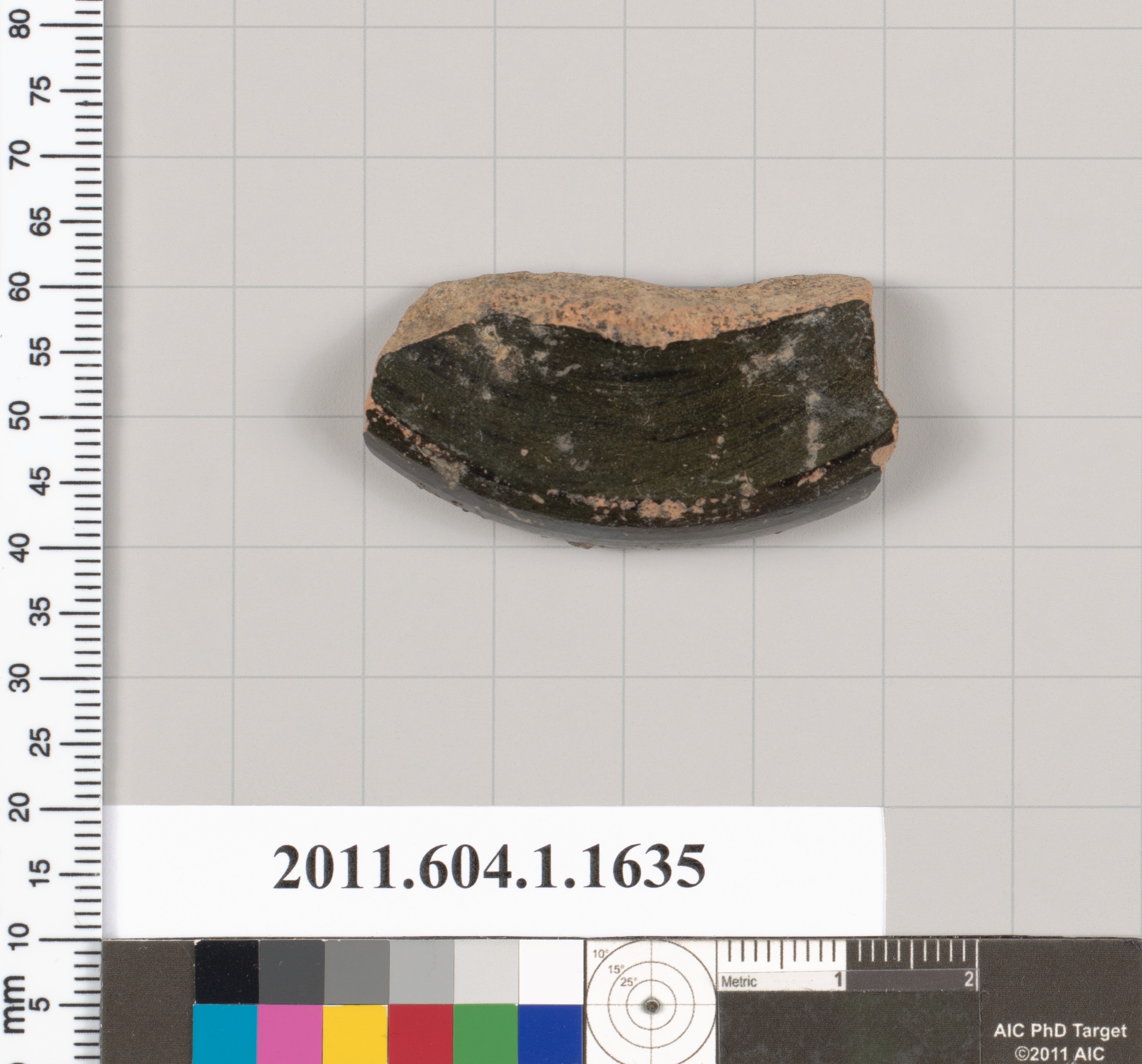
The terracotta fragment of an Attic kylix—a Greek drinking cup from the 5th century BCE—survives not as a complete object but as a shard of form, a broken rim bearing the ghost of a symposium. In the context of Lauren Fashion Heritage Lab’s ongoing investigation into the 2026 Old Money silhouette, this fragment offers a profound counterpoint to the internal genetic code’s meditation on vessels and meaning. Where the Saint Philip Neri portrait embodies the “person-vessel” of inner spiritual radiance, and the Shang bronze “ritual vessel” encodes cosmic order, the kylix fragment speaks to a third category: the “social vessel”—an object whose brokenness itself becomes a signifier of lineage, restraint, and the quiet authority of incompleteness. This paper argues that the kylix fragment’s aesthetic logic—its emphasis on fragmentation as status, material honesty, and communal ritual—directly informs the 2026 Old Money silhouette’s turn toward “architectural restraint” and “patinated luxury.”
I. The Fragment as Signifier: From Symposium to Silhouette
The Attic kylix was never a solitary object. It was designed for the symposion, a male drinking ritual that bound together politics, philosophy, and pleasure. Its shallow bowl, twin handles, and elevated stem facilitated a shared experience—wine was mixed, passed, and consumed in a choreography of social bonding. The terracotta fragment, now isolated in a museum case, retains the memory of this communal function. Its broken edge does not signify loss but selective preservation: what remains is precisely what was deemed worthy of keeping. This logic of curated incompleteness resonates directly with the 2026 Old Money silhouette. The new generation of heritage dressing does not seek pristine perfection. Instead, it privileges “unfinished” details—raw hems, exposed seams, slightly frayed cuffs—that signal a wearer’s ease with time and their refusal to perform newness. Just as the kylix fragment’s breakage authenticates its antiquity, so too do these “archaeological” details authenticate a garment’s belonging to a lineage of quiet, unostentatious wealth.
Furthermore, the kylix’s terracotta material—fired earth, unglazed, porous—embodies a “material honesty” that the 2026 silhouette adopts through its preference for “heritage blacks” and “grounded neutrals.” Unlike the gilded bronze of Shang ritual vessels or the oil-painted luminosity of Renaissance portraiture, terracotta does not aspire to transcendence. It remains of the earth, its color a spectrum of ochre, umber, and charcoal. This chromatic humility is echoed in the 2026 Old Money palette: deep charcoal, ink black, slate, and the brown-black of aged leather. These are not the blacks of mourning or rebellion, but the blacks of “ritual sobriety”—colors that absorb light rather than reflect it, creating a silhouette that recedes into the background of a room, allowing the wearer’s presence, not the garment, to command attention.
II. The Architecture of the Rim: Structural Restraint and the New Silhouette
The kylix fragment’s most instructive feature is its rim—a thin, precisely curved edge that defines the vessel’s opening. In Greek pottery, the rim was not merely functional; it was a “threshold” between the interior (the wine, the communal experience) and the exterior (the world of the symposium). The 2026 Old Money silhouette borrows this “threshold logic” in its treatment of the neckline, collar, and shoulder line. Just as the kylix rim is clean, unadorned, and structurally decisive, so too does the new silhouette favor “architectural necklines”—sharp notched lapels, precise mandarin collars, and clean boat necks that frame the face without competing with it. These are not decorative flourishes but “structural edges” that delineate the garment’s volume and the wearer’s form, much as the kylix rim delineates the vessel’s capacity.
The fragment’s curvature also teaches a lesson in “negative space.” What is missing—the missing bowl, the missing stem—is as important as what remains. In the 2026 silhouette, this translates into a preference for “unfilled volumes”: jackets that drape rather than constrict, trousers that fall straight without tapering, and coats that create a “negative space” between fabric and body. This is not slouchiness but “controlled emptiness”—a silhouette that breathes, that allows the wearer to inhabit the garment rather than be inhabited by it. The kylix fragment, by its very incompleteness, invites the viewer to mentally complete its form; the 2026 Old Money garment, by its restrained volume, invites the observer to focus on the person within.
III. Patina as Code: The Surface of Time and the Language of Wear
The terracotta fragment’s surface—its accumulated scratches, mineral deposits, and subtle color variations from centuries of burial—constitutes a “patina of authenticity” that the 2026 Old Money silhouette explicitly emulates. In the internal genetic code’s language, this patina is a form of “time’s layer” akin to the bronze’s verdigris or the portrait’s craquelure. For the 2026 silhouette, patina is achieved not through artificial distressing but through “material selection” that naturally ages with grace: heavyweight wool that develops a soft sheen, cashmere that pills into a subtle halo, and leather that cracks into a map of use. These are not signs of neglect but of “ritual wear”—the garment’s history inscribed into its surface, much as the kylix’s use-wear tells the story of countless symposia.
This patina logic extends to the silhouette’s “finishing codes.” Buttons are not polished brass but “oxidized metal” or “horn”; zippers are exposed and darkened; linings are raw silk that wrinkles naturally. Every detail conspires to create a surface that “absorbs time” rather than resisting it. In the Old Money aesthetic, newness is gauche; “settledness” is the ultimate signifier of belonging. The kylix fragment, by its very brokenness, declares that it has “settled” into its current state over millennia. The 2026 garment, through its patina, declares that its wearer has “settled” into their status over generations.
IV. The Vessel as Metaphor: From Drinking Cup to Dressed Body
Ultimately, the kylix fragment and the 2026 Old Money silhouette share a common metaphorical structure: both are “vessels for presence.” The kylix was designed to hold wine, but its deeper purpose was to hold “social meaning”—the bonds of the symposium, the exchange of ideas, the performance of citizenship. The Old Money silhouette, in its most refined form, is likewise a vessel: it holds the wearer’s body, but its deeper purpose is to hold “social identity”—the quiet confidence of inherited taste, the ease of belonging, the refusal to perform wealth through novelty.
The internal genetic code’s meditation on the “person-vessel” (Saint Philip) and the “civilization-vessel” (Shang bronze) finds its third term in the “social-vessel” of the kylix. Where the saint’s vessel is “vertical” (reaching toward the divine) and the bronze’s vessel is “horizontal” (binding the community), the kylix’s vessel is “circular”—it encloses a shared space, a moment of collective presence. The 2026 silhouette, with its “architectural restraint” and “patinated surface,” creates a similar enclosure: it does not shout for attention but creates a “quiet perimeter” around the wearer, inviting those who recognize its codes into a shared understanding of what true luxury means.
Conclusion: The Shard as Silhouette
The terracotta fragment of an Attic kylix, broken and incomplete, offers the 2026 Old Money silhouette its most profound lesson: that true elegance is not about wholeness but about the authority of what remains. In a culture obsessed with newness, perfection, and visibility, the Old Money aesthetic reclaims the power of the fragment—the garment that has been worn, the silhouette that recedes, the material that ages with grace. The kylix fragment does not need to be whole to be meaningful; its brokenness is its authenticity. Likewise, the 2026 Old Money silhouette does not need to be spectacular to be powerful; its restraint is its statement. In the end, both the shard and the silhouette teach the same lesson: that the deepest luxury is not in possessing the vessel, but in being worthy of what it once held.