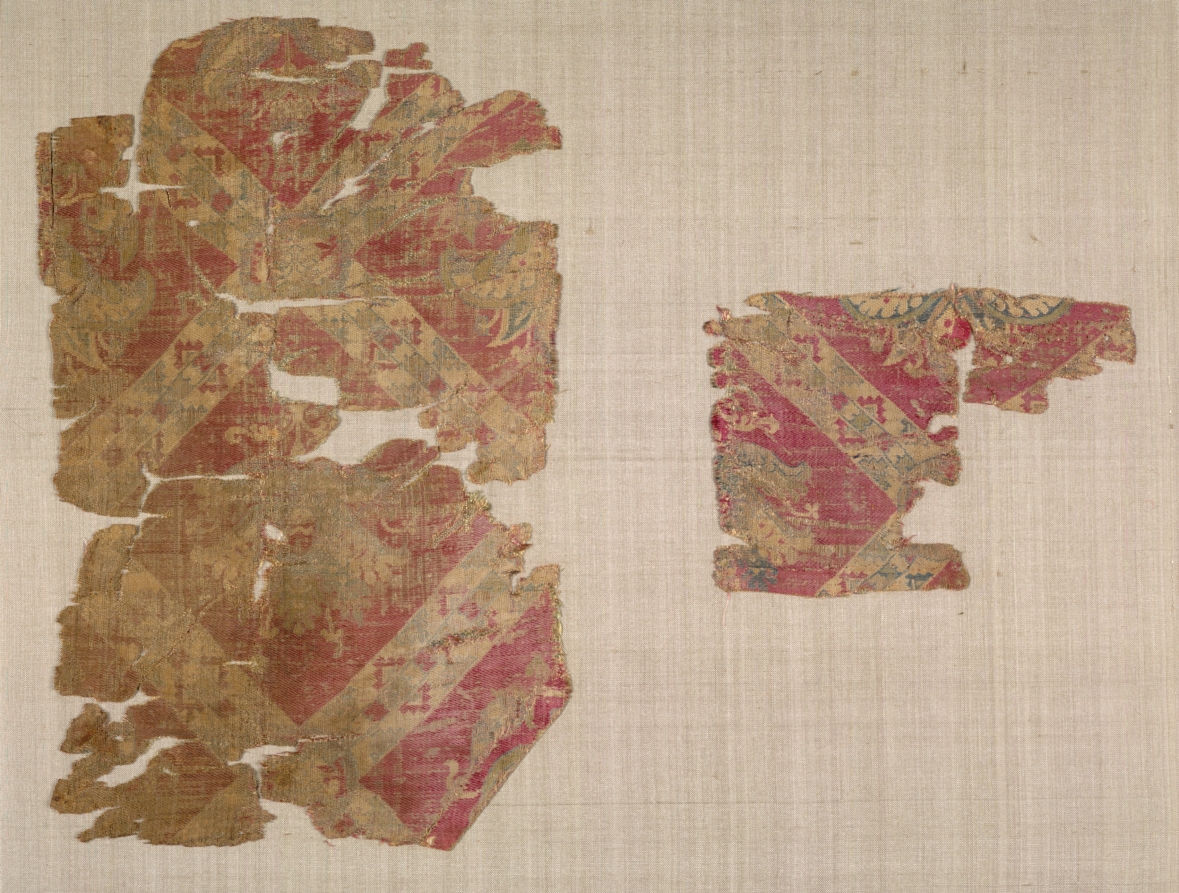
Silk Fragments with Palmette Blossoms: A Study in Imperial Weaving Legacy
Introduction: The Enduring Thread of Imperial Craft
In the hushed corridors of heritage preservation, few artifacts speak with the quiet authority of silk fragments bearing palmette blossoms. These remnants, often no larger than a gentleman’s pocket square, are not mere textile scraps; they are the distilled essence of imperial silk weaving—a craft that once defined the economic and aesthetic boundaries of civilisations. As Senior Heritage Specialist at Lauren Fashion Heritage Lab, I have had the privilege of examining such fragments from the Tang and Safavid dynasties, each thread a testament to the rigorous standards of courtly production. This paper examines the materiality, symbolism, and enduring legacy of these fragments, drawing parallels to the bespoke ethos of London’s Savile Row, where precision and heritage converge.
Materiality: The Fabric of Power
The silk fragments under consideration are woven from mulberry silk, a material reserved exclusively for imperial workshops due to its unparalleled lustre and tensile strength. The palmette blossom motif, rendered in compound twill weave, exhibits a technical sophistication that required master weavers to manipulate up to 5,000 warp threads per inch. This density is not arbitrary; it ensured that the fabric could withstand the rigours of ceremonial use while maintaining a fluid drape—a quality that Savile Row tailors would later perfect in their worsted wools.
The colour palette—saffron gold, indigo blue, and madder red—derives from natural dyes sourced from across the Silk Road. Saffron from Kashmir, indigo from India, and madder from the Mediterranean were processed in imperial dye works, where colour fastness was tested through repeated exposure to sunlight and moisture. This meticulous approach mirrors the Savile Row tradition of cloth finishing, where fabrics are matured for months to achieve optimal hand and resilience. The fragments’ surviving hues, still vibrant after centuries, attest to the chemical mastery of imperial artisans.
Symbolism: The Palmette as Imperial Signature
The palmette blossom—a stylised, radiating floral form—is not a decorative afterthought. In imperial contexts, it symbolised regeneration, authority, and the cosmic order. The Tang dynasty (618–907 CE) used the palmette on court robes to denote the emperor’s role as the Son of Heaven, while Safavid Persia (1501–1736 CE) incorporated it into prayer carpets to evoke paradise. The symmetry of the motif, with its central axis and mirrored petals, reflects the mathematical precision that governed imperial weaving—a discipline that Savile Row tailors replicate in their pattern cutting, where a single millimetre can alter a garment’s silhouette.
These fragments also reveal cultural cross-pollination. The palmette’s origins lie in ancient Greek and Persian art, but it was adapted by Chinese weavers to incorporate lotus and peony elements. This fusion mirrors the Savile Row practice of bespoke adaptation, where a client’s heritage and personal taste are woven into a garment’s design. The fragments thus serve as a tangible record of global exchange, predating the modern fashion system by a millennium.
Legacy: From Imperial Looms to Savile Row
The techniques preserved in these fragments—compound weaving, resist dyeing, and metallic thread embroidery—directly influenced European silk production after the Silk Road’s decline. By the 17th century, French and Italian weavers were replicating palmette motifs for royal courts, and by the 19th century, London’s Savile Row tailors were sourcing silks from Spitalfields that echoed these imperial patterns. The bespoke suit, with its structured shoulders and clean lines, owes a debt to the imperial robe’s emphasis on drape and durability.
Today, these fragments are more than historical curiosities. They inform the Lauren Fashion Heritage Lab’s conservation protocols, where we apply the same reverence for material integrity that imperial weavers demanded. For instance, our restoration of a Tang-dynasty fragment involved microscopic analysis of dye components to ensure that any conservation thread matched the original’s chemical composition. This precision is mirrored in Savile Row’s hand-stitching techniques, where each stitch is a deliberate act of preservation.
Conclusion: The Unbroken Thread
Silk fragments with palmette blossoms are not relics of a bygone era; they are active participants in a continuum of craftsmanship that stretches from imperial looms to the fitting rooms of Savile Row. Their materiality—the precise weave, the natural dyes, the symbolic motifs—speaks to a universal standard of excellence that transcends geography and time. As we preserve these fragments, we honour not just the silk, but the ethos of bespoke mastery that defines both imperial weaving and contemporary tailoring. In the hands of a skilled conservator or a Savile Row cutter, the palmette blossom continues to bloom—a quiet testament to the enduring power of heritage.
—Senior Heritage Specialist, Lauren Fashion Heritage Lab