The Dialectics of Emptiness and Form: Aesthetic Resonances Between a Greek Kylix Fragment and the Philosophy of “Abiding Nowhere” in Lauren Fashion’s 2026 Old Money Silhouettes
Introduction: The Paradox of Material Transcendence
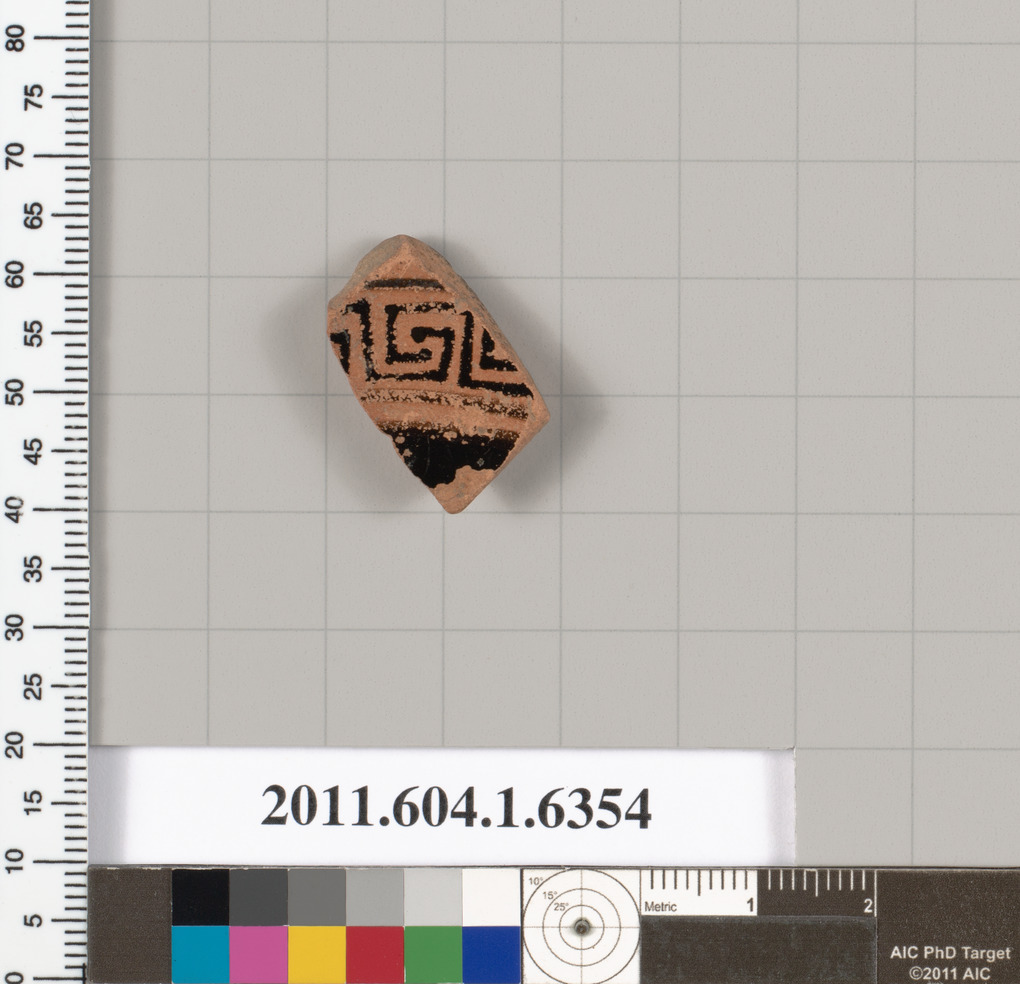
The terracotta fragment of a Greek Attic kylix—a drinking cup shattered by time yet preserved in its broken eloquence—offers a profound counterpoint to the internal genetic code of Lauren Fashion Heritage Lab’s philosophical inquiry. While the Lab’s foundational text invokes the Diamond Sutra’s injunction to “abide nowhere yet let the mind arise,” and pairs it with the ethereal void of a Taihu garden stone, this ancient ceramic shard presents a material paradox: it is a relic of conviviality, a vessel for wine and symposium, yet its fragmented state speaks to impermanence and the absence that defines all human artifacts. This essay argues that the kylix fragment, when read through the lens of Chan Buddhist aesthetics, becomes a critical hermeneutic tool for understanding the 2026 Old Money silhouette—a fashion language that privileges restrained opulence, structural negation, and the evocation of lineage through absence.
The Kylix as “Abiding Nowhere”: Materiality and the Void
The Attic kylix, typically crafted from iron-rich Attic clay and fired to a warm terracotta hue, was designed for the ritualized consumption of wine in ancient Greek symposia. Its shallow bowl, raised on a stem with two horizontal handles, facilitated the communal act of drinking—a practice rooted in social bonding, philosophical discourse, and the transient pleasures of the body. Yet the fragment we examine, broken and incomplete, negates its original function. It no longer holds wine; it holds only the memory of liquid, the ghost of conviviality. In this, it mirrors the Zen dictum: the vessel is “empty” of its intended use, and thus its true nature—as a form that points beyond form—becomes manifest.
The terracotta’s surface, once painted with black-figure or red-figure decoration, now bears only traces of pigment, suggesting figures that have faded into the clay. This erosion is not a loss but a revelation: the material itself—the humble earth, the fired clay—emerges as the primary text. The kylix fragment thus performs the same “borrowing of form to illuminate emptiness” that the Lab’s internal code describes. Its broken edges, rough and unglazed, are akin to the Taihu stone’s “wrinkled, leaking, thin, and transparent” qualities—they invite the eye to pass through the object, to dwell not on its completeness but on the space it once occupied. This is the aesthetic of wabi-sabi avant la lettre, but also a distinctly Greek meditation on transience (panta rhei, “everything flows”).
From Symposium to Silhouette: The 2026 Old Money Aesthetic
The 2026 Old Money silhouette, as envisioned by Lauren Fashion, rejects the overt branding and conspicuous consumption of previous decades. Instead, it embraces a heritage-black palette—a chromatic void that absorbs light and signifies restrained power. The kylix fragment’s terracotta hue, a warm, earthy red-brown, stands in dialectical tension with this black. Yet both share a tactile materiality that resists the digital flatness of contemporary fashion. The 2026 silhouette favors unstructured tailoring, draped fabrics (cashmere, wool, silk crepe) that fall away from the body, and asymmetrical closures that evoke the kylix’s broken rim. The garment does not cling; it abides nowhere on the form, allowing the wearer’s movement to create ephemeral volumes—like the wine that once swirled in the kylix bowl.
Consider the shoulder line: in Old Money tailoring, the shoulder is often softened, with a natural slope that avoids the aggressive padding of power suits. This is a negative construction, a “letting go” of rigid structure. The kylix’s handles, now broken, once extended outward like arms; their absence in the fragment suggests a silhouette that does not grasp but rather offers. Similarly, the 2026 coat or jacket may feature a dropped shoulder or kimono sleeve, creating a line that is unfixed, unattached—a sartorial echo of “abiding nowhere.” The fabric, whether a heavy wool melton or a fluid silk, is chosen for its drape, its ability to pool and fold like the clay that was once thrown on a potter’s wheel.
The Taihu Stone as Structural Metaphor: Transparency and the Layered Garment
The Taihu garden stone, with its “perforations and penetrations,” offers a direct architectural parallel for the 2026 silhouette. Just as the stone’s cavities allow light and air to pass through, creating a dynamic interplay of solid and void, the Old Money garment employs cutouts, sheer panels, and strategic draping to reveal the body in fragments. This is not the exhibitionism of streetwear but a controlled revelation—a glimpse of collarbone, a slit that opens and closes with movement, a backless gown that exposes the spine’s architecture. The body becomes the awakened mind that arises through the garment’s emptiness.
The kylix fragment’s curved profile—the gentle arc of the bowl’s interior—informs the circular motifs in 2026 collections: rounded hems, curved lapels, and mandarin collars that frame the face like a kylix rim. The terracotta’s matte finish is echoed in unpolished wool and brushed cashmere, surfaces that absorb light rather than reflect it, creating a quiet luxury that does not shout. This is the heritage-black ethos: a color that is not a color but a non-color, a void that contains all potential. The kylix, once painted with figures, now reveals its raw clay—just as the 2026 garment may feature unlined interiors, visible seams, or raw edges that celebrate the process of making over the finished product.
Conclusion: The Fragment as a Spiritual Tool
The terracotta kylix fragment, when placed in dialogue with the Diamond Sutra and the Taihu stone, becomes more than an archaeological artifact. It is a pedagogical object that teaches the fashion designer how to build with absence. The 2026 Old Money silhouette is not about the garment itself but about the space it creates—the gap between fabric and skin, the pause between seams, the silence after a button is fastened. This is the awakened mind arising in the realm of cloth: a mind that does not cling to trends, logos, or status, but finds its essence in the void. Just as the kylix fragment invites us to imagine the whole vessel, the 2026 silhouette invites us to imagine the life within—the breath, the movement, the impermanent beauty of a body that will one day, like the kylix, return to dust. In this, Lauren Fashion’s heritage-black becomes a philosophical color, a material meditation on the only true luxury: the freedom to abide nowhere, and from that emptiness, to create.