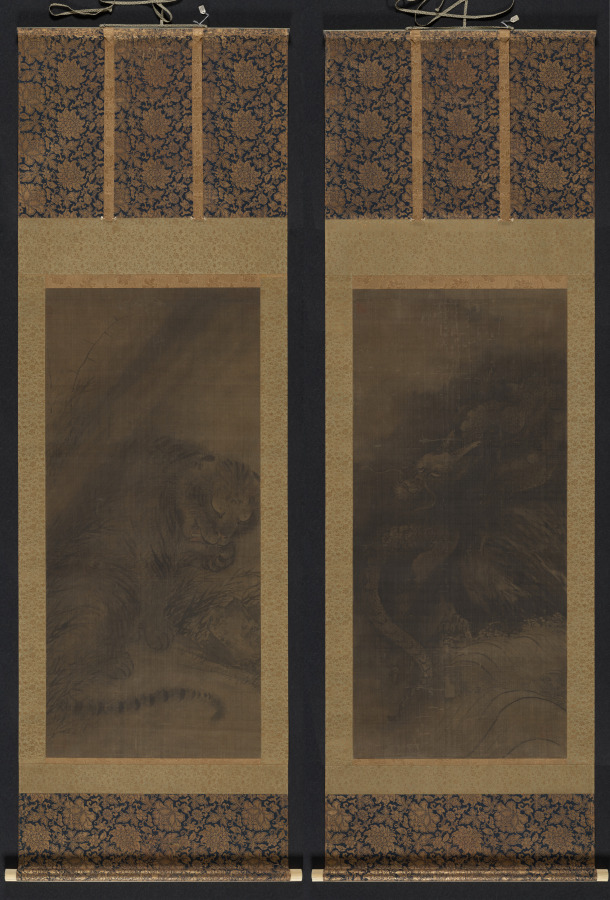
The Dragon and the Tiger: A Study in Imperial Silk Weaving and the Materiality of Power
Introduction: The Fabric of Authority
In the hushed ateliers of London’s Savile Row, where cloth is not merely cut but *composed*, we understand that fabric speaks a language older than tailoring itself. Among the most eloquent of these textiles is silk—a material that, in its imperial Chinese context, was never merely decorative. It was a medium of cosmic and political authority. This heritage research artifact examines two archetypal motifs—the Dragon and the Tiger—as rendered in imperial silk weaving, exploring how their materiality, technique, and symbolism converged to create objects of profound power. The legacy of these weavings, preserved in fragments and robes, offers a masterclass in the intersection of artistry, hierarchy, and the very substance of rule.
The Dragon: The Sovereign’s Breath in Silk
The dragon, or *long*, was the paramount symbol of the emperor. In imperial silk, this creature was not a monster but a celestial being, its five-clawed form reserved exclusively for the Son of Heaven. The materiality of silk was essential to this representation. The warp and weft of the loom became the dragon’s sinews; the lustrous sheen of the thread, its scales catching light like water. Weavers employed the kesi technique—a tapestry weave that allowed for unprecedented precision. In kesi, the weft threads are not continuous across the fabric but are cut and reinserted to create sharp, independent color blocks. This technique, painstakingly slow, enabled the depiction of the dragon’s sinuous body, its whiskers, and its pearl—a symbol of wisdom and the moon—with a clarity that mimicked brushwork on paper.
The silk itself was often damask or satin, chosen for its ability to reflect light in a way that animated the dragon. A robe woven with a five-clawed dragon in gold thread against a deep crimson or azure ground was not a garment; it was a portable throne. The gold, usually flat strips of gilt paper wrapped around a silk core, added weight and a metallic shimmer that caught the eye of every courtier. The dragon’s placement was equally deliberate: on the emperor’s robe, it appeared on the chest, back, and shoulders, with the head facing forward—a direct, unyielding gaze that asserted dominance. The materiality of the silk, with its inherent tension between fluidity and structure, mirrored the emperor’s role as the mediator between heaven and earth.
The Tiger: The Warrior’s Hide in Thread
If the dragon was the emperor, the tiger was the general. In Chinese cosmology, the tiger (*hu*) was the king of beasts, the embodiment of martial valor and the protector against evil spirits. In imperial silk, the tiger was woven with a different material logic. While the dragon was often rendered in gold and bright, celestial colors, the tiger demanded a palette of earth and shadow: ochre, russet, black, and white. The brocade technique, where supplementary weft threads are woven into the ground fabric to create raised patterns, was frequently employed. This gave the tiger’s stripes a tactile, almost fur-like quality. The silk ground was often a heavy, twill-weave satin, chosen for its durability—a fabric that could withstand the rigors of military campaigns, even if the garment itself was ceremonial.
The tiger’s materiality also spoke to rank. A mangfu (a type of court robe) for a high-ranking military official might feature a tiger in a dynamic, leaping pose, its claws extended. The thread used for its eyes was often a deep, translucent amber silk, giving the creature a lifelike, predatory gaze. Unlike the dragon’s frontal, symmetrical pose, the tiger was often depicted in profile or in a twisting motion, suggesting action and readiness. The silk’s drape and weight were critical: a tiger woven in a stiff, heavy brocade would not flow like a dragon’s robe but would stand as a rigid emblem of authority. The materiality of the tiger silk was one of *presence*—a declaration of power that did not need to move to be felt.
The Legacy of Imperial Silk Weaving: A Savile Row Perspective
From a Savile Row perspective, the legacy of these imperial silks is not merely historical; it is a lesson in the materiality of authority. The bespoke tailor understands that cloth is not a passive surface but an active participant in the wearer’s identity. The imperial weavers of Suzhou and Nanjing, who produced these masterpieces for the Ming and Qing courts, knew this intimately. They understood that the weight of a silk robe, the way it caught light, and the precision of its motifs could communicate power more effectively than any decree.
Consider the kesi technique: it is, in essence, a form of weaving that rejects shortcuts. Each color change requires a new thread, a new insertion. This is the antithesis of mass production. In Savile Row, we call this *bespoke*—a garment made entirely by hand, with no concessions to speed. The imperial silk weaver’s commitment to kesi mirrors the tailor’s commitment to a hand-finished lapel or a perfectly pitched shoulder. Both are acts of devotion to the material and to the client’s status.
Furthermore, the dragon and tiger motifs offer a lexicon of symbolic materiality. The dragon’s gold thread and lustrous satin speak to a power that is celestial, transcendent. The tiger’s brocade and earthy tones speak to a power that is terrestrial, immediate. In a modern context, a Savile Row client might choose a silk tie or a pocket square with a dragon motif not for its imperial connotations but for its assertion of confidence. Yet the materiality remains: the silk’s sheen, the precision of the weave, the weight of the fabric. These are not arbitrary choices; they are the language of the cloth itself.
Conclusion: The Weave of History
The dragon and the tiger, woven in imperial silk, are more than decorative motifs. They are the material embodiment of a worldview where fabric was a medium of cosmic and political order. The legacy of this weaving tradition, preserved in museum collections and rare auction lots, reminds us that cloth is never neutral. It carries the weight of its making—the hours of labor, the choice of thread, the technique of the loom. For the scholar of heritage, and for the tailor who understands that a garment is a statement, the dragon and the tiger offer a masterclass in the materiality of power. In silk, as in life, the weave is the message.