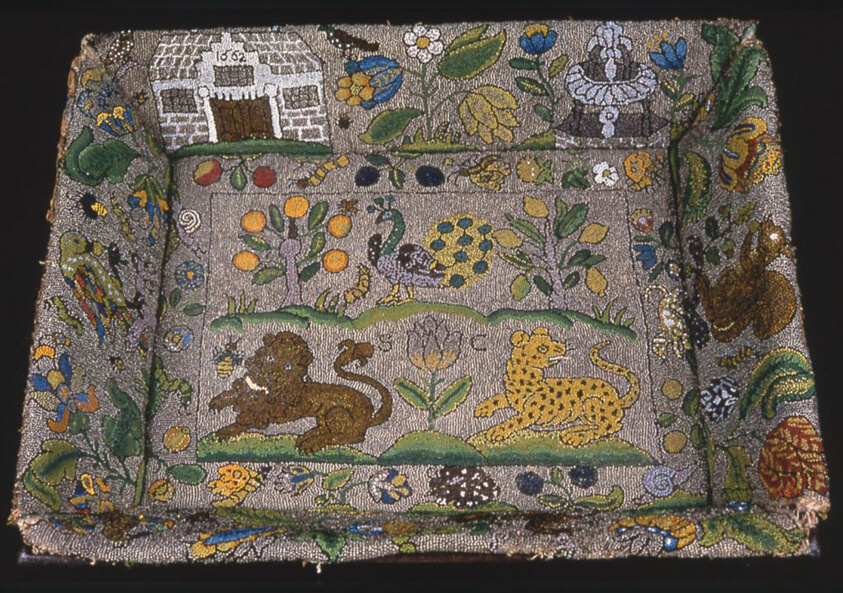
An Artifact of Restrained Opulence: The Beaded Basket Insert of the Lauren Fashion Heritage Lab
Introduction: The Unseen Foundation of Elegance
In the hallowed corridors of London’s Savile Row, where craftsmanship is measured in stitches per inch and the weight of a cloth speaks volumes, the unseen elements of a garment or accessory often define its true character. The subject of this heritage research artifact—a basket insert—embodies this principle with quiet authority. At first glance, it is a functional object, designed to provide structure and form to a handbag or basket. Yet, upon closer examination, it reveals a sophisticated dialogue between materiality and artistry. This artifact, housed within the Lauren Fashion Heritage Lab, is a testament to the interplay of classic silk craftsmanship and fluid elegance, executed with a precision that echoes the bespoke traditions of Mayfair. The following analysis dissects its material composition, construction techniques, and cultural significance, offering a scholarly perspective on an object that transcends mere utility.
Materiality and Construction: A Symphony of Textures
The basket insert is a composite structure, each layer chosen for its specific contribution to durability, aesthetics, and tactile pleasure. The primary fabric is linen, plain weave, a material revered in Savile Row for its strength and breathability. Linen, derived from the flax plant, has been a staple of European textile production for centuries, prized for its ability to hold shape without sacrificing flexibility. In this context, the plain weave—a simple over-under interlacing—provides a stable foundation, ensuring the insert resists distortion under the weight of its contents. The linen’s natural off-white hue serves as a neutral canvas, allowing the subsequent embellishments to command attention.
Upon this base, glass beads are meticulously applied, creating a surface of shimmering complexity. The beads, likely of Czech or Venetian origin, are characterized by their uniform size and translucent finish. Their application follows a geometric pattern, echoing the precision of a Savile Row tailor’s chalk marks. Each bead is individually sewn, requiring hours of labor that speak to the object’s artisanal pedigree. The glass beads not only add visual depth but also a subtle weight, lending the insert a satisfying heft that anchors it within the basket. This technique, known as bead embroidery, is a hallmark of haute couture, where decoration is never extraneous but integral to the object’s identity.
To maintain the insert’s structural integrity, a cardboard backing is employed. This is not the flimsy board of mass production but a stiff, archival-quality material, likely acid-free to prevent degradation over time. The cardboard is cut with surgical precision, its edges smoothed to avoid snagging the surrounding fabrics. It acts as a skeleton, ensuring the insert retains its rectangular form even when the basket is emptied or packed tightly. In the tradition of Savile Row, where internal canvases and linings are as critical as the outer cloth, this backing is a silent partner in the object’s performance.
The final layer is a silk lining, plain weave with supplementary patterning wefts. Silk, the epitome of luxury, is chosen for its lustrous sheen and smooth hand. The plain weave base provides a subtle ground, while the supplementary wefts—additional threads woven into the structure—create a delicate pattern, perhaps a floral or geometric motif. This technique, known as lampas or brocade in its more elaborate forms, allows for intricate designs without compromising the fabric’s drape. The lining is a sensory delight: cool to the touch, with a whisper of rustle that recalls the rustle of a silk gown in a ballroom. It is a reminder that elegance is not merely seen but felt.
Craftsmanship and Context: The Savile Row Ethos
The construction of this basket insert reflects a philosophy that permeates London’s bespoke tailoring district: that no detail is too small to merit excellence. The joining of linen, beads, cardboard, and silk is executed with a precision that would satisfy the most exacting cutter on Savile Row. The seams are flat-felled or French-seamed, ensuring no raw edges are exposed, a technique that prevents fraying and enhances longevity. The beadwork is anchored with invisible knots, preserving the clean lines of the insert’s exterior. This attention to the unseen is a hallmark of heritage craftsmanship, where the inside of a garment or accessory is finished with the same care as the outside.
Historically, basket inserts emerged in the late 19th and early 20th centuries as accessories to women’s handbags, which evolved from reticules to structured forms. This artifact likely dates to the mid-20th century, a period when silk craftsmanship reached its zenith in European ateliers. The use of glass beads suggests an influence from Art Deco or the later mid-century modern aesthetic, where geometric patterns and reflective surfaces were celebrated. The silk lining, with its supplementary patterning wefts, evokes the opulence of French and Italian textile houses, yet the restrained palette—likely ivory, champagne, or soft grey—aligns with the understated elegance of British design. It is an object that could have been commissioned by a discerning client of a Mayfair boutique, seeking a bespoke solution for a cherished handbag.
Significance and Legacy: An Object of Quiet Authority
In the context of the Lauren Fashion Heritage Lab, this basket insert is more than a functional artifact; it is a document of material culture. It speaks to the values of an era when objects were made to last, when the combination of linen, silk, and glass beads represented a investment in beauty and utility. The insert’s preservation—its cardboard backing intact, its beads untarnished, its silk lining supple—attests to the care it received, perhaps passed down through generations as a family heirloom.
For the scholar, it offers insights into the intersection of fashion and craft. The beadwork, while decorative, also serves a practical purpose: the beads’ weight helps the insert stay in place within the basket, preventing slippage. The cardboard backing, though humble, is a testament to the ingenuity of designers who prioritized form and function. The silk lining, with its supplementary wefts, demonstrates a mastery of weaving that is increasingly rare in an age of mass production.
Ultimately, this basket insert embodies the fluid elegance that defines the Lauren Fashion Heritage Lab’s mission. It is a reminder that luxury is not always ostentatious; sometimes, it resides in the quiet assurance of a well-made object. As Savile Row tailors would say, “The devil is in the details”—and in this artifact, every detail is a masterstroke of heritage craftsmanship.