The Fragment as a Testament: Deconstructing Silk Velvet’s Materiality and Legacy
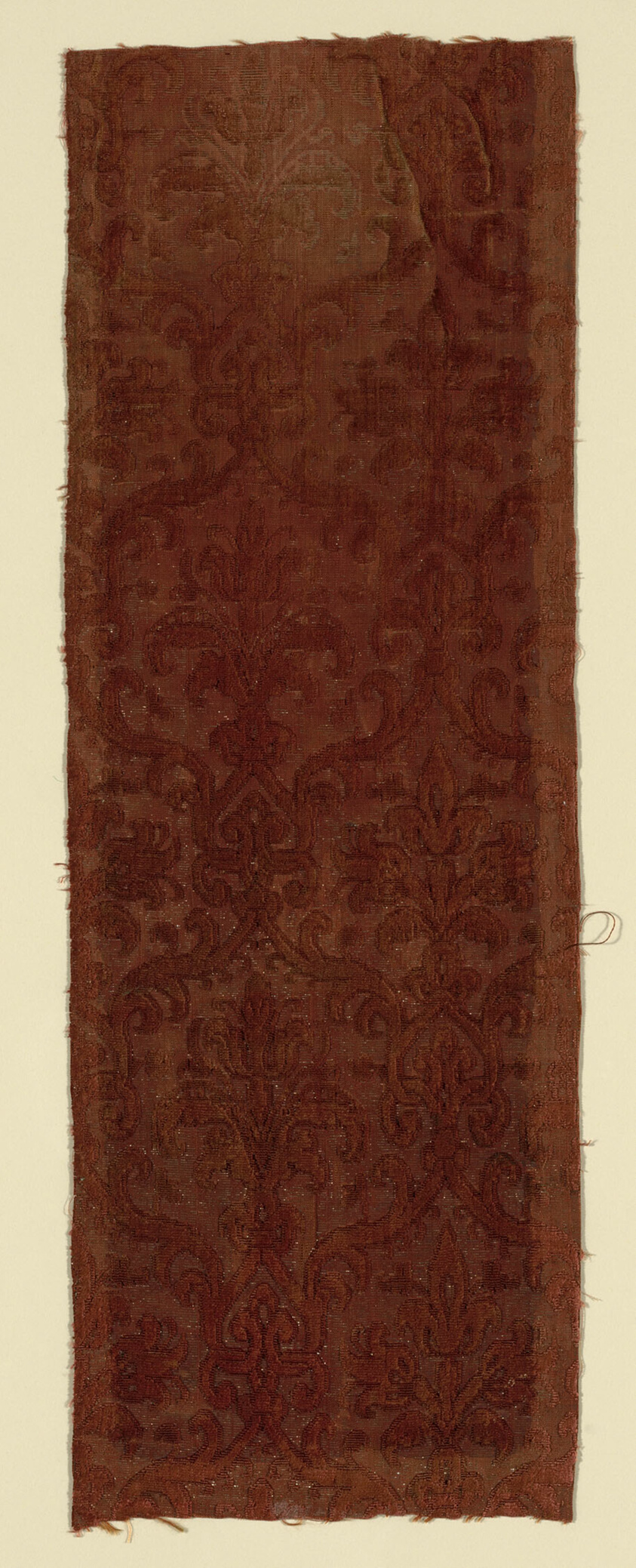
In the quiet, hallowed archives of Lauren Fashion Heritage Lab, a fragment speaks volumes. It is not a complete garment, nor a pristine bolt of cloth, but a remnant—a severed piece of history that holds within its weave the very essence of classic silk craftsmanship and fluid elegance. This artifact, a piece of silk, cut, uncut, voided velvet with additional patterning wefts in gold foil against a plain weave foundation, is a masterclass in materiality. It demands a rigorous examination, not merely as a textile, but as a document of technical virtuosity, aesthetic ambition, and the enduring dialogue between structure and sensuality. From the bespoke ateliers of London’s Savile Row to the haute couture houses of Paris, this fragment embodies a standard of luxury that is both timeless and exacting.
I. The Architecture of Opulence: Deconstructing the Weave
To understand this fragment, one must first appreciate the engineering of its beauty. The foundation is a plain weave, the simplest and most stable of interlacings, where each weft thread passes over and under each warp thread. This provides a disciplined, neutral ground—a canvas of restraint. Upon this, the velvet emerges. The term “velvet” itself is a promise of depth, achieved through a complex pile weave. In this instance, we encounter a tripartite system: cut velvet, uncut velvet, and voided velvet. The cut pile, created by slicing the loops of extra warp threads, yields a plush, tactile surface that absorbs and reflects light with a soft, diffused glow. The uncut pile, left as loops, introduces a contrasting texture—a subtle, almost ribbed dimension that catches light differently, creating a play of shadow and sheen. The voided areas, where the pile is absent, reveal the plain weave foundation, offering a moment of visual and tactile respite. This is not mere decoration; it is a deliberate choreography of surface, a dialogue between opulence and emptiness.
The inclusion of additional patterning wefts in gold foil elevates the fragment from luxurious to regal. Gold foil, a material of immense historical weight, is not simply a color; it is a substance. It carries connotations of wealth, power, and the divine. In this textile, the gold is not woven as a solid thread but as a foil—a thin, malleable strip that is often wrapped around a silk core or applied as a supplementary weft. This technique, known as lame or metallic brocading, allows the gold to sit on the surface, catching light with an almost liquid brilliance. The contrast between the matte, absorbent velvet and the reflective, assertive gold creates a dynamic tension. The gold does not overwhelm; rather, it punctuates the velvet’s softness, offering a counterpoint of precision and sparkle. This is the hallmark of classic silk craftsmanship: the ability to balance disparate elements—matte and shine, soft and hard, dense and void—into a cohesive, harmonious whole.
II. The Language of Voided Velvet: Elegance Through Absence
The term “voided” is particularly instructive. In the context of this fragment, the void is not a flaw but a feature. The absence of pile in specific areas creates a pattern, a negative space that defines the positive forms. This technique, historically associated with Renaissance velvets and later with the opulent textiles of the Baroque and Rococo periods, demands extraordinary skill. The weaver must control the pile warps with precision, raising and lowering them to create the desired motifs. The result is a textile that breathes. The voided areas provide a visual break, preventing the velvet from becoming cloying or heavy. They introduce a rhythm, a pattern of light and shadow that animates the fabric. This is the essence of fluid elegance: a fabric that moves with the body, that drapes and falls with a natural grace, because its structure allows for both density and lightness.
Consider the implications for a Savile Row tailor. A jacket or a gown made from such a fabric would not be a static object. The cut velvet would catch the eye in the light; the uncut loops would offer a subtle, tactile intrigue; the voided areas would allow the fabric to flow and fold without excessive bulk. The gold foil would catch the light at the wearer’s every gesture, creating a living, breathing ornament. This is not a fabric for the timid. It is a statement of confidence, a declaration of a refined understanding of materiality. The fragment, though small, encapsulates this entire philosophy. It is a microcosm of the tailor’s art: the ability to select a fabric that is not merely beautiful but intelligent, that works with the body and the design to create a garment of enduring significance.
III. The Fragment as a Research Artifact: Preserving the Intangible
In the context of the Lauren Fashion Heritage Lab, this fragment serves a purpose beyond aesthetic appreciation. It is a primary source, a tangible link to the technical and cultural practices of a bygone era. The silk itself is a material of immense historical and economic importance. The cultivation of silkworms, the reeling of the filament, the dyeing and weaving—each step represents a chain of knowledge and labor that stretches back millennia. The gold foil speaks to trade routes, to the alchemy of metallurgy, and to the desire for luxury that has driven human commerce for centuries. The combination of cut, uncut, and voided velvet is a testament to the sophistication of European weaving centers, particularly in Italy and France, whose techniques were later adopted and refined by London’s finest houses.
To handle this fragment is to engage in a form of historical dialogue. The wear and tear, the slight fraying at the edges, the subtle discoloration—these are not signs of decay but of life. They tell a story of use, of movement, of a garment that was worn, admired, and eventually preserved. The fragment is a survivor. It has outlived its original context, yet it retains the power to inform and inspire. For the heritage specialist, it is a tool for reconstruction. By analyzing the weave structure, the density of the pile, the thickness of the gold foil, we can reverse-engineer the techniques used to create it. We can understand the limitations and possibilities of the loom, the skill of the weaver, and the aesthetic preferences of the patron. This knowledge is invaluable for contemporary designers who seek to revive or reinterpret these historic techniques. It is also a cautionary tale: a reminder that true luxury is not about novelty but about mastery, about the patient accumulation of skill and the fearless pursuit of beauty.
Conclusion: The Eternal Fragment
This fragment of silk, cut, uncut, voided velvet with gold foil is more than a piece of fabric. It is a document, a sculpture, and a poem. It embodies the principles of classic silk craftsmanship: the discipline of the plain weave, the sensuality of the pile, the brilliance of the metal. It speaks to the fluid elegance that defines the highest echelons of fashion, from the bespoke tailoring of Savile Row to the haute couture of the world’s great fashion houses. In its small, severed form, it contains the entirety of a tradition. It reminds us that heritage is not a static relic but a living, breathing resource. It challenges us to look beyond the surface, to understand the materiality that underpins beauty, and to honor the hands that created it. This fragment is a testament to the enduring power of silk, and to the timeless pursuit of perfection.