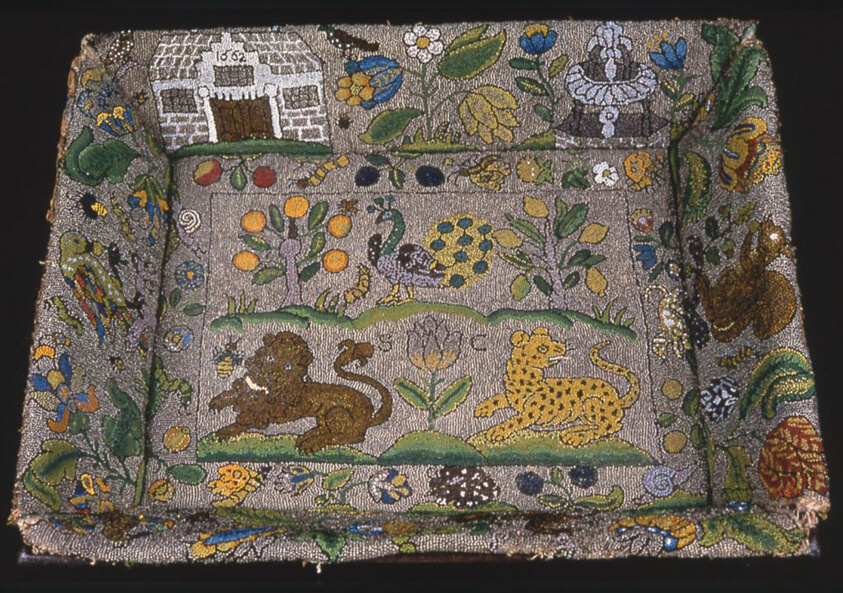
Heritage Research Artifact: The Basket Insert as a Microcosm of Craft and Elegance
Introduction: The Unseen Artifact of Savile Row Precision
In the hallowed ateliers of London’s Savile Row, where the cut of a jacket is a matter of legacy and the drape of a trouser is a study in physics, the most profound truths often reside in the smallest details. The Basket Insert—a seemingly humble accessory designed to structure a handbag or a bespoke case—is no mere utilitarian afterthought. It is a testament to the philosophy that true elegance is not merely seen but felt, a quiet assertion of mastery in the spaces between the visible. This artifact, a composite of linen, glass beads, cardboard, and silk, speaks to a tradition where materiality is a language, and every stitch is a sentence in a longer narrative of classic silk craftsmanship and fluid elegance.
Materiality and the Hierarchy of Craft
The Basket Insert is a study in deliberate contrasts, each material chosen not for expedience but for its contribution to a unified whole. The linen plain weave serves as the foundational structure—a nod to the understated strength that underpins all great tailoring. Linen, with its natural resilience and breathability, provides a neutral canvas, its crispness a counterpoint to the opulence it supports. This is the Savile Row equivalent of a sturdy canvas interlining: unseen, yet essential for maintaining form and integrity.
Upon this base, the glass beads are applied with a precision that borders on the obsessive. Each bead, faceted to catch and refract light, is not merely decorative but architectural. They create a textured surface that invites touch, a subtle interplay of shadow and sparkle that evokes the fluid elegance of silk in motion. The beads are a deliberate departure from the austerity of linen, introducing a note of luxury that is restrained yet unmistakable. In the context of Savile Row, this is akin to a hand-stitched buttonhole on a worsted wool suit—a detail that announces its presence only to the discerning eye.
The cardboard backing is the unsung hero of this composition. It provides rigidity and shape, transforming the insert from a limp textile into a structured artifact. This is the tailor’s secret: the use of a humble material to achieve a precise silhouette. Cardboard, often dismissed as mundane, is here elevated to a structural element, much like the horsehair canvas in a bespoke jacket’s chest piece. It is a reminder that elegance is not about the cost of materials alone but their intelligent application.
The silk lining, a plain weave with supplementary patterning wefts, is the final layer—a whisper of opulence that greets the user only upon closer inspection. Silk, the quintessential fabric of luxury, is here used with restraint. The supplementary wefts introduce a subtle pattern, a geometric or floral motif that catches the light without overwhelming the senses. This is the hallmark of classic silk craftsmanship: the ability to be both present and unobtrusive, to enhance without dominating. The lining is the interior of a Savile Row jacket—immaculate, refined, and a private pleasure for the wearer alone.
Context: Fluid Elegance and the Art of the Unseen
The Basket Insert is not an isolated object but a product of a broader tradition—one that values fluid elegance as a guiding principle. In the world of Savile Row, fluidity is not about looseness but about the seamless integration of form and function. The insert’s design allows it to adapt to the contours of a bag, maintaining its shape while yielding to the bag’s natural movement. This is the same principle that governs a well-draped sleeve or a perfectly balanced shoulder: the garment moves with the body, not against it.
The use of silk in this context is particularly telling. Silk, with its inherent luster and drape, is the material of choice for those who understand that elegance is a dialogue between the object and its environment. The supplementary patterning wefts are a subtle nod to the art of jacquard weaving, a technique that has defined luxury textiles for centuries. Yet, here, the pattern is not a statement but a suggestion—a quiet echo of the floral motifs found in the finest silk scarves or the intricate weaves of a bespoke tie. It is a reminder that true craftsmanship does not shout; it whispers.
Preservation and the Legacy of the Artifact
As a heritage artifact, the Basket Insert demands a preservation strategy that respects its composite nature. The linen base requires careful handling to avoid fraying; the glass beads must be protected from impact, as their faceting is vulnerable to chipping; the cardboard backing is susceptible to moisture and must be stored in a climate-controlled environment; and the silk lining, with its delicate wefts, is prone to snagging. Each material presents a unique challenge, yet together they form a cohesive whole that is greater than the sum of its parts.
This artifact is a microcosm of the Savile Row ethos: a commitment to quality that transcends the visible. It is a lesson in the power of the unseen—the interlinings, the linings, the small details that elevate a garment from the ordinary to the extraordinary. For the heritage specialist, the Basket Insert is not just an object but a narrative, a story of how classic silk craftsmanship and fluid elegance can be distilled into a form that is both functional and beautiful.
Conclusion: The Quiet Authority of Craft
In the end, the Basket Insert is a testament to the idea that elegance is not about excess but about intention. It is a study in restraint, where each material is chosen for its role in a larger composition. The linen provides strength, the beads add light, the cardboard ensures form, and the silk offers a private luxury. Together, they create an artifact that is as much about the experience of use as it is about the visual impression. This is the language of Savile Row: a quiet authority that speaks through the hands of the maker and the eyes of the beholder. The Basket Insert is not merely an accessory; it is a philosophy made tangible.