The Aesthetic Paradox of Depth: From Attic Terracotta to 2026 Old Money Silhouettes
Introduction: The Fragment as Philosophical Artifact
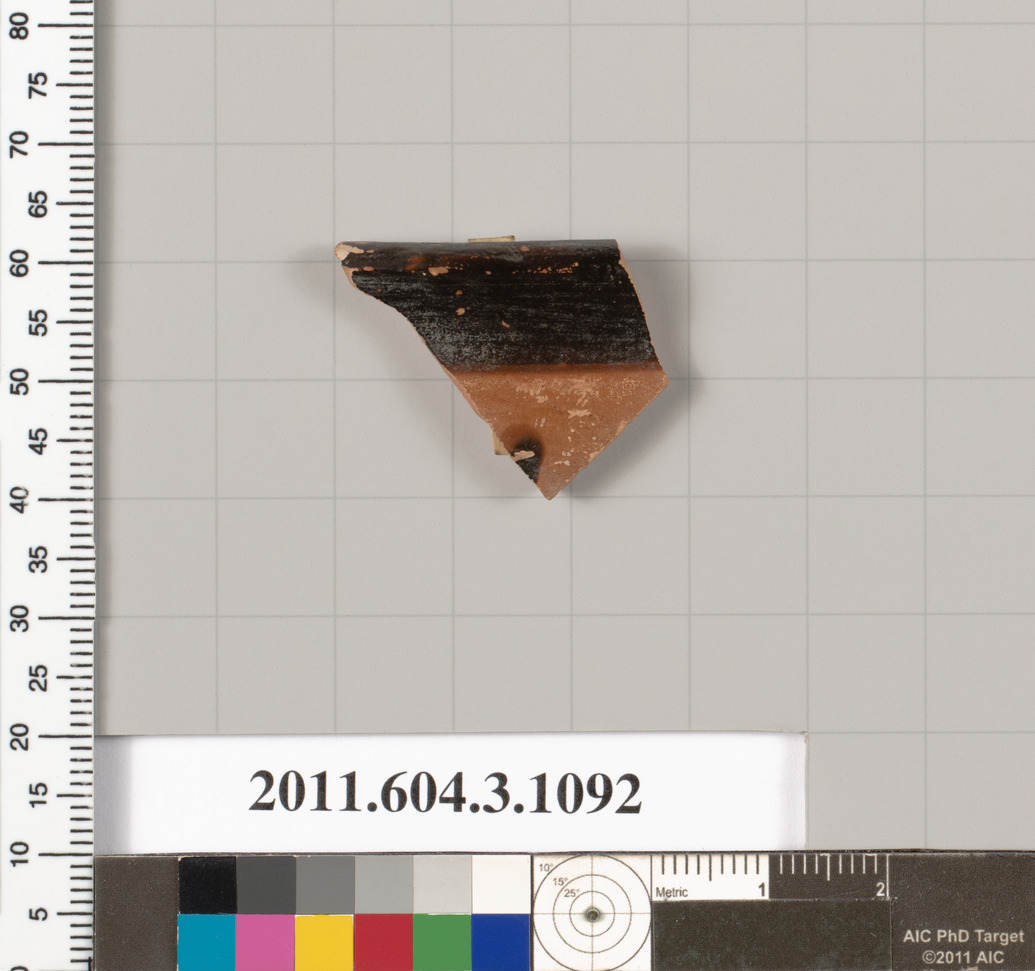
The terracotta rim fragment of a mastoid drinking cup—a humble, broken shard from Attic Greece—presents a profound hermeneutic challenge to the contemporary fashion scholar. At first glance, this artifact is merely a functional remnant: a narrow-based vessel designed for the symposium, its terracotta surface bearing the patina of millennia. Yet, when examined through the lens of Lauren Fashion Heritage Lab’s internal genetic code—which juxtaposes Jacques-Louis David’s monumental painting The Death of Socrates with a ceramic cup bearing the same name—this fragment becomes a critical tool for interrogating the very nature of aesthetic depth. The internal code posits a dialectic between “narrative depth” (the painting’s allegorical, didactic sublimity) and “existential depth” (the cup’s silent, material presence). This paper argues that the 2026 Old Money silhouette, as synthesized from this heritage dialectic, must embody a balanced aesthetic—one that reconciles the classical gravitas of narrative heritage with the quiet, unadorned authenticity of pure form. The terracotta fragment, precisely because it is incomplete, functions as a perfect synecdoche for this tension: it is both a bearer of lost stories (the symposium, the rituals of ancient Athens) and a mute, tactile object that resists narrative reduction.
The Dialectic of Depth: David’s Sublime vs. The Cup’s Silence
David’s The Death of Socrates exemplifies what the internal code terms “reproductive depth.” The painting’s power derives from its dense semiotic layering: Socrates’ upward-pointing finger references the immortality of the soul; the weeping disciples embody philosophical pathos; the chain and cup of hemlock anchor the scene in historical martyrdom. This is depth achieved through knowledge, memory, and moral instruction—a depth that demands decoding. The Old Money aesthetic has long drawn on such narrative depth, referencing classical motifs (columns, laurel wreaths, drapery) to signify lineage, education, and cultural capital. A 2026 silhouette inspired by David might feature a tailored wool coat with sculptural shoulders evoking Socratic gravitas, or a silk gown with pleated folds reminiscent of ancient chitons, each fold a quiet citation of philosophical discourse.
In stark contrast, the mastoid cup—and the conceptual cup named after Socrates in the internal code—offers what we might term “phenomenological depth.” Its aesthetic is not about what it represents but about what it is: a three-dimensional object of clay and glaze, defined by weight, texture, and volume. The cup’s “depth” is experienced through direct sensory engagement—the coolness of terracotta, the curve of the rim against the lip, the abstract swirl of cobalt and indigo that refuses narrative. This is depth without allegory, a pure presence that, as the code notes, approaches Heidegger’s concept of “thingness” (Dinglichkeit). For the 2026 Old Money silhouette, this translates into an emphasis on material integrity: the weight of a cashmere sweater, the drape of unadorned wool, the precise cut of a herringbone jacket that asks nothing of the viewer but to be worn. The fragment’s broken edge—its incompleteness—becomes a design principle: a deliberate austerity that rejects over-ornamentation in favor of essential form.
From Symposium to Silhouette: The Terracotta Fragment as Design Source
The specific museum artifact—a terracotta rim fragment of a mastoid drinking cup (Greek, Attic)—offers three key design insights for 2026 Old Money silhouettes. First, its materiality: terracotta is earthy, unpretentious, and deeply tactile. This suggests a palette of heritage blacks, muted ochres, and clay-like taupes, rendered in fabrics that honor the fragment’s physicality—heavy linen, raw silk, matte wool. The 2026 silhouette should avoid synthetic shine, favoring the “quiet luxury” of natural fibers that age gracefully, much like the patina of ancient pottery.
Second, the fragment’s form—the narrow base and flaring rim of the mastoid cup—informs silhouette proportions. The cup’s stability despite its narrow base suggests a design philosophy of understated tension: garments that appear simple but are structurally complex. A 2026 coat might feature a narrow shoulder that flares into a wider hem, echoing the cup’s profile. The rim fragment itself, with its curved edge, inspires collar designs—a subtle, sculptural roll at the neckline that references classical pottery without literal imitation.
Third, the fragment’s incompleteness is its most radical contribution. Unlike David’s painting, which is a finished, didactic whole, the fragment invites the viewer to complete its story. This aligns with the Old Money ethos of restrained elegance: garments that do not shout but whisper, leaving space for the wearer’s own narrative. A 2026 silhouette might incorporate deliberate “unfinish”—raw hems, exposed seams, or asymmetrical closures—that evoke the fragment’s broken edge, suggesting a lineage of wear and history rather than pristine newness.
Synthesis: The 2026 Old Money Silhouette as Balanced Aesthetic
The internal code concludes that the deepest aesthetic lies not in choosing between narrative and silence, but in balancing them. The 2026 Old Money silhouette must therefore be a dialectical garment: one that simultaneously references classical heritage (the Davidian depth of cultural memory) and embraces material authenticity (the cup’s Heideggerian thingness). This is not a compromise but a synthesis—a third term that the terracotta fragment embodies perfectly.
Concretely, this synthesis manifests in three design principles. First, silhouette as narrative: the cut of a garment can tell a story of lineage—a double-breasted jacket with peak lapels recalls Edwardian tailoring, while a dropped shoulder references 1980s power dressing—but this narrative must be subtle, not didactic. The 2026 silhouette should not require a decoder; it should be legible to those who know, invisible to those who do not. Second, material as presence: the fabric must dominate. A heritage-black wool coat, cut with mathematical precision, derives its depth from the weight of the cloth, the density of the weave, the way it falls and folds—not from any applied ornament. Third, fragment as form: the silhouette should embrace asymmetry, incompleteness, and the beauty of the broken. A single pleat, a missing button, a collar that does not quite close—these are not flaws but invitations, echoes of the terracotta rim that asks us to imagine the whole.
Conclusion: The Unity of the Philosophical and the Tactile
The terracotta fragment, in its mute materiality, and David’s painting, in its eloquent narrative, are not opposites but complements. The 2026 Old Money silhouette, as a heritage research artifact, must honor both: the depth of cultural memory and the depth of pure presence. It must be a garment that, like the mastoid cup, can be held and felt, and like the Socratic painting, can be read and remembered. In the end, the deepest aesthetic is not about choosing between the two but about achieving what the internal code calls “a more complete aesthetic”—a moment when a philosophy and a cup, a narrative and a shard, converge in the wearer’s gaze. The 2026 silhouette is that convergence: a heritage-black coat that is both a story and a thing, both a memory and a presence, both David’s Socrates and the silent terracotta that outlives him.