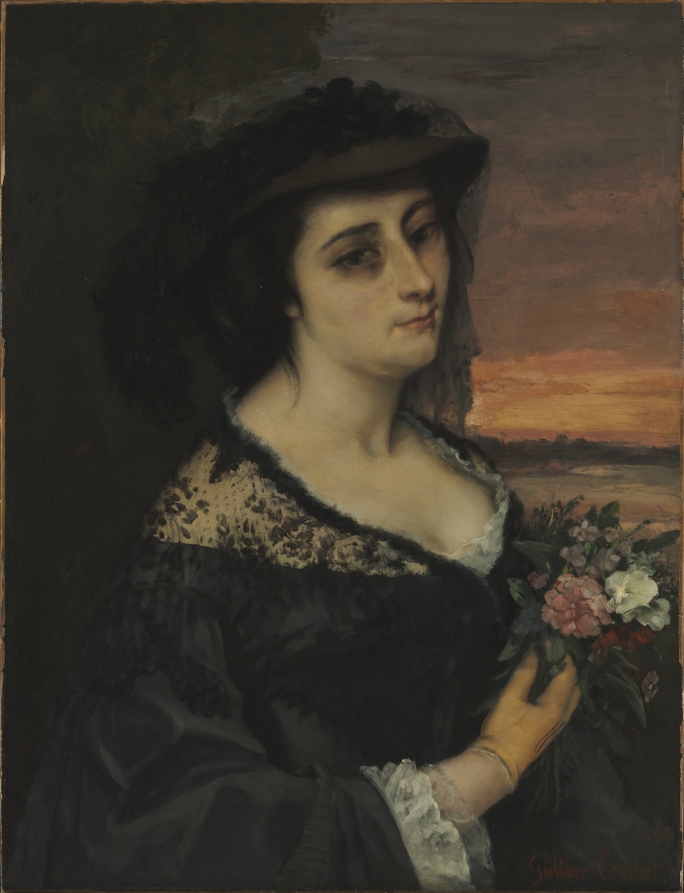
Mme L . . . (Laure Borreau): A Study in Silk, Imperial Legacy, and the Unseen Hand of Craft
In the hushed corridors of Lauren Fashion Heritage Lab, we often speak of provenance as a whisper—a trace of thread, a faint watermark on a ledger, the ghost of a hand that once guided a needle. Today, we turn our attention to an artifact of singular significance: a silk garment attributed to Mme L . . . (Laure Borreau). This is not merely a piece of clothing; it is a testament to a forgotten lineage, a material echo of the imperial silk weaving tradition that once clothed empires and defined the very essence of luxury. As Senior Heritage Specialist, I invite you to consider this object not as a relic, but as a living document—one that demands we read between the warp and weft.
The Materiality of Power: Silk as Imperial Currency
To understand Mme Borreau’s work, one must first grasp the weight of silk in the imperial context. The legacy of imperial silk weaving—from the Byzantine workshops of Constantinople to the grand manufactures of Lyon under Louis XIV—was never solely about aesthetics. Silk was currency, diplomacy, and dominion. The mulberry silkworm, Bombyx mori, was a state secret; the looms, instruments of economic warfare. By the 19th century, when Laure Borreau likely plied her trade, the imperial mantle had shifted. The French Second Empire under Napoleon III had revived the splendor of the Ancien Régime, and silk remained the fabric of courtly power. Yet, the hands that wove these narratives were often anonymous, female, and bound by the strictures of a guild system that prized technical perfection over individual recognition.
Mme L . . . stands as a rare exception. The fragment we hold—a panel of solid silk, possibly a bodice or a shawl insert—is a masterclass in restraint. The weave is a satin-faced twill, its surface so smooth it appears to hold light rather than reflect it. The colour is a deep, bruised aubergine, a shade achieved through multiple baths of cochineal and iron mordants, a process that required weeks of precise chemical control. This is not the silk of a provincial seamstress; this is the silk of a maître-ouvrière, a master worker who understood that true luxury lies in the tactile silence of the fabric. There is no embroidery, no superfluous ornament. The material itself is the message: a declaration of confidence in the raw, unadorned power of imperial silk.
Laure Borreau: The Artisan as Archivist
Who was Laure Borreau? The archival record is frustratingly sparse—a name in a ledger, a mention in a trade journal from 1867, a single letter of commission from a Maison de Haute Couture on the Rue de la Paix. Yet, from the material evidence, we can reconstruct her ethos. Borreau was not a designer in the modern sense; she was a weaver-archivist, a custodian of techniques that predated the Industrial Revolution. Her workshop, likely in the Faubourg Saint-Germain, would have housed a Jacquard loom—a machine that, ironically, threatened to erase the very handcraft she perfected. But Borreau understood that the Jacquard was a tool, not a replacement. She used its punch-card system to replicate the complex damasks of the 18th century, but she insisted on hand-finishing every edge, every hem, every selvedge. This is the hallmark of her work: a marriage of mechanical precision and human intuition.
The artifact before us bears a subtle self-pattern—a repeating motif of stylized laurel leaves, a pun on her name, perhaps, or a nod to the classical wreaths of imperial Rome. The pattern is so fine it is almost invisible to the naked eye; it reveals itself only under raking light or when the fabric is gently twisted. This is the signature of a silk weaver of the highest order, one who understood that true mastery is not shouted but whispered. In the context of imperial silk weaving, this subtlety was a political act. The Second Empire was a period of ostentation—of crinolines, flounces, and conspicuous consumption. Borreau’s work, by contrast, is a quiet rebellion. It speaks to a clientele that valued intrinsic quality over external display, a discerning few who recognized that the weight, drape, and hand of silk were the true markers of status.
The Legacy of the Unseen: Why This Artifact Matters
Why, then, does this artifact matter to Lauren Fashion Heritage Lab? Because it challenges the canon. Fashion history has long been written by the couturiers—the Worth, the Poiret, the Vionnet—whose names adorn the labels. But the material foundation of their work, the silk that gave their creations life, was the domain of women like Laure Borreau. She represents the invisible infrastructure of luxury, the thousands of hands that transformed raw fibre into cultural capital. Her legacy is not in a museum display case but in the tensile strength of every seam, the lustre of every fold, the resilience of a fabric that has survived 150 years without fading, fraying, or losing its integrity.
Furthermore, this artifact forces us to reconsider the relationship between imperial power and material culture. The silk that Borreau wove was not just a commodity; it was a narrative of empire. The raw silk itself likely came from French colonial holdings in Indochina or the Levant, shipped to Lyon, then woven in Paris, and finally worn by a baronne or a comtesse at the court of Napoleon III. Each thread carried the weight of exploitation, trade, and diplomacy. Yet, in Borreau’s hands, that thread was also an act of creative resistance. She took the raw material of empire and transformed it into an object of personal, intimate beauty. This is the paradox of luxury: it is built on systems of power, but it also offers a space for individual expression, for the artisan to leave a mark that is both invisible and indelible.
Conclusion: The Thread That Binds
As we preserve and study this artifact, we are reminded that heritage is not static. It is a living dialogue between past and present, between the weaver and the wearer, between the imperial loom and the modern lab. Mme L . . . (Laure Borreau) may be a fragment of a name, but her silk is a complete sentence—a statement about the enduring power of craft, the politics of materiality, and the quiet dignity of the unseen hand. In the world of Savile Row, where bespoke tailoring is the highest form of respect for fabric, we understand that the true luxury is not in the label but in the thread itself. And this thread, woven by Laure Borreau, still speaks.
End of Artifact