← BACK TO ARCHIVES
Heritage-Black
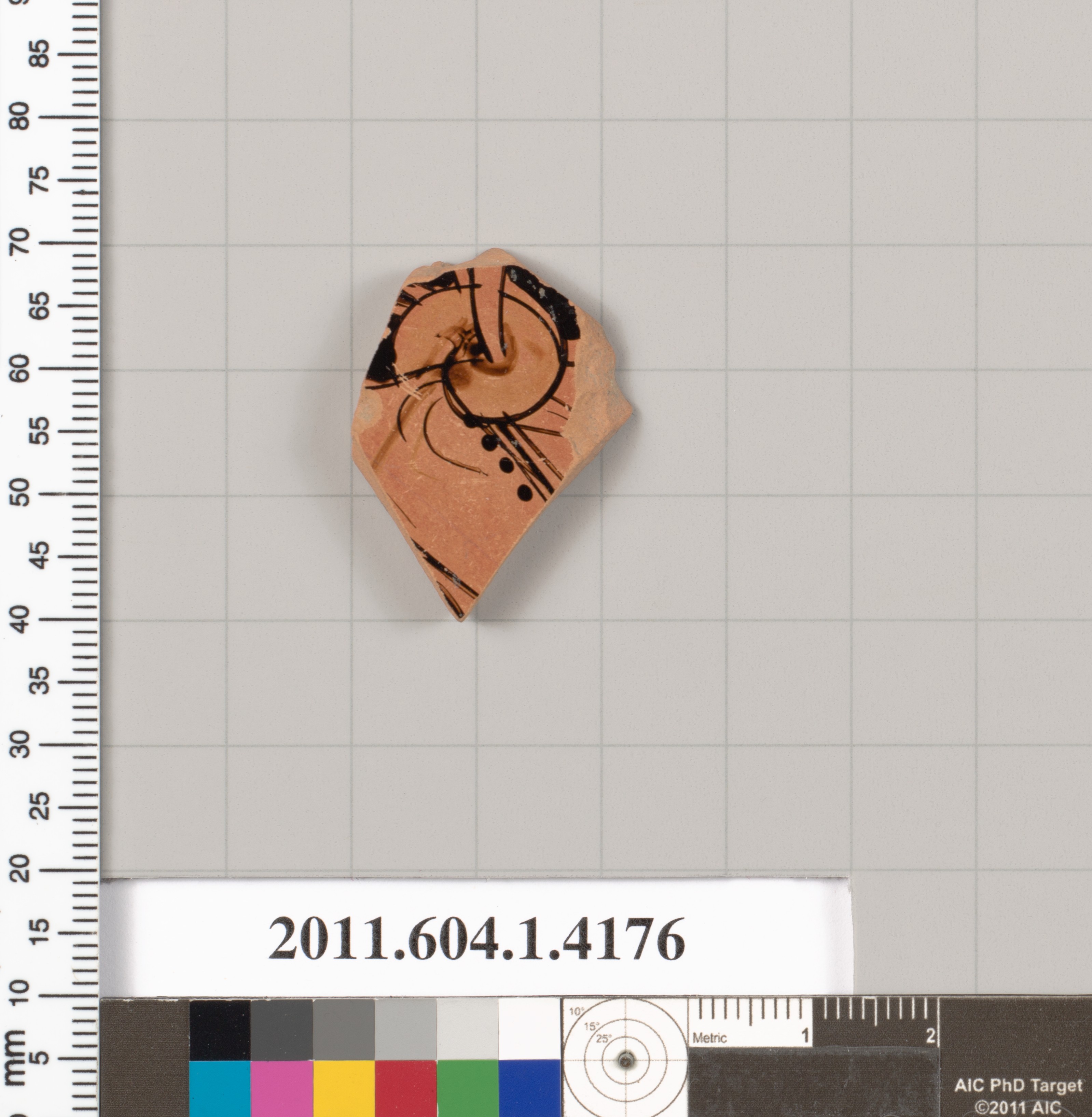
Heritage Synthesis: Terracotta fragment of a kylix (drinking cup)
Curated on May 08, 2026 // Node: LDN-01
The Vessel and the Void: Terracotta Fragments and the Architecture of Old Money Silhouettes for 2026
In the human chronicle of civilization, objects and images are never mere physical remnants; they are condensed spiritual universes. The internal genetic code of the Lauren Fashion Heritage Lab, which juxtaposes a Renaissance portrait of Saint Philip Neri with a Shang dynasty ritual wine vessel (*jiuqi*), reveals a profound dialectic between the “inner light” of the individual and the “outer order” of the collective. This dialectic finds an unexpected, yet resonant, third term in a seemingly humble artifact: a terracotta fragment of a kylix (drinking cup) from Attic Greece. This fragment, a shard of a once-whole vessel used in symposia—ritualized drinking parties that were both social bonding and philosophical inquiry—offers a crucial hermeneutic key for decoding the 2026 Old Money silhouette. The kylix fragment, with its broken edges and faded black-figure decoration, is not an object of pristine completeness but of *survival*. It is a testament to time’s erosive power, and it is precisely this quality of weathered, dignified incompleteness that must inform the next evolution of quiet luxury.
From Ritual Vessel to Sartorial Architecture
The kylix, in its original context, was a vessel of *liminality*. Held in the hand, it mediated between the individual drinker and the communal symposium. Its shallow bowl and two handles demanded a specific posture—a reclining, contemplative pose that allowed for conversation, poetry, and the measured consumption of wine. The terracotta fragment, now divorced from its function, becomes a pure signifier of *form as memory*. For the 2026 Old Money silhouette, this translates into a sartorial architecture that prioritizes *volume as container* and *structure as restraint*. The garments must not cling or reveal; they must *hold*. Consider a double-breasted overcoat in a dense, matte-finish wool—its shoulders are not padded for aggression but cut with a gentle, rounded slope, echoing the kylix’s bowl. The lapels are wide but not exaggerated, folding back like the rim of the vessel. The silhouette is not about the body beneath but about the *space* the garment creates around it. This is the “container” concept: the coat becomes a portable vessel, a dignified enclosure that protects the wearer’s inner life from the vulgarity of exposure.
The terracotta’s materiality is equally instructive. Unlike polished marble or gilded bronze, terracotta is earthen, fired, and inherently fragile. Its beauty lies in its texture—the slight irregularities of the clay, the matte surface that absorbs light rather than reflecting it. This is the antithesis of the high-shine, logo-emblazoned luxury of the past decade. For 2026, the Old Money palette must privilege *absorbed light*. Think of a cashmere sweater in a deep, dusty charcoal—not black, but a black that has been weathered by time. A silk twill scarf in a muted, oxidized gold, like the faded gilding on a museum fragment. The fabric should feel *lived-in* from the first wear, not new. This is not about distress or deconstruction; it is about *patina as a moral quality*. The wearer’s garments, like the kylix fragment, should suggest a lineage, a history of being handled with care. The silhouette becomes a vessel for generational memory.
The Symposiastic Silhouette: Reclining into Authority
The symposium was an exercise in *controlled release*. The kylix was passed, wine was mixed with water, and discourse was moderated. The 2026 Old Money silhouette must embody this same principle of *structured ease*. The key is in the *shoulder-to-hip ratio*. The kylix fragment, even in its broken state, reveals a clear geometry: a wide, open bowl balanced on a narrow stem and a broad foot. The sartorial translation is a silhouette that is broad at the shoulder (the bowl), cinched or relaxed at the waist (the stem), and grounded in a substantial, often heavier hem or trouser cuff (the foot). For women, this could manifest as a tailored blazer with a soft, extended shoulder, worn over a fluid silk shell, paired with wide-leg trousers that graze the floor. For men, a three-roll-two jacket in a heavy flannel, with natural shoulders and a suppressed waist, worn with a pleated trouser that breaks just over the shoe. The posture is not one of rigid attention but of *reclining authority*—the confidence of one who does not need to stand at attention to command a room.
The fragment’s decoration, often a symposium scene itself, offers a further layer. The black-figure technique, with its silhouetted forms against the terracotta ground, is a study in *negative space*. The figures are defined not by their outlines but by the void around them. For the 2026 wardrobe, this means embracing *absence as presence*. A jacket with no visible buttons (a hidden placket), a dress with no darts (the shape created by the fabric’s own weight and cut), a trouser with no belt loops (a side tab closure). The garment’s structure is implied, not declared. The “void” is the space between the fabric and the body, the quiet pause in a silhouette that allows the eye to rest. This is the ultimate expression of Old Money: the refusal to perform. The garment does not shout; it *contains*.
The Sacred in the Fragment: A Theology of the Incomplete
Returning to the genetic code’s core insight—that the deepest aesthetic experience arises from the “faint light between finite form and infinite meaning”—the terracotta kylix fragment teaches us that *incompleteness is a form of transcendence*. The Shang bronze wine vessel was a complete, sacred object, its power derived from its wholeness and its role in ritual. The Renaissance portrait of Saint Philip Neri is a complete image, its power derived from the illusion of a soul captured within a body. The kylix fragment, however, is *neither*. It is a ruin, a survivor. Its power lies in what it *does not* show. The missing half of the symposium scene, the broken handle, the chipped rim—these are invitations to the imagination. The viewer must *complete* the vessel.
For the 2026 Old Money silhouette, this is a radical proposition. It suggests that the most powerful garment is not the one that is perfectly finished, but the one that *implies* a larger whole. A cashmere cardigan with a slightly frayed edge at the cuff, not from neglect but from decades of wear. A linen suit that is intentionally rumpled, its creases telling a story of travel and ease. A silk dress that is cut on the bias, its hem uneven, as if it were draped in a hurry for a private dinner. This is not sloppiness; it is a *theology of the fragment*. The wearer, like the kylix, is a survivor of time. The garment is not a costume but a *relic*—a piece of a larger, unseen narrative. The silhouette becomes a vessel not for wine, but for the *memory of ritual*. It holds the spirit of the symposium: the measured conversation, the shared knowledge, the quiet authority of those who know that the best things are never fully revealed.
In conclusion, the terracotta fragment of a kylix, in its broken, earthen, and dignified state, provides the essential blueprint for the 2026 Old Money silhouette. It demands a shift from the *object* of luxury to the *vessel* of meaning. The silhouette must be architectural but not rigid, voluminous but not shapeless, textured but not ostentatious. It must absorb light, imply history, and invite contemplation. Like the kylix fragment, the garments of 2026 will be most powerful not in their completeness, but in their capacity to hold the void—the sacred space where the wearer’s own inner life, like the wine of the symposium, can be quietly, and authoritatively, contained.
Heritage Lab Insight
Genetic Bridge: Archive node focusing on Heritage-Black craftsmanship.