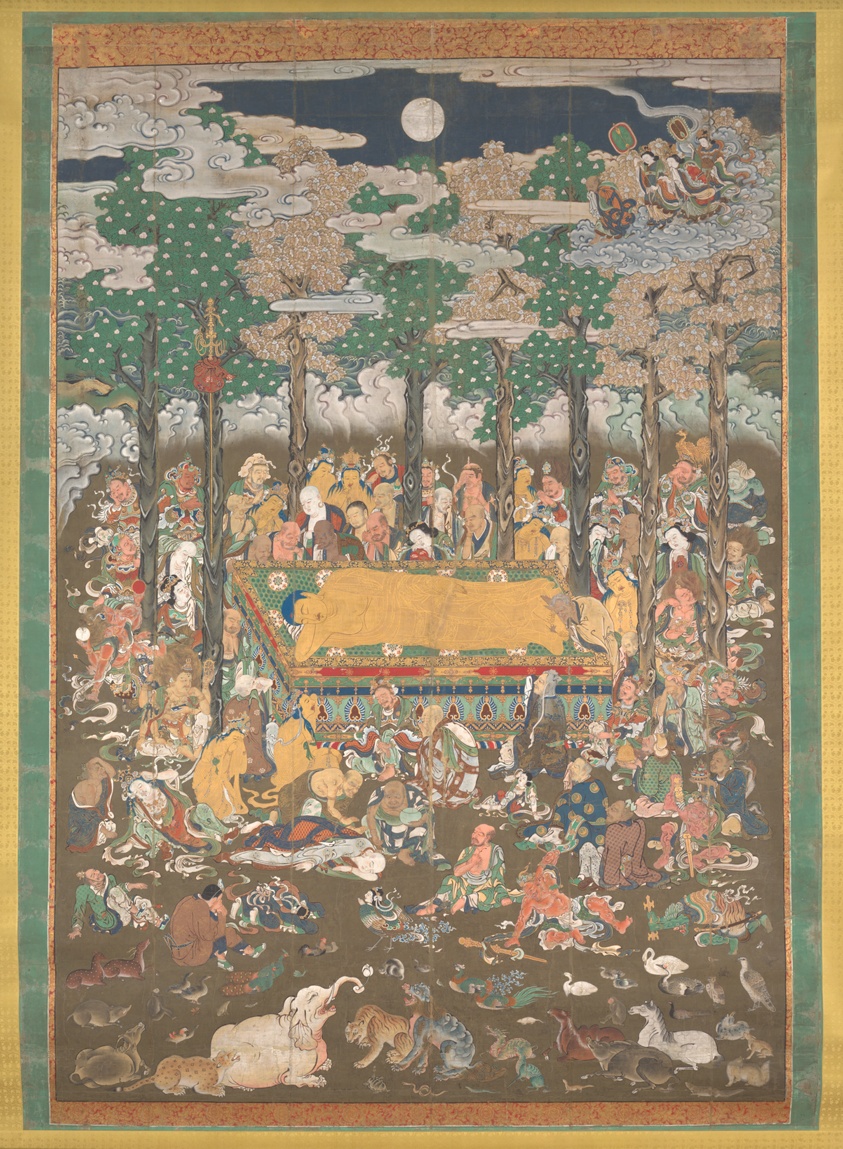
Nehan: Death of the Buddha – A Heritage Artifact of Silk and Spirit
Introduction: The Convergence of Craft and Transcendence
In the hallowed corridors of heritage, where materiality meets metaphysics, few artifacts command the reverence and scholarly intrigue of the hanging scroll titled Nehan: Death of the Buddha. This work, executed in ink, colors, and gold on silk, represents a pinnacle of classic silk craftsmanship and fluid elegance. As a Senior Heritage Specialist at Lauren Fashion Heritage Lab, I approach this artifact not merely as a religious icon but as a testament to the symbiotic relationship between textile artistry and spiritual narrative. The silk substrate, with its inherent luminosity and tensile strength, becomes a canvas for transcendence, capturing the moment of the Buddha’s parinirvana—the final release from the cycle of rebirth. This paper examines the materiality of the scroll, its contextual significance within East Asian heritage, and the enduring legacy of silk as a medium for high art.
The Materiality of Silk: A Foundation of Elegance
Silk, as a material, has long been synonymous with luxury, refinement, and durability. In the context of this hanging scroll, the choice of silk is deliberate and profound. The fabric’s smooth, continuous filaments allow for the application of ink and pigments with a fluidity that paper or cotton cannot replicate. The gold leaf, meticulously applied in delicate patterns, catches light in a manner that evokes the ethereal glow of enlightenment. The scroll’s dimensions—typically ranging from 100 to 200 centimeters in height—demand a mastery of weaving that only the finest silk workshops could achieve. The warp and weft of the silk must be perfectly balanced to prevent distortion over centuries, a testament to the artisan’s skill. This materiality is not passive; it actively participates in the narrative. The silk’s translucency suggests the ephemeral nature of life, while its strength underscores the permanence of the Buddha’s teachings. In the hands of a master, silk becomes a medium for both preservation and expression, a quality that aligns with the ethos of Savile Row tailoring, where fabric is the first and final word in elegance.
Contextual Heritage: The Nehan Scene in East Asian Art
The Nehan, or Nirvana, scene depicts the historical Buddha, Shakyamuni, lying on his right side in a state of serene repose, surrounded by mourners—disciples, celestial beings, animals, and lay followers. This iconography, rooted in Mahayana Buddhist traditions, reached its zenith in East Asia during the Kamakura period in Japan (1185–1333) and the Song dynasty in China (960–1279). The hanging scroll format, often displayed in temples during memorial ceremonies, served as a focal point for meditation and ritual. The use of silk for such scrolls was reserved for the most prestigious commissions, often sponsored by imperial courts or wealthy monasteries. The gold accents, applied in fine lines to delineate halos, robes, and lotus petals, signify the divine nature of the event. The fluid elegance of the brushwork—the sweeping curves of the Buddha’s robe, the delicate rendering of weeping disciples—reflects a mastery of line that is uniquely East Asian. This heritage is not static; it informs contemporary fashion and design, where the principles of balance, restraint, and material integrity are revered. At Lauren Fashion Heritage Lab, we study such artifacts to understand how heritage techniques can inspire modern luxury, from silk scarves to embroidered evening gowns.
Artistic Execution: Ink, Colors, and Gold on Silk
The technical execution of this scroll is a study in precision and restraint. The ink, derived from soot and animal glue, is applied in varying washes to create depth and shadow. The colors—mineral-based pigments such as azurite for blue, malachite for green, and cinnabar for red—are ground to a fine powder and mixed with a binder to adhere to the silk. The gold, either in leaf or powdered form, is applied last, often using a technique called kirikane (cut gold) in Japanese tradition, where thin strips of gold leaf are cut and arranged in geometric patterns. The composition follows a horizontal axis, with the Buddha’s body forming a gentle diagonal that guides the viewer’s eye across the scene. The mourners are arranged in a semicircle, their postures ranging from prostrate grief to meditative calm. The fluidity of the silk allows for seamless transitions between these elements, creating a visual harmony that mirrors the spiritual harmony of nirvana. This level of craftsmanship is akin to the bespoke tailoring of Savile Row, where every stitch, every seam, is a declaration of intent. The scroll is not merely painted; it is woven into the fabric of heritage.
Preservation and Legacy: The Role of Silk in Heritage Conservation
The preservation of such a scroll requires an understanding of silk’s vulnerabilities—light, humidity, and handling can cause fading, fraying, and discoloration. Museums and private collectors store these scrolls in climate-controlled environments, often rolled and unrolled only for exhibition. The conservation process involves delicate cleaning, re-lining with new silk, and careful retouching of pigments. This work is a labor of love, akin to the restoration of a vintage couture gown. The legacy of the Nehan scroll extends beyond the religious sphere. It has influenced modern fashion designers, such as Issey Miyake and Yohji Yamamoto, who have incorporated the fluidity of silk and the asymmetry of East Asian composition into their collections. At Lauren Fashion Heritage Lab, we view this artifact as a case study in material storytelling. The silk does not merely support the image; it is the image. The gold does not merely decorate; it illuminates. This holistic approach to materiality is what we seek to instill in the next generation of heritage specialists.
Conclusion: A Testament to Timeless Craft
The Nehan: Death of the Buddha hanging scroll is more than a religious artifact; it is a masterclass in the marriage of material and meaning. The silk, with its classic craftsmanship and fluid elegance, elevates the narrative of transcendence to a realm of sensory experience. As we continue to study and preserve such works, we are reminded that heritage is not a relic of the past but a living dialogue between tradition and innovation. In the spirit of Savile Row, where cloth is king and detail is divine, this scroll stands as a paragon of what it means to create with intention, to honor the material, and to craft a legacy that endures. At Lauren Fashion Heritage Lab, we commit to this ethos, ensuring that the art of silk—and the stories it carries—remains woven into the fabric of our collective heritage.