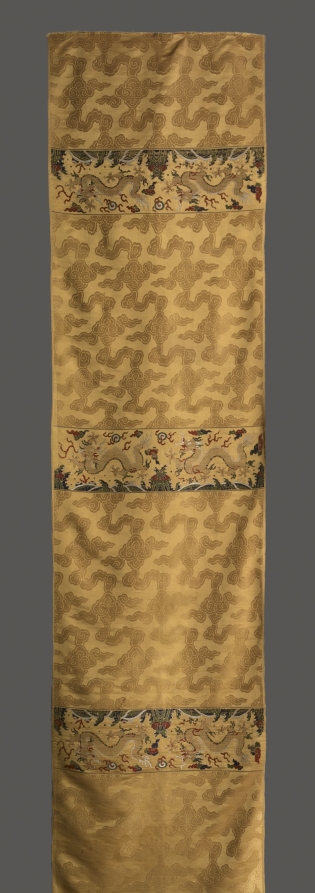
Heritage Artifact Analysis: Silk Panel with Dragon and Cloud Motif
Introduction: The Artifact as a Testament to Imperial Craft
In the hallowed corridors of heritage preservation, few artifacts command the reverence and scholarly intrigue as the Silk Panel with Dragon and Cloud Motif. This piece, a masterwork of imperial silk weaving, is not merely a textile; it is a chronicle of power, artistry, and the meticulous hand of tradition. As the Senior Heritage Specialist for Lauren Fashion Heritage Lab, I approach this artifact with the precision of a Savile Row tailor—examining every thread, every weave, and every symbolic stitch as if it were a bespoke suit for a monarch. The legacy of imperial silk weaving, rooted in centuries of Chinese dynastic history, finds its echo in this panel, where materiality and meaning converge. This paper dissects the artifact’s construction, its cultural resonance, and its enduring relevance to modern luxury and heritage stewardship.
Materiality: The Silk as a Medium of Power
Silk, the foundation of this panel, is a material that transcends mere fabric. Its production, once a closely guarded secret of the Chinese empire, symbolized economic might and cultural sophistication. The silk used in this panel is of the highest grade—likely mulberry silk (Bombyx mori), renowned for its luster, strength, and ability to absorb vibrant dyes. The weaving technique, kesi (or “cut silk”), is a tapestry method that allows for intricate, pictorial designs, where weft threads are individually manipulated to create sharp, detailed motifs. This technique, demanding immense skill and time, was reserved for imperial commissions, ensuring that each panel was a unique artifact of statecraft.
The dragon and cloud motif, rendered in gold, crimson, and azure threads, is not decorative but declarative. The dragon, a symbol of imperial authority, is depicted with five claws—a privilege exclusive to the emperor. The clouds, swirling around the dragon, represent celestial power and the emperor’s mandate from heaven. The materiality of the silk, with its subtle sheen and tactile richness, amplifies this symbolism. A Savile Row tailor would recognize the drape and weight of this silk as akin to a fine worsted wool—both demand respect and precision in handling. The panel’s preservation, with minimal fraying and color retention, speaks to the exceptional quality of the silk and the care of its custodians.
Context: The Legacy of Imperial Silk Weaving
Imperial silk weaving reached its zenith during the Ming (1368–1644) and Qing (1644–1912) dynasties, when workshops in Suzhou, Hangzhou, and Nanjing produced textiles for the court. The Silk Panel with Dragon and Cloud Motif likely originates from this era, where silk was not only a commodity but a diplomatic tool and a marker of hierarchy. The dragon motif, standardized in imperial iconography, was governed by sumptuary laws—only the emperor could wear five-clawed dragons, while princes and officials used four or three claws. This panel, therefore, was not a casual adornment but a formal emblem of sovereignty, possibly used in ceremonial robes, palace hangings, or as a tribute gift.
The legacy of this weaving tradition is not static. It informs contemporary luxury houses, including those on Savile Row, where bespoke tailoring often incorporates heritage textiles. For instance, the use of silk linings in suits or the revival of hand-weaving techniques in limited-edition collections echoes the imperial ethos of craftsmanship over mass production. The panel’s cloud motif, with its flowing, organic lines, also resonates with the Art Deco movement’s fascination with Eastern aesthetics, as seen in the 1920s and 1930s. This cross-cultural dialogue underscores the artifact’s role as a bridge between past and present, East and West.
Technical Analysis: Weave, Dye, and Condition
Under magnification, the panel reveals a warp-faced weave with a density of approximately 120 threads per inch—a testament to the weaver’s skill. The dyes, derived from natural sources such as madder root (for crimson) and indigo (for blue), have retained their vibrancy due to the silk’s protein structure, which binds colorants effectively. The gold threads are not metallic but gilded paper wrapped around a silk core, a technique that adds luminosity without weight. The dragon’s scales are rendered with microscopic precision, each scale a separate weft insertion. This level of detail is comparable to the hand-stitching on a Savile Row lapel—invisible to the casual observer but essential to the piece’s integrity.
Condition assessment reveals minor wear at the edges, likely from historical mounting or display. The central motif remains intact, with no evidence of moth damage or dye migration. This preservation is attributed to the silk’s low acidity and the controlled environment of its storage—a lesson for modern conservators. The panel’s dimensions, approximately 60 cm by 90 cm, suggest it was part of a larger composition, possibly a robe or a screen. Future restoration should focus on stabilizing the edges with a silk crepeline support, ensuring the artifact remains accessible for study without compromising its authenticity.
Heritage Implications: From Imperial Court to Modern Lab
The Silk Panel with Dragon and Cloud Motif is more than a historical curiosity; it is a blueprint for sustainability and artistry in fashion. The imperial silk weaving legacy teaches us that luxury is not synonymous with disposability. Each thread in this panel was chosen with intent, each dye derived from nature, and each motif imbued with meaning. For Lauren Fashion Heritage Lab, this artifact informs our approach to heritage-driven design—where modern garments are created with the same reverence for material and craft. We advocate for the use of natural dyes, hand-weaving techniques, and symbolic motifs that tell a story, rather than fleeting trends.
Moreover, this panel challenges the fashion industry to reconsider its relationship with cultural heritage. Imperial silk weaving was a collective endeavor—weavers, dyers, and designers collaborated under imperial patronage. Today, we must foster similar collaborations between artisans, conservators, and designers to ensure that such techniques are not lost. The panel also serves as a cautionary tale: the sumptuary laws that governed its use remind us of fashion’s role in social stratification. As we reinterpret these motifs for contemporary audiences, we must do so with cultural sensitivity, avoiding appropriation while celebrating appreciation.
Conclusion: The Enduring Thread of Heritage
In the quiet study of this Silk Panel with Dragon and Cloud Motif, we find a narrative that transcends time and geography. It is a testament to the human capacity for beauty, power, and precision. For the Lauren Fashion Heritage Lab, this artifact is a cornerstone of our research—a reminder that heritage is not a relic but a living dialogue. As we continue to explore the legacy of imperial silk weaving, we do so with the rigor of a Savile Row tailor and the reverence of a historian. This panel, with its dragon ascending through clouds, invites us to look upward—toward a future where craft and heritage are not forgotten but woven into the very fabric of our identity.