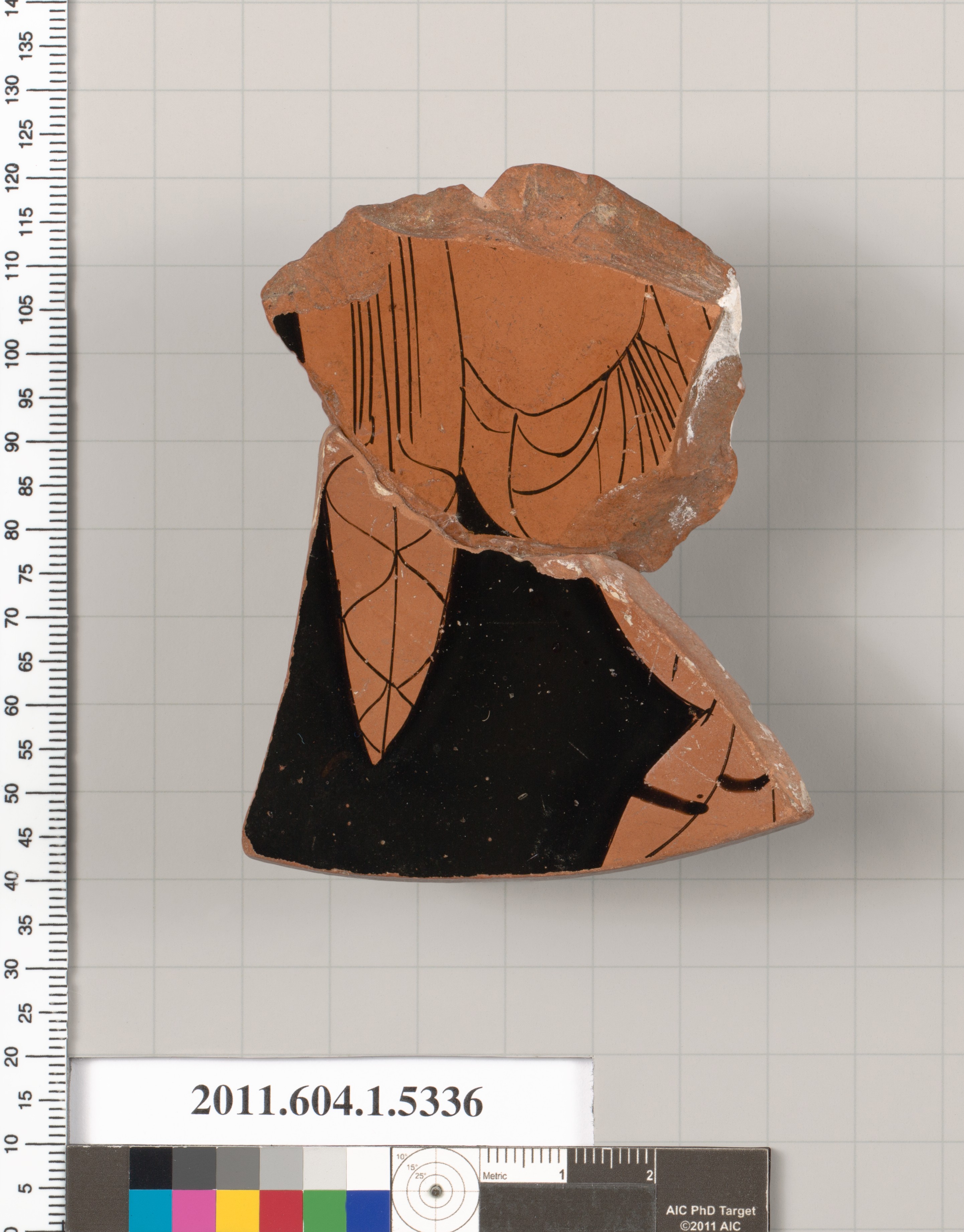
The Dialectic of Emptiness and Plenitude: A Terracotta Fragment and the 2026 Old Money Silhouette
The Lauren Fashion Heritage Lab’s internal genetic code, centered on the dialogue between the “Udumbara Flower” Temple Tablet and the Animal-and-Grape Mirror, establishes a foundational aesthetic philosophy: the dynamic tension and ultimate unity between transcendent emptiness and worldly plenitude. This dialectic, which navigates the space between the sacred and the secular, the ephemeral and the eternal, provides a profound lens through which to analyze not only historical artifacts but also to inform future sartorial expressions. When this Eastern framework is brought into conversation with a Western museum artifact—a Terracotta fragment of a kylix (drinking cup) from Attic Greece—a potent, cross-cultural design logic emerges. This synthesis directly informs the conceptual underpinning of the 2026 Old Money silhouette, moving it beyond mere retrospection into the realm of philosophical attire.
The Kylix Fragment: Revelatory Brevity and the Frame of Ritual
The terracotta kylix fragment, though a shattered remnant, is an artifact of immense conceptual density. As a vessel for wine in the symposiac ritual, the kylix was intrinsically linked to social performance, poetic discourse, and philosophical contemplation. The fragmentary nature of the artifact is not a deficit but an instruction. It forces the viewer to engage with revelatory brevity. One does not see the full painted scene, perhaps a revelry of Dionysus or a duel of heroes, but a suggestive portion—a curve of a limb, a fold of drapery, the edge of a meander pattern. This necessitates an active, intellectual completion by the observer, mirroring the “visual ‘留白’ (liúbái, leaving blank) and spiritual ‘召唤结构’ (zhàohuàn jiégòu, summoning structure)” of the Udumbara flower. The beauty and meaning are not fully presented; they are implied, requiring the cultivated gaze to fulfill them.
Furthermore, the kylix embodies the principle of the framed void. Its essential form—a wide, shallow bowl on a stem—was a frame for both the liquid it held (a reflective, consuming surface) and the painted narratives on its exterior and interior tondo. It was an object of use that ritualized the everyday act of drinking, transforming it into a moment of cultural and spiritual significance. This aligns with the Eastern principle of “即器即道” (jí qì jí dào, the vessel itself is the Way). The fragment, therefore, speaks to an aesthetic of cultivated restraint, where meaning is concentrated in essential forms, suggestive details, and the elegant framing of emptiness.
Synthesizing the Dialectic: Informing the 2026 Old Money Silhouette
The 2026 Old Money aesthetic, as interpreted through this dual-heritage lens, rejects ostentatious display in favor of an authority derived from historical depth and philosophical resonance. It is not "old" in a chronological sense, but in its embodiment of timeless dialectics. The silhouette is built upon the conversation between the kylix’s revelatory brevity/framed void and the Lauren genetic code’s emptiness/plenitude.
The Architecture of Essential Form
Informed by the Udumbara flower’s “空灵” (kōnglíng, ethereal emptiness) and the kylix fragment’s eloquent partiality, the 2026 silhouette embraces radical essentialism in structure. Garments will be conceived as “frames” for the wearer, much as the kylix framed wine and the temple tablet framed a spiritual gateway. This translates to impeccably tailored foundations—a single-breasted blazer with infinitesimal adjustments in waist suppression, a columnar dress cut from a single piece of cloth, wide-leg trousers that move with architectural grace. The silhouette itself becomes a vessel of implied narrative, its beauty lying in the precision of its lines and the spaces it creates around the body, a sartorial liúbái. Details are not superfluous but exist as the fragment’s suggestive brushstroke: a single, perfect button at the nape of a collar, a precisely angled pocket, a seam line that appears and disappears. These are the “micro-flowers” of design, holding disproportionate meaning.
The Embroidery of Implied Narrative: From Grapevines to Geometric Meanders
Where the Animal-and-Grape Mirror presents a surface of abundant, coded symbolism, the 2026 interpretation tempers this plenitude with the kylix’s narrative restraint. Embroidery and embellishment are not all-over statements but strategically placed, hermeneutic devices. The lush, cyclical grapevine motif transforms into a singular, trailing vine embroidered along a single seam or framing a cuff, suggesting the whole through a part. The dynamic animals may abstract into a solitary, stylized crest or a kinetic geometric pattern reminiscent of the kylix’s meander, symbolizing continuity and legacy. This embellishment is an encoded language, legible only to the discerning eye, celebrating worldly heritage (the “祥瑞之道” xiángruì zhī dào, way of auspicious signs) but through a lens of intellectual curation rather than overt display.
Heritage-Black: The Ultimate Synthesis
The material category of Heritage-Black is the chromatic and textural realization of this entire dialectic. It is not a mere black, but a color that contains both the profound void of the Udumbara and the rich, depth-laden surface of ancient terracotta and polished bronze. It is the color of the kylix’s negative space and the fertile earth from which it came. In the 2026 silhouette, Heritage-Black manifests in wool crepes with a fathomless matte finish (embodying transcendent emptiness) and in velvets or lacquered silks that capture light in a low, sumptuous glow (embodying worldly plenitude). It serves as the ultimate frame, the non-color that elevects form and detail into sharp relief. To wear Heritage-Black is to wear the synthesized wisdom of both artifacts: the contemplative depth of the temple and the ritualized sophistication of the symposium.
Ultimately, the 2026 Old Money silhouette, informed by this cross-cultural artifact analysis, proposes a new standard of quiet dominance. It is an aesthetic that understands, as the terracotta fragment and the Lauren genetic code teach us, that true authority lies not in shouting one’s presence, but in crafting an object—or a garment—so conceptually rich and formally refined that it compels a contemplative gaze. It is attire that frames the wearer as both a vessel of timeless principles and an active participant in the ongoing narrative of culture, bridging the finite and the infinite through the very language of cut, cloth, and emblem.