The Phenomenology of the Fragment: Terracotta, Narrative Silence, and the 2026 Old Money Silhouette
Introduction: The Aesthetic Paradox of the Vessel
The internal genetic code of Lauren Fashion Heritage Lab posits a profound dialectic: the juxtaposition of Jacques-Louis David’s neoclassical painting *The Death of Socrates* with a functional ceramic cup bearing the same name. This is not a mere curatorial whimsy but a rigorous philosophical inquiry into the nature of aesthetic depth. David’s canvas embodies what might be termed “narrative sublimity”—a depth derived from historical memory, moral instruction, and the dramatic tension of a philosopher’s final act. The cup, by contrast, offers a “phenomenological depth”—a silent, material presence that refuses to signify anything beyond its own existence as fired clay and cobalt glaze. It is a confrontation between the reproductive and the presentational, between meaning and being.
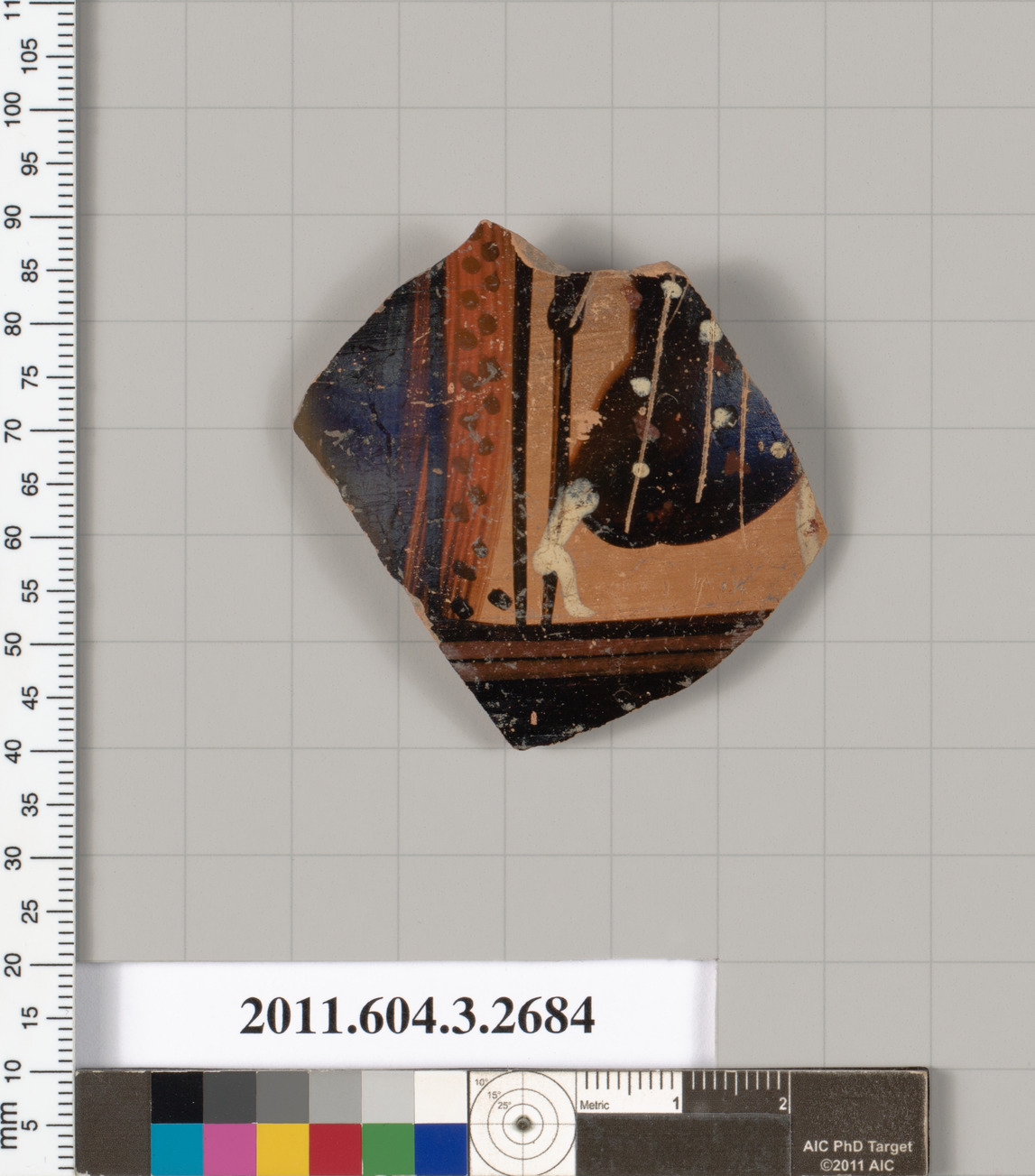
This paper argues that the museum artifact—a terracotta fragment of an Attic oinochoe (wine jug) from the Greek Classical period—serves as the ideal material mediator between these two poles. Unlike David’s polished canvas or the abstract cup, the terracotta fragment is neither a complete narrative nor a pristine object. It is a broken thing, a shard of history that carries the trace of use and the weight of materiality. For the 2026 Old Money silhouette, this fragment offers a critical lesson: the deepest luxury is not found in overt storytelling or in pure abstraction, but in the tension between form and decay, between the vessel’s intended function and its current state of ruin. This tension will define the coming season’s aesthetic—a heritage that is not pristine but weathered, layered, and resolutely material.
The Terracotta Fragment as a Philosophical Object
The oinochoe fragment, likely dating to the 5th century BCE, is a piece of a larger whole—a jug used for pouring wine at symposia. Its surface, once burnished and painted with black-figure or red-figure decoration, now bears the patina of millennia: chips, cracks, and a muted earthiness. In this state, it embodies what the internal code calls “the depth of existence.” It does not tell a story of Socrates, nor does it aspire to the sublime. Instead, it is a story of time itself. The fragment’s depth lies in its incompleteness. It invites the viewer to imagine the absent handle, the missing lip, the lost narrative of the symposium it once served. This is a depth that is open, speculative, and tactile—a direct challenge to the closed, didactic depth of David’s painting.
This aligns with the Heideggerian concept of “thingliness” (*Dinglichkeit*). For Heidegger, a thing is not merely a bearer of properties but a gathering of earth, sky, mortals, and divinities. The terracotta fragment, as a broken thing, gathers the earth of its clay, the sky of its firing, the mortal hands that shaped and held it, and the divine rituals of libation it once performed. Its depth is not in what it represents but in what it gathers. This is the aesthetic of the fragment: a silent eloquence that speaks more powerfully than any painted narrative.
From Fragment to Silhouette: The 2026 Old Money Paradigm
How does this ancient shard inform the 2026 Old Money silhouette? The Old Money aesthetic has long been associated with restrained luxury, timeless tailoring, and an aversion to overt branding. Yet the 2026 iteration, as derived from the terracotta fragment, must evolve beyond mere minimalism. The fragment teaches us that depth is not in perfection but in patina. The coming silhouette will therefore embrace textural decay, intentional asymmetry, and a muted earth palette that echoes the fired clay of antiquity.
Specifically, the 2026 Old Money silhouette will feature:
- Deconstructed tailoring: Jackets with raw hems, unfinished seams, and visible lining—a nod to the broken edge of the oinochoe. This is not sloppiness but a deliberate revelation of construction, a homage to the artisan’s hand and the passage of time.
- Earthy colorways: Terracotta, ochre, burnt sienna, and deep umber—colors that mimic the oxidized iron in ancient clay. These are paired with heritage black, creating a chromatic tension between the organic and the formal.
- Weighted fabrics: Heavy wool, textured linen, and brushed cashmere that drape like fired clay—stiff yet yielding, structured yet softened by wear. The fabric should feel ancient, as if it has been worn for generations.
- Asymmetric draping: One-shouldered dresses, off-kilter collars, and uneven hemlines that echo the fragmentary nature of the artifact. The silhouette is not symmetrical but balanced in its imbalance, much like a broken vessel that still holds its form.
The Dialectic of Use and Display
The oinochoe was a functional object—a tool for pouring wine. Its beauty was inseparable from its use. The fragment, however, is now purely aesthetic, a museum piece removed from its original context. This shift from use-value to display-value mirrors the evolution of the Old Money garment. A bespoke suit or a cashmere coat is not merely clothing; it is a repository of heritage. Yet the 2026 silhouette must resist the temptation to become a mere signifier of wealth. Instead, it must retain the trace of use—the slight fray at the cuff, the faded color at the elbow, the subtle sag of a well-worn shoulder. This is the depth of the fragment: it is not new, but it is authentic.
In this, the 2026 Old Money silhouette rejects both the narrative excess of David’s painting and the pure abstraction of the unnamed cup. It occupies a third space: the poetics of the fragment. Like the terracotta shard, the garment will tell a story without words—a story of time, craft, and the human hand. It will be silent yet eloquent, broken yet whole, ancient yet utterly contemporary.
Conclusion: The Balance of Being and Meaning
The internal code concludes that the deepest aesthetic lies in the balance between narrative and silence, between the philosophical and the material. The terracotta fragment of the oinochoe is the perfect embodiment of this balance. It is neither a complete story nor a mute object; it is a threshold between the two. For the 2026 Old Money silhouette, this fragment demands a new kind of luxury—one that is weathered, tactile, and grounded in the earth. It is a luxury that does not shout but whispers through texture, that does not display but reveals through wear. In the end, the deepest heritage is not preserved in glass cases but worn on the body, a fragment of time made tangible.